
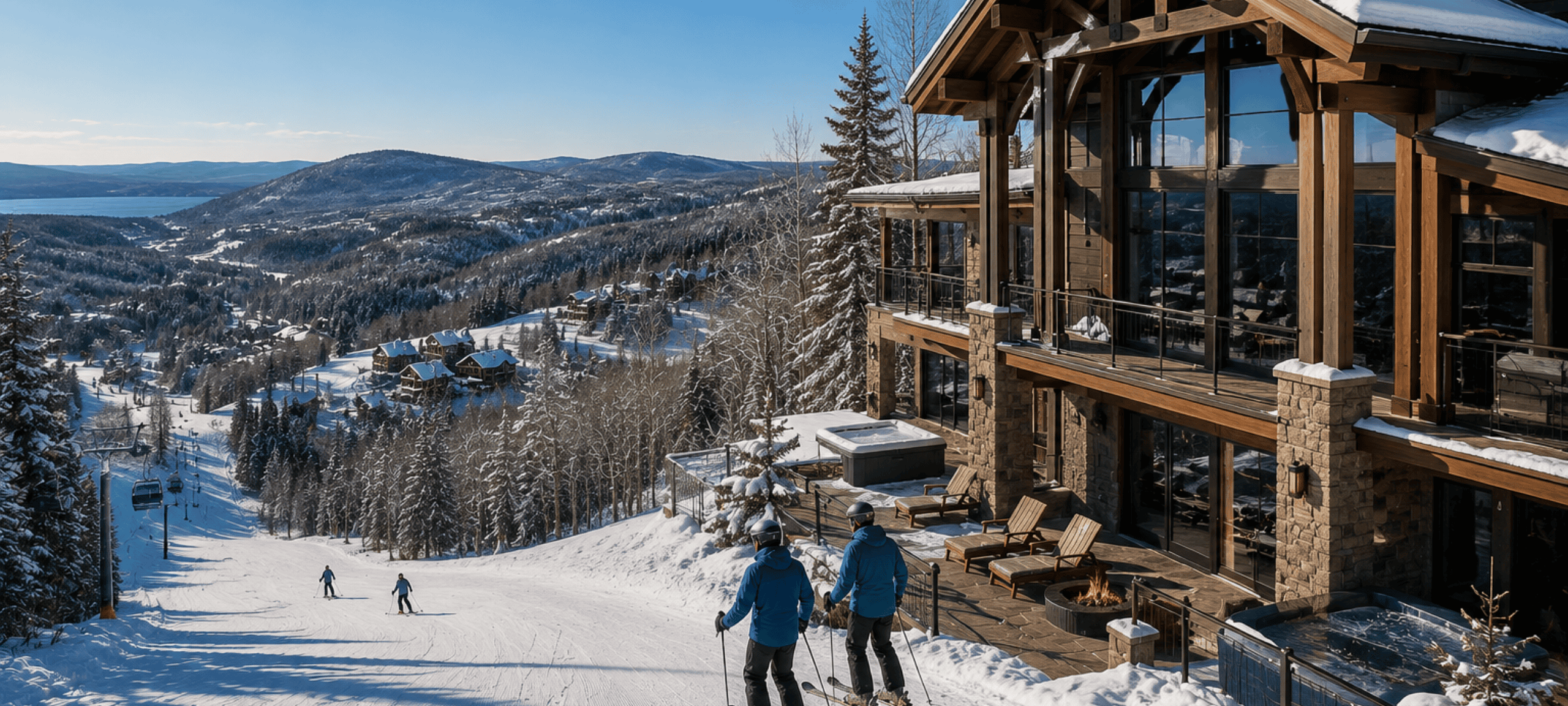
What if the ski-in sanctuary you've envisioned actually requires a grueling trek across a slushy parking lot before your boots ever meet the powder? It's a common frustration for many investors who find that marketing descriptions don't always align with the reality of the terrain. Precision matters. You deserve clarity when assessing high-stakes resort real estate, especially since true slope-side access can command a 45% price premium over standard mountain properties. Understanding exactly what makes a property ski-in ski-out is the difference between a seamless winter lifestyle and a logistical headache.
We recognize that your time is the ultimate luxury, and your home should reflect that. This guide establishes a precise framework for evaluating these premier Northern Michigan investments across Emmett, Charlevoix, and Grand Traverse counties. You'll gain the expert insight needed to distinguish between vague proximity and genuine, frictionless connectivity to the lifts. We'll examine the specific criteria that define an elite alpine haven and how these unique assets perform in the 2026 market.
Key Takeaways
- Learn the precise technical markers of what makes a property ski-in ski-out to ensure your investment offers genuine, frictionless connectivity rather than a marketing compromise.
- Discover how to evaluate topography and lift proximity to distinguish between true resort access and properties that merely sit near the trail.
- Explore premier slope-side opportunities in Emmett and Charlevoix counties, focusing on the unique lifestyle benefits of Boyne Mountain and The Highlands.
- Master the nuances of resort real estate valuation, including how to weigh the premium for convenience against the seasonal rental potential of the region.
- Navigate the complexities of local short-term rental ordinances in Northern Michigan to ensure your property remains a high-value, compliant investment.
Defining True Ski-In Ski-Out Access
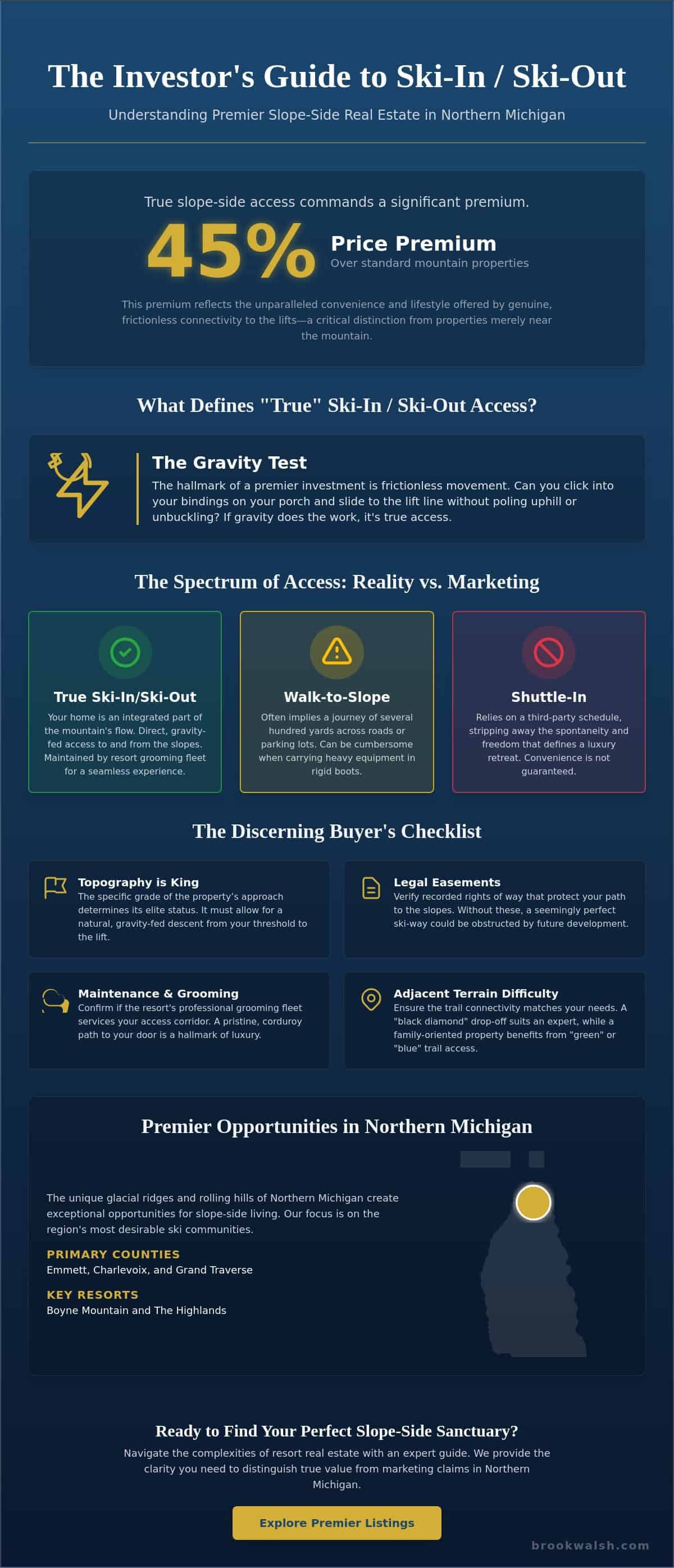
The distinction between a property that is merely near the mountain and one that offers true alpine connectivity is often found in the elevation of your doorstep. To understand what makes a property ski-in ski-out, one must apply the Gravity Test. Can you click into your bindings on your own porch and slide to the lift line without unbuckling or poling uphill? This level of frictionless movement is the hallmark of a premier investment. Within a high-end ski resort, the spectrum of access ranges from private groomed trails to shared public corridors, each offering a different degree of exclusivity and ease.
In Northern Michigan, where the landscape transitions from rolling hills to steep glacial ridges, the grade of a driveway can be as significant as its location. Proximity is a frequent trap in marketing, where a home is described as slope-side but requires a cumbersome hike across a slushy road. True access means your home is an integrated part of the mountain's flow. To better understand this concept, watch this helpful video:
The Difference Between Ski-In and Ski-Out
While the terms are often used interchangeably, they represent two distinct logistical experiences. A true ski-out property allows for an effortless morning transition; you step out of your mudroom, onto the snow, and glide directly to the nearest high-speed chair. Conversely, a ski-in property allows you to return home at the end of the day by sliding directly to your door. Some properties in Emmett and Charlevoix counties may only offer one or the other due to the mountain's specific topography. Identifying a residence that offers both is essential for those seeking the pinnacle of resort lifestyle homes for sale.
Marketing Terms vs. Reality
The terminology used in luxury condominium listings can be surprisingly vague. "Walk-to-slope" often implies a journey of several hundred yards, which feels significantly longer when carrying heavy equipment in rigid plastic boots. Similarly, "shuttle-in" access relies on a third-party schedule, stripping away the spontaneity that defines a luxury retreat. Discerning buyers should look for "true" access, which signifies a property located on a designated trail or a private spur that is maintained by the resort’s grooming fleet. This level of detail ensures your home remains a sanctuary of convenience rather than a source of logistical frustration.
The Technical Criteria: How Properties Qualify
Topography is king when determining the true value of an alpine residence. Within the landscape of Northern Michigan, where glacial ridges define the horizon, the specific grade of a property’s approach determines its elite status. Understanding what makes a property ski-in ski-out requires a deep dive into the engineering of the mountain itself. It isn't enough to be adjacent to a trail; the land must allow for a natural, gravity-fed descent from your threshold to the lift. Data from the National Ski Areas Association highlights how resort infrastructure investments, such as high-speed lifts, directly correlate with the desirability of surrounding real estate. If you are curious about how these technical factors influence long-term growth, a detailed investment property analysis can reveal the true potential of slope-side assets.
Technical qualification also hinges on the permanence of access. Discerning buyers in Emmett and Charlevoix counties must verify legal easements that protect their path to the slopes. Without these recorded rights, a seemingly perfect ski run could be obstructed by future development. Maintenance is equally vital. You should confirm whether the resort’s professional grooming fleet services your specific corridor or if the responsibility falls to a private homeowners' association. A pristine, corduroy path to your front door is a hallmark of a well-managed luxury development.
Physical Connectivity and Terrain
The difficulty of the adjacent terrain dictates who can actually use the access. While an expert skier might appreciate a steep "black diamond" drop-off from the back deck, a family-oriented property benefits most from "green" or "blue" trail connectivity. Snowmaking capabilities are another critical factor. Properties situated along trails with high-output snow guns enjoy a significantly longer season of usability, often extending the ski-in period by several weeks. In more complex developments, look for architectural solutions like heated skier bridges or dedicated tunnels that bypass roads to maintain a continuous ribbon of snow.
Infrastructure and Amenities
What makes a property ski-in ski-out is also reflected in its internal architecture. A true resort home is designed around the transition from the elements to the interior sanctuary. This requires a dedicated mudroom or "ski portal" equipped with heated boot racks, integrated lockers, and heavy-duty flooring that withstands the rigors of winter gear. The design should facilitate an effortless après-ski transition, allowing you to move from the cold mountain air to a warm, inviting hearth without tracking snow through the main living areas. These thoughtful details transform a simple structure into an essential emotional haven within the regional landscape.
Evaluating the Premium: Value vs. Convenience
Investing in slope-side real estate requires a shift in perspective, moving beyond simple square footage to the luxury of reclaimed time. High-performance assets demand a higher price entry, and in the current market, true resort access carries a significant premium. Industry data from 2025 indicates that true ski-in/ski-out properties can cost approximately 45% more than comparable slope-side homes that lack direct connectivity. This price gap reflects a fundamental truth about what makes a property ski-in ski-out: scarcity is the ultimate driver of value. When you consider defining ski-in, ski-out access, you aren't just buying a view. You're securing a permanent place in an exceptionally tight inventory environment.
Operating costs also reflect this exclusivity. At destinations like Boyne Mountain in Charlevoix County, monthly HOA fees for these elite condominiums typically range from $500 to over $1,000. While these figures are higher than standard residential fees, they provide the specialized grooming and infrastructure required for seamless mountain integration. This investment in maintenance ensures that the resale velocity of these homes remains high, as they often hold their value more effectively than standard luxury residential properties during market shifts.
The ROI of Convenience
Properties with direct trail access command a higher Average Daily Rate in the short-term rental market. Investors often view these assets as defensive plays because their unique utility ensures they are the last to lose demand. In Northern Michigan, the scarcity factor is particularly acute in premier resorts across Emmett and Charlevoix counties. For those curious about the specific numbers, our investment property analysis provides a clearer picture of how these premiums translate into long-term gains and consistent rental performance.
Lifestyle Benefits for Families
Beyond the balance sheet, the emotional value of a slope-side haven is found in the absence of friction. Parents no longer face the gear-haul struggle, dragging heavy skis and rigid boots across parking lots for children. Instead, the mountain becomes an extension of the living room. Family members can take mid-day breaks for lunch or a warm drink without the logistical chore of leaving the resort. It's about creating a multi-generational legacy in a place where the connection to the landscape is immediate and profound. These homes serve as essential emotional havens, offering a purity of experience that is rare in modern life.
Ski-In Ski-Out Opportunities in Northern Michigan
The landscape of Northern Michigan offers a unique alpine experience, where the proximity to the Great Lakes creates a microclimate perfect for winter sports. Determining what makes a property ski-in ski-out in this regional market often comes down to the specific resort's master plan and its integration with the natural terrain. Boyne Mountain Resort stands as the gold standard for this lifestyle in Charlevoix County. It provides a curated blend of high-energy village life and serene, slope-side seclusion. Investors here often target established communities that offer direct access to the mountain's expansive trail network, ensuring that the transition from home to chairlift is entirely frictionless.
In Emmett County, The Highlands at Harbor Springs offers a different but equally prestigious atmosphere. This area is characterized by its sophisticated charm and deep-rooted history as a premier destination for luxury buyers. While the Midwest recorded 5.8 million skier visits during the 2025-2026 season, the demand for exclusive slope-side inventory in these specific pockets remains exceptionally tight. Discerning buyers are increasingly prioritizing these locations not just for their winter utility, but for their four-season appeal and the quiet confidence that comes with owning a rare piece of the regional landscape.
Boyne Falls and Boyne City Real Estate
The communities of Disciples Ridge and the Mountain Cabins represent the pinnacle of connectivity within the Boyne Mountain ecosystem. These residences are designed to act as essential emotional havens, where the "Gravity Test" mentioned earlier is easily met. Their location provides a seamless link to the resort's amenities while remaining just a short drive from the waterfront charm of Lake Charlevoix. For those looking to explore these elite offerings, we invite you to browse our current resort lifestyle homes for sale to see how these properties define modern luxury.
Harbor Springs and Petoskey Options
The real estate market in Petoskey and Harbor Springs continues to reflect a flight to quality. As of April 2026, the median listing price in Petoskey reached $1,111,175, underscoring the enduring value of this geography. Buyers in Emmett County often weigh the distinction between seasonal ski access and the broader utility of year-round golf communities. While Nubs Nob offers legendary terrain, properties at The Highlands provide a comprehensive resort experience that balances winter sports with world-class summer recreation. This dual-season appeal is a significant factor in the sustained price appreciation seen across the region.
If you are ready to secure your place on the slopes, view our exclusive ski-in ski-out condominiums and discover the perfect winter sanctuary for your family.
Strategic Considerations for Ski Property Buyers
Strategic success in resort real estate requires looking beyond the winter months. While understanding what makes a property ski-in ski-out is the foundation of your search, the most resilient investments in Charlevoix and Emmett counties are those that offer a compelling four-season narrative. A slope-side sanctuary that transitions effortlessly into a summer retreat near the pristine waters of Lake Michigan or the world-class golf courses of Harbor Springs ensures your asset remains an essential emotional haven year-round. This dual-purpose utility is what separates a high-performing property from a seasonal liability in a smart, balanced market.
Navigating the regulatory landscape is equally critical for the modern investor. In Northern Michigan, short-term rental rules are hyper-localized and subject to frequent updates. For instance, the City of Charlevoix maintains a strict 80-unit cap on short-term rentals. Meanwhile, Peninsula Township in Grand Traverse County does not permit rentals of less than 30 days in residential zones. Owners must also account for the statewide 6% Use Tax applied to all residential rentals of 30 days or less. Working with a specialist who understands these granular details is vital. A generalist broker might overlook a subtle topography shift or a restrictive local ordinance that could fundamentally alter your property's long-term value.
Investment and Rental Potential
Maximizing the return on a resort asset involves more than just identifying a prime location. It requires a data-driven approach to revenue projections and a commitment to professional property management to protect the integrity of your home. True ski-in access often justifies a higher entry point, but it also attracts a more discerning tenant base willing to pay for the convenience of a frictionless mountain experience. For a deeper dive into the financial mechanics of these assets, we invite you to learn more about investing in Northern Michigan real estate. Our analysis helps you quantify the scarcity factor and project appreciation in this coveted geography.
Your Next Steps in Northern Michigan
As you prepare for the 2026 winter buying season in Boyne Falls or Harbor Springs, the most effective strategy is a boots-on-the-ground evaluation. Walk the trails, test the proximity to the high-speed lifts, and experience the transition from the slopes to the threshold. This physical verification ensures that what makes a property ski-in ski-out on paper translates to the lifestyle you desire. We recommend starting your search early, as inventory for premier slope-side residences remains exceptionally tight. You can explore our ski-in ski-out condominiums for current listings that meet our rigorous standards for quality and connectivity. Securing a legacy property in this region is about more than a transaction; it's an invitation to a specific, elevated way of life.
Securing Your Place on the Northern Michigan Slopes
Owning a piece of the mountain is about more than proximity; it's about the seamless integration of your private sanctuary with the natural flow of the terrain. By understanding what makes a property ski-in ski-out, you've gained the clarity needed to identify the nuances of topography, legal easements, and the long-term investment value of these rare assets. Whether you're drawn to the vibrant energy of Boyne Mountain in Charlevoix County or the sophisticated charm of The Highlands in Emmett County, the right guidance ensures your home remains an enduring emotional haven for generations.
Brook Walsh Real Estate offers deep-rooted expertise in these premier markets, providing a specialized search by lifestyle platform and comprehensive vacation rental management to protect and enhance your investment. Our team understands the granular details that generalists miss, from local rental ordinances to the technical grade of a ski-way. Discover your premier Northern Michigan ski-in ski-out sanctuary with Brook Walsh Real Estate and step into a lifestyle defined by effortless connectivity and quiet prestige. The 2026 season is approaching, and your perfect winter retreat is within reach.
Common Questions Regarding Resort Real Estate
Is ski-in ski-out real estate worth the higher price tag?
The premium for these assets is justified by their exceptional scarcity and the significant lifestyle efficiency they provide. Data indicates that true ski-in/ski-out properties can command a price premium of approximately 45% over standard slope-side homes. This higher entry cost is balanced by strong resale velocity and the ability to generate higher average daily rates in the rental market, making them a defensive and high-value addition to any luxury portfolio.
What is the difference between slope-side and ski-in ski-out?
The primary distinction lies in the level of frictionless connectivity to the mountain. Slope-side properties are located near the trails but may still require a short walk or a shuttle ride to reach the lifts. In contrast, what makes a property ski-in ski-out is the ability to glide directly from your threshold to the lift network. This eliminates the logistical burden of transporting gear across parking lots, offering a level of convenience that defines the elite resort experience.
Does ski-in ski-out access increase property taxes in Michigan?
Property taxes in Michigan are calculated based on the property's taxable value, which is influenced by its market value. Since the unique utility and convenience of direct trail access significantly increase a home's market price, these properties naturally carry a higher tax assessment. It's a direct reflection of the asset's prestige and its location within high-demand geographies like Emmett or Charlevoix counties.
Are there ski-in ski-out homes that are also near golf courses in Northern Michigan?
Yes, the premier resorts in our region are designed as true four-season destinations. Locations like Boyne Mountain and The Highlands at Harbor Springs offer residences that provide direct winter trail access while sitting adjacent to world-class golf courses. This dual-season appeal is a hallmark of the regional lifestyle, ensuring your home remains an essential emotional haven throughout the entire year.
How do I verify if a property has a legal ski easement?
Verification requires a meticulous review of the property's deed and a comprehensive title search. These legal documents outline any recorded easements that grant you the permanent right to cross specific parcels of land to reach the resort's trail network. We recommend working with a local real estate specialist who can identify these nuances and ensure your access path is protected from future development or obstruction.
What are the typical HOA fees for ski-in ski-out condos at Boyne Mountain?
Monthly HOA fees for these elite condominiums generally range from $500 to over $1,000 as of June 2026. These costs cover the specialized infrastructure required for resort living, including professional snow removal, trail grooming, and common area maintenance. While these fees are higher than standard residential costs, they directly support the seamless, high-end experience that maintains the property's long-term value.
Can I rent out my ski-in ski-out property when I am not using it?
Short-term rentals are an excellent way to offset ownership costs, but they are subject to strict local ordinances. For example, the City of Charlevoix has an 80-unit cap on short-term rentals, while Peninsula Township does not permit rentals of less than 30 days. It's crucial to conduct thorough due diligence with the specific township to understand the current permit requirements and any potential regulatory changes.
Which Northern Michigan resort has the best ski-in ski-out infrastructure?
Boyne Mountain Resort and The Highlands at Harbor Springs offer the most sophisticated infrastructure in the region. Determining what makes a property ski-in ski-out at these locations involves evaluating their high-speed lift networks and integrated village designs. Both resorts have invested heavily in snowmaking and professional grooming, ensuring that their slope-side communities enjoy the most consistent and frictionless alpine access in the Midwest.
Posted by Brook Walsh onEnjoy this blog post? Click here to subscribe for updates
Leave A Comment