

What if your most profitable asset felt less like a second job and more like a curated sanctuary? You likely recognize that real estate remains the premier vehicle for wealth; however, the fear of midnight repair calls or the current 35-day average time to lease a unit often keeps sophisticated investors on the sidelines. It's a common concern that the pursuit of financial freedom might inadvertently sacrifice your most precious resource: time.
This strategic guide reveals how to generate passive income from real estate investing by curating a portfolio of lifestyle-driven properties that offer both elegance and ease. Discover how to leverage professional concierge management to ensure your investment remains a source of joy rather than a list of chores. We'll examine the essential 2026 market shifts, including the 5.3% average dividend yields found in REITs and the specific opportunities within the Northern Michigan lifestyle market. You'll gain a clear roadmap to owning high-end assets that provide reliable monthly cash flow and long-term capital appreciation without the headaches of traditional property management.

Key Takeaways
- Learn how to distinguish between the labor-intensive demands of traditional landlording and a sophisticated strategy for passive income from real estate investing.
- Evaluate the performance of diverse investment vehicles, from the average 5.3% yields of REITs to the high-appreciation potential of direct luxury ownership.
- Understand why short-term rental sanctuaries often outperform traditional long-term leases in the 2026 market by catering to the lifestyle-driven traveler.
- Identify the specific metrics and geographic markers, such as pristine waterfront access or ski-in/ski-out convenience, that define a high-yield asset.
- Discover how professional investment analysis and concierge management transform high-end properties into truly hands-off wealth generators.
Table of Contents
- Defining the Landscape of Passive Income From Real Estate Investing
- Comparing Passive Real Estate Investment Vehicles
- The Luxury Vacation Rental: A Superior Path to Passive Yield
- Strategic Acquisition: Evaluating Lifestyle Properties for Passive Returns
- Cultivating Your Portfolio With Professional Investment Consulting
Defining the Landscape of Passive Income From Real Estate Investing
The 2026 economic environment demands a more sophisticated approach to wealth preservation. With national mortgage rates for investment properties hovering around 6.51% as of May 8, 2026, the barrier to entry is higher, but the rewards for those who navigate this space correctly are unparalleled. To understand the foundation, one must first grasp what is passive income in a modern context. It isn't merely about receiving a check; it's about decoupling your time from your earnings. True passive income from real estate investing requires a shift from the role of a landlord to that of a portfolio strategist.
Traditional landlording often feels like a second career. It involves the friction of tenant disputes and the burden of maintenance. In contrast, strategic passive ownership utilizes professional management and data-driven acquisition to ensure the asset performs without daily intervention. This is particularly vital in 2026, where the national rental vacancy rate sits at 7.3%. Success now depends on owning properties that people desire, rather than just properties they need. This distinction is the hallmark of the Northern Michigan Lifestyle, where quality and location drive consistent demand.
To better understand the scale of properties required for financial independence, watch this helpful video:
The Evolution of Passive Investing Models
Technology has fundamentally altered how we approach remote property ownership. Sophisticated platforms now allow investors to monitor performance, expenses, and guest satisfaction from anywhere in the world. Passive real estate income is a vehicle for lifestyle freedom. This evolution has expanded the ways to secure passive income from real estate investing, leading to the rise of the lifestyle-driven investment sanctuary. By focusing on investing in Northern Michigan real estate, owners find assets that reflect their personal standards of excellence while benefiting from a market that values exclusivity.
Why Real Estate Remains the Premier Asset Class
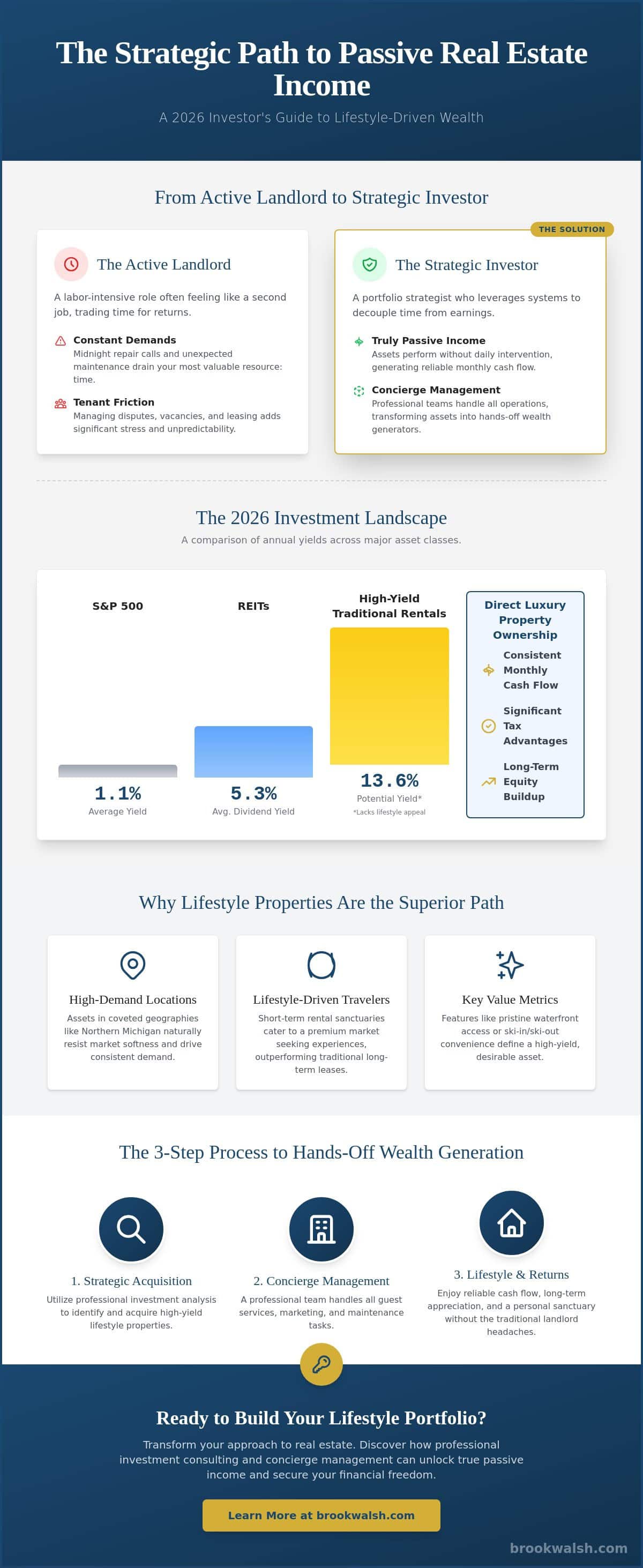
As of February 2026, the contrast between asset classes is stark. While the S&P 500 offers a modest average yield of 1.1%, Real Estate Investment Trusts (REITs) provide a more robust 5.3% dividend yield. Physical property offers a unique trifecta of benefits:
- Consistent monthly cash flow that acts as a reliable revenue stream.
- Significant tax advantages and depreciation benefits that protect your wealth.
- Long-term equity buildup through market appreciation in coveted geographies.
In an increasingly digital and volatile world, a tangible asset serves as a physical sanctuary. It provides a level of security that paper assets cannot match, especially when those assets are situated in high-demand, pristine locations that naturally resist market softness. Real estate is not just a transaction; it's the acquisition of a lifestyle that continues to appreciate over time.
Comparing Passive Real Estate Investment Vehicles
Choosing the right vehicle for your capital is a matter of aligning financial objectives with your desired level of involvement. While some investors prefer the simplicity of a ticker symbol, others seek the tangible security of a physical sanctuary. Analyzing various passive income real estate strategies reveals a spectrum of control and potential yield that dictates the longevity of your wealth. In 2026, the distinction between fractional interest and direct ownership has never been more relevant for the discerning strategist.
The landscape of passive income from real estate investing offers diverse entry points, each with unique risk-adjusted returns. High-yield rental markets like Birmingham or Indianapolis might offer yields up to 13.6%, yet these often lack the lifestyle appeal and long-term prestige of luxury markets. Balancing immediate cash flow with the emotional and aesthetic value of an asset is the hallmark of a sophisticated portfolio.
REITs and Crowdfunding: The Hands-Off Approach
Real Estate Investment Trusts (REITs) remain a popular gateway, offering an average dividend yield of 5.3% as of February 2026. They provide liquidity that direct ownership cannot match; you can exit a position with a few clicks. However, this accessibility comes with trade-offs. You surrender all decision-making power to a corporate board, and your investment is subject to the volatility of the broader equity markets. Crowdfunding and syndications offer a middle ground through fractional interest, but these models often lack the robust tax depreciation benefits available to sole owners. You own a share of a spreadsheet, not the keys to a pristine waterfront retreat.
Direct Ownership With Professional Management
The most successful investors often gravitate toward a hybrid model. This involves holding the direct title to luxury lifestyle homes for sale while delegating every operational detail to seasoned experts. It's a strategy that transforms a potentially demanding property into a truly passive asset. You retain 100% of the long-term capital appreciation and the unique tax advantages of physical real estate on your own balance sheet.
With housing inventory in early 2026 approximately 20% higher than the previous year, the opportunity to select an unparalleled asset is significant. New federal reporting rules effective March 1, 2026, now require disclosure for non-financed transactions involving LLCs, adding a layer of transparency to the market. Despite these regulations, direct ownership remains the premier path for those who value exclusivity and control. If you're ready to see how a specific property can anchor your wealth, a professional investment property analysis can provide the clarity needed to move forward with confidence. This approach ensures your investment remains a source of steady growth and a private sanctuary for your legacy.
The Luxury Vacation Rental: A Superior Path to Passive Yield
The traditional residential market is currently experiencing a period of significant recalibration. As of April 2026, the national median rent fell to $1,370, marking a 1.7% year-over-year decline. This softness in the long-term sector suggests that standard leasing may no longer be the most efficient strategy for those seeking to maximize passive income from real estate investing. While the general market faces a 7.3% vacancy rate, the luxury short-term rental market continues to thrive by offering something far more valuable than a roof: a curated experience.
Positioning your property as a premier destination rather than a mere rental unit is the key to resilience. Investors are increasingly moving away from expensive coastal hubs and toward mid-sized cities and resort enclaves that offer a unique sense of place. A waterfront lifestyle home or a mountain retreat serves as a sanctuary for guests who are willing to pay a premium for exclusivity and natural beauty. This shift in traveler behavior creates an opportunity to capture higher margins that traditional annual leases simply cannot match.
The Short-Term Rental Advantage
Luxury waterfront and resort properties command premium pricing because they cater to the emotional and aesthetic desires of high-net-worth travelers. Exquisite finishes, pristine locations, and proximity to world-class recreation allow these assets to maintain high nightly rates even when the broader market fluctuates. Lifestyle amenities like private beach access or professional-grade kitchens drive higher occupancy rates by transforming a simple stay into a lifetime memory. Additionally, direct ownership allows you the flexibility of personal use, ensuring your investment serves as both a financial engine and a private family retreat when it's not generating revenue.
Mitigating the Active Management Burden
The primary concern for many investors is that short-term rentals require too much effort to be truly passive. This is where professional short-term rental management becomes indispensable. By delegating the guest experience to experts, you ensure 24/7 support and professional housekeeping without ever taking a phone call. Sophisticated dynamic pricing algorithms maximize your revenue by adjusting rates in real-time based on local demand and seasonal trends. Regular, routine inspections keep the asset in pristine condition, protecting your long-term capital appreciation while you enjoy the steady flow of monthly cash flow. If you're exploring resort lifestyle homes for sale, remember that the quality of management is just as critical as the quality of the view.
Strategic Acquisition: Evaluating Lifestyle Properties for Passive Returns
Standard financial models often overlook the lifestyle premium that high-end assets command. While a basic apartment might yield a 7.3% vacancy rate nationally, a pristine waterfront retreat in a coveted geography operates on a different plane of demand. Building a portfolio for passive income from real estate investing requires you to look beyond the cap rate and toward the long-term desirability of the environment itself. It's a psychological shift from merely owning land to curating a high-performing lifestyle asset.
A thorough investment property analysis is the first step in this journey. This process involves calculating the net operating income after accounting for professional management and the 6.51% mortgage rates typical for investment properties in May 2026. Professional investment consulting can bridge the gap between a standard purchase and a strategic acquisition, ensuring you understand the lifecycle of the asset from its initial acquisition to its eventual role as a cornerstone of your legacy.
Data-Driven ROI Projections for 2026
Net operating income is the lifeblood of your strategy. In 2026, professional marketing has become a non-negotiable factor in property valuation. Listings that utilize high-quality digital assets and comply with the new 2026 digital photo disclosure regulations attract a more discerning clientele. This level of presentation ensures that your asset stands out in a market where inventory has increased by 20% over the last year. By engaging in detailed investment property analysis, you can project returns that account for these evolving market dynamics and the 35-day average time to lease.
The Importance of Lifestyle Amenities
Lifestyle amenities act as an insurance policy against market volatility. Properties such as golf course community homes and luxury waterfront homes attract premium tenants who prioritize recreation and wellness. Proximity to world-class recreation ensures that demand remains high even when traditional rental markets soften. Discerning investors now utilize search-by-lifestyle tools to filter for these high-demand niches. These tools allow you to identify sanctuaries that serve as both financial engines and personal retreats. This strategic approach ensures that your pursuit of passive income from real estate investing remains grounded in data while reaching for the extraordinary. If you're ready to identify your next high-performing asset, explore our luxury lifestyle homes for sale to begin your acquisition journey.
Cultivating Your Portfolio With Professional Investment Consulting
Achieving consistent passive income from real estate investing requires more than a simple transaction. It demands a partnership with a guide who understands that a high-performing asset is also a reflection of your personal standards. While standard agents often focus on the close of a sale, a specialized investment consultant looks toward the horizon of your financial legacy. This comprehensive approach ensures that every step, from the initial analysis to the ongoing short-term rental management, is executed with the precision that a luxury portfolio deserves.
The transition from property owner to portfolio strategist is the final hurdle in securing true financial freedom. By aligning your capital with the unique character of Northern Michigan, you create more than a financial engine; you build a legacy of discernment. Success in this market isn't found by following the crowd but by identifying the rare opportunities that offer both aesthetic beauty and robust financial performance. It's about finding your specific sanctuary within a competitive market.
The Role of Expert Investment Consulting
Data-driven analysis is the silent engine behind every successful acquisition. Expert consultants identify high-yield opportunities before they hit the mass market, giving you a distinct advantage in a landscape where inventory has grown by 20% over the last year. Working with a firm that deeply understands the Northern Michigan Lifestyle allows you to tailor your portfolio to match specific financial and aesthetic goals. Whether you're seeking condominium lifestyle homes for sale or expansive waterfront estates, professional guidance ensures your choices are grounded in market reality and personal vision. This level of investing in Northern Michigan real estate transforms a simple purchase into a strategic move for long-term wealth.
Long-Term Asset Appreciation and Resale
A truly passive income stream must grow alongside market trends to remain viable. Professional maintenance and concierge-level management are not just about the guest experience; they're essential for preserving future resale value. As market conditions evolve, such as the new federal reporting rules effective March 1, 2026, having a trusted advisor ensures your portfolio remains compliant and optimized. Diversifying across different property types, from ski-in/ski-out retreats to golf course havens, protects your capital from seasonal fluctuations.
The journey toward a managed real estate sanctuary begins with a single, informed decision. By utilizing search-by-lifestyle tools and professional consulting, you can secure your place in one of the country's most resilient markets. Your pursuit of passive income from real estate investing deserves a guide who shares your appreciation for the finer details of life. Contact us today to begin curating a portfolio that reflects your success and secures your future.
Secure Your Legacy Through Managed Lifestyle Assets
The shift toward lifestyle-driven assets is a strategic necessity in a 2026 market where national rental vacancy rates have reached 7.3%. You've seen how direct ownership of a pristine sanctuary, paired with professional management, creates a far more resilient income stream than traditional residential leases or volatile equity markets. True passive income from real estate investing is the result of meticulous acquisition and the delegation of operational friction to trusted experts. By leveraging our data-driven lifestyle search platform and deep expertise in luxury waterfront and resort properties, you can identify high-yield opportunities that others overlook. Our comprehensive vacation rental management services ensure your asset remains in its finest state while delivering consistent results. Explore our exclusive investment property analysis and consulting services to begin your journey toward a more sophisticated portfolio. Your path to a curated financial future starts with a single, intentional step toward the lifestyle you deserve.
Frequently Asked Questions
How much capital do I need to start passive real estate investing?
The capital required depends on your chosen vehicle, ranging from a few hundred dollars for REITs to a 20% or 25% down payment for a direct purchase. In May 2026, the national average mortgage rates for investment properties are approximately 6.51%. This means a sophisticated investor should prepare for higher entry costs to secure the most desirable lifestyle assets in competitive markets.
Is real estate investing truly passive if I own the property directly?
Direct ownership becomes a source of passive income from real estate investing when you engage a professional short-term rental management firm. These experts handle everything from guest communication to maintenance, removing the owner from daily operations. This model allows you to retain the long-term appreciation of a physical sanctuary without the traditional burdens of being a landlord.
What are the best types of properties for passive income in 2026?
Lifestyle-driven properties like ski-in/ski-out condominiums and luxury waterfront homes are currently outperforming standard residential units. While the national rental vacancy rate is 7.3%, these exclusive assets maintain high demand due to their proximity to world-class recreation. Focusing on properties that serve as a retreat ensures your portfolio remains resilient against broader market softness.
How do I choose a professional property management company?
Prioritize firms that offer concierge-level service and have a deep-rooted expertise in the local market. A quality manager should utilize dynamic pricing algorithms and professional marketing to maximize their yield. They must also provide routine inspections to keep your asset in pristine condition, ensuring it remains a high-value sanctuary for years to come.
What are the tax benefits of passive real estate investing?
Investors benefit from significant deductions, including mortgage interest, property taxes, and depreciation, which can often offset the income generated. Direct ownership allows you to keep these benefits on your personal balance sheet, unlike many fractional models. These advantages make real estate a premier vehicle for wealth preservation in the current economic climate.
Can I use my passive investment property for personal vacations?
Yes, one of the primary advantages of direct ownership in resort markets is the ability to reserve time for personal use. This flexibility allows your asset to function as both a financial engine and a private family retreat. It's a key reason why many strategists prefer lifestyle-driven properties over anonymous commercial or residential units.
What is the difference between a REIT and direct ownership with management?
REITs offer liquidity and an average dividend yield of 5.3%, but they lack the control and personalized tax benefits of physical property. Direct ownership provides a tangible sanctuary and 100% of the long-term equity buildup. While REITs are simpler to buy, direct ownership offers the unique emotional and aesthetic value of the Northern Michigan experience.
How does professional management affect my overall ROI?
Professional management often increases your net return by achieving higher occupancy rates and premium nightly pricing. Experts use data-driven analysis to adjust rates in real-time, often offsetting their own fees through increased revenue. This ensures your pursuit of passive income from real estate investing remains efficient while protecting the asset's future resale value.
Posted by Brook Walsh onEnjoy this blog post? Click here to subscribe for updates
Leave A Comment