
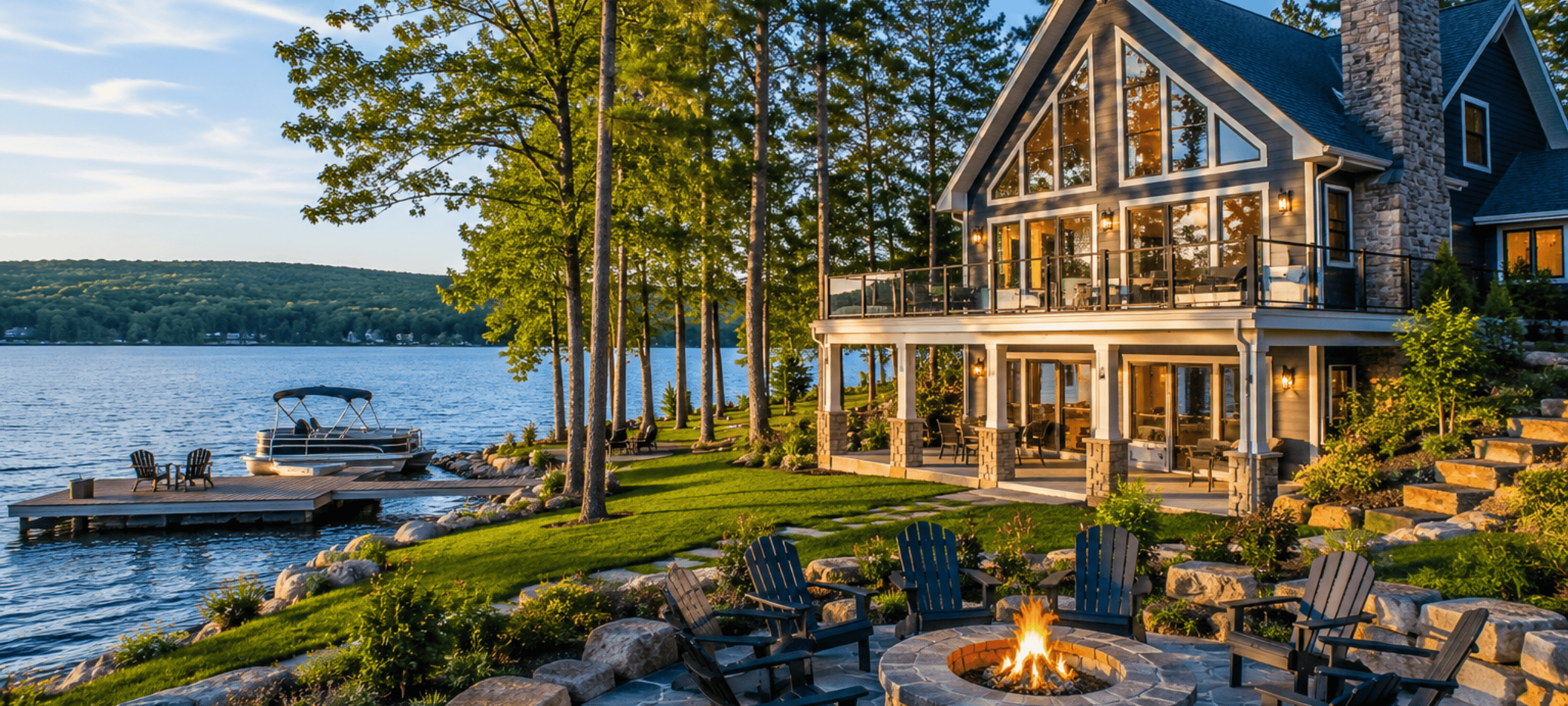
Could a single overlooked township ordinance quietly dismantle the ROI of your prestigious waterfront escape in Petoskey or Charlevoix? For the discerning investor, the allure of Northern Michigan is undeniable, yet the evolving legal requirements for short-term rentals can feel like a shifting shoreline. You've likely felt the tension between the desire for a high-yield asset and the anxiety of navigating a patchwork of local caps, such as the 80-unit limit in the City of Charlevoix. It's a complex environment where a simple oversight in a permit application or a misunderstanding of the 6% statewide Use Tax can lead to significant administrative fees. We understand that your property is more than a transaction; it's a curated experience that requires protection from bureaucratic friction.
We're here to offer the clarity you deserve, transforming regulatory hurdles into a calculated competitive advantage. This guide provides a sophisticated roadmap for maintaining compliance across Grand Traverse, Emmet, and Charlevoix counties while maximizing your property's potential as an emotional and financial haven. You'll gain expert insights into specific county ordinances, current state-level tax obligations, and the strategic value of professional management in preserving your investment's longevity. We'll explore the granular details of zoning and the essential steps to secure your standing in the region's most coveted communities.
Key Takeaways
- Master the nuanced distinctions between 'Use by Right' and 'Special Use Permits' to ensure your property aligns with specific waterfront or downtown zoning.
- Navigate the evolving legal requirements for short-term rentals by securing necessary local licenses and adhering to the 2026 Michigan property law standards.
- Protect your investment and guests by implementing mandatory fire safety protocols and specialized insurance coverage tailored for high-end vacation rentals in Emmet or Grand Traverse counties.
- Simplify the complexities of the 6% Michigan Use Tax and local assessments to maintain financial transparency and avoid administrative penalties.
- Discover how professional short-term rental management serves as a critical safeguard against bureaucratic complexity while elevating your property as a premier regional escape.
The Evolving Landscape of Short-Term Rental Regulations in Northern Michigan
The shores of Lake Michigan and the rolling hills of Grand Traverse County have long been a sanctuary for those seeking a refined escape. However, the prestige of owning a luxury waterfront home now comes with the responsibility of understanding The Evolving Landscape of Short-Term Rental Regulations. In 2026, Michigan property law has matured to recognize short-term rentals as a distinct commercial use of residential property, driven largely by the staggering $54 billion in tourism spending recorded across the state in 2025. This economic surge has prompted townships from Harbor Springs to Traverse City to implement more structured oversight. The goal is to ensure that the vibrant tourism economy doesn't compromise the quiet elegance and community character that make these regions so coveted.
To better understand how these legislative shifts might affect your property, watch this helpful video:
Managing these assets requires a sophisticated approach to legal requirements for short-term rentals. Local municipalities are no longer viewing these properties as mere hobbyist endeavors but as professional hospitality operations. Brook Walsh Real Estate remains a vigilant partner in this space, monitoring every legislative pulse in Lansing and every township meeting in Charlevoix to ensure your investment remains both compliant and prestigious. This proactive oversight allows owners to focus on the aesthetic and emotional value of their regional experience while we handle the granular details of regulatory shifts. We view your property not just as a physical structure, but as an essential emotional haven within this coveted geography.
Understanding the 30-Day Threshold
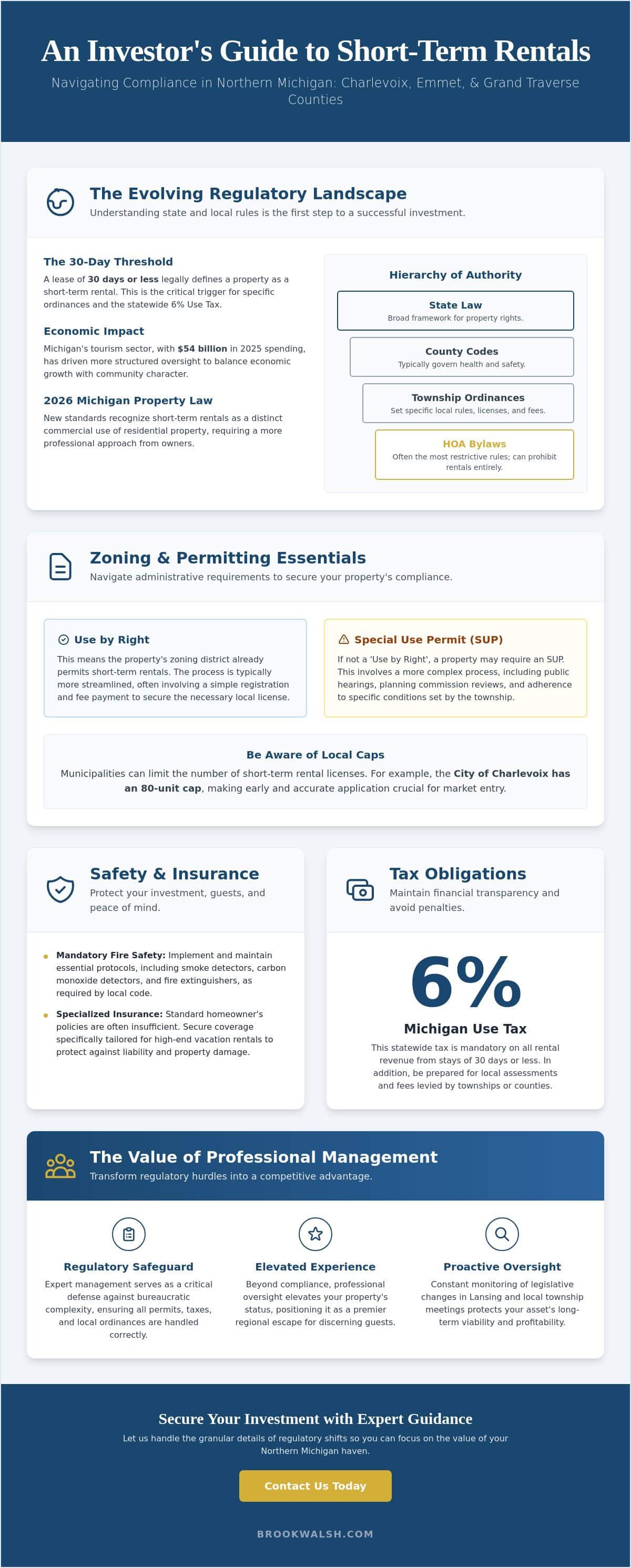
The legal distinction between a transient guest and a long-term tenant hinges on the 30-day threshold. If a lease is for 30 days or less, it falls under the specific legal requirements for short-term rentals, triggering the mandatory 6% statewide Use Tax. This duration isn't just a matter of paperwork; it's the pivot point for most local ordinances. Staying under this limit can also impact your primary residence tax exemption if the property isn't purely an investment asset. It's a delicate balance that defines how both the state and the local assessor perceive your property.
State vs. Local Control: Who Makes the Rules?
While the Michigan Legislature provides a broad framework for property owner rights, the concept of Home Rule grants individual townships the authority to set much stricter standards. This creates a hierarchy of authority where a property in Emmet County must satisfy state laws, county health codes, and township-specific licensing fees. Beyond the government, Homeowners Associations (HOAs) often hold the final word. Many luxury communities in Northern Michigan have bylaws that are more restrictive than municipal codes; these rules rarely permit the grandfathering of existing rentals when new limitations are adopted. Investing in Northern Michigan real estate requires a deep understanding of these overlapping circles of authority to ensure long-term ROI.
Navigating Zoning and Permitting in Charlevoix and Emmet Counties
Securing a piece of the Northern Michigan shoreline is a dream for many, but the path to a profitable investment is paved with administrative precision. In Charlevoix and Emmet counties, the first step is identifying whether your property falls under a 'Use by Right' or requires a 'Special Use Permit.' Use by Right means the zoning district already permits transient lodging, allowing for a smoother path to operation. Conversely, a Special Use Permit involves a more public and rigorous review process; neighbors and planning commissions evaluate the potential impact on the community's character. This distinction is especially sharp when comparing waterfront districts, which often prioritize tranquil residential life, against downtown corridors where higher density is expected. Navigating Zoning and Permitting in Charlevoix requires an intimate knowledge of these boundaries, as even a single street can separate a lucrative opportunity from a regulatory dead end. Before finalizing any purchase, investors must research a parcel's zoning history, looking for previous variances or specific density designations that could limit future operations.
Township-Specific Ordinances: A Granular View
In high-demand enclaves like Petoskey and Harbor Springs, the legal requirements for short-term rentals are increasingly defined by local capacity. For instance, Emmet County municipalities often limit occupancy to two persons per bedroom plus an additional two guests. In more rural stretches of Charlevoix County, the limiting factor isn't just a number on a page, but the physical capacity of the property's septic system. Charlevoix Township strictly enforces an occupancy limit of two adults per bedroom to protect the local environment. Meanwhile, Grand Traverse County has intensified its focus on noise and parking enforcement, ensuring that short-term visitors don't disrupt the steady rhythm of year-round neighborhoods.
The Application Process: From Submission to Approval
The journey from property acquisition to the first guest check-in involves a meticulous application process. You'll need to provide comprehensive documentation, including detailed site plans, floor plans, and clear proof of ownership. In the City of Charlevoix, the annual license fee is $300.00, with additional registration fees that vary based on whether an inspection is required. These annual renewal cycles mean your property must remain in peak condition and compliant with all local standards. A critical, though often overlooked, component is the 'Good Neighbor' policy. Demonstrating a commitment to the community's well-being can significantly smooth the approval process. If you're looking to identify properties with the best regulatory outlook, performing a comprehensive investment property analysis can provide the data-driven confidence you need to move forward.
The application process is a testament to the professionalization of the industry. It demands more than just a listing; it requires a portfolio of safety certifications and local contact information. In the City of Charlevoix, failing to maintain these standards can result in a $100.00 violation administration fee. When the local cap of 80 business rentals is reached, a $50.00 deposit is required just to join the waiting list. These figures underscore the importance of getting it right the first time, ensuring your investment is protected from the start.
Essential Safety Standards and Operational Requirements
The distinction between a private residence and a high-end vacation rental is most visible in the meticulous safety protocols required by local law. While zoning secures your property's placement, satisfying the legal requirements for short-term rentals ensures its continued operation. In Charlevoix Township, for instance, owners must designate a local contact available 24/7 who can respond to issues within 30 minutes. This isn't merely a suggestion; it's a vital operational standard that ensures the peace of the neighborhood is never compromised. Similarly, municipalities like Harbor Springs and Petoskey enforce strict occupancy limits, typically capped at two persons per bedroom plus an additional two guests. Adhering to these rules prevents the disruption often associated with high-density transient stays and maintains the quiet confidence of the local community.
Health and Safety Inspections
Inspectors in Northern Michigan pay close attention to the structural integrity of luxury waterfront properties. Beyond the standard smoke detectors and fire extinguishers, egress routes must be clearly defined and unobstructed. For those with waterfront lifestyle homes for sale, safety extends to the shoreline. Docks and boat lifts must meet specific liability standards to ensure guest safety during Michigan's vibrant summer months. Professional management plays a decisive role here, maintaining an 'inspection-ready' status through regular audits and proactive maintenance of architectural details. Ensuring your property remains a coveted haven for guests requires a commitment to safety that mirrors the quality of the home itself.
Liability and Specialized STR Insurance
A common pitfall for new investors is relying on standard homeowners insurance. These policies almost always exclude commercial activity, leaving you vulnerable to property damage or guest injury claims. According to the Michigan Short-Term Rental Association, local governments increasingly require proof of specialized insurance before issuing a license. A standard policy isn't enough. It won't cover guest slips. It won't cover intentional damage. Understanding the legal requirements for short-term rentals regarding liability is essential for protecting the emotional and financial value of your asset. Brook Walsh Real Estate assists clients in identifying coverage that aligns with the unique risks of the luxury market, ensuring your investment remains protected against the unforeseen while maintaining its prestige.
Tax Obligations for Northern Michigan Vacation Rentals
The financial rewards of a high-performing property are significant, but they come with a set of fiscal responsibilities that are unique to the Great Lakes State. While previous sections detailed the physical and operational safety standards, the economic and legal requirements for short-term rentals are equally critical for maintaining a prestigious investment. Every property rented for 30 days or less in Michigan is subject to a 6% statewide Use Tax. This tax is a fundamental pillar of the state's revenue from the $54 billion tourism industry recorded in 2025. Failing to remit it accurately can lead to costly audits and penalties. For the sophisticated owner, maintaining a clear ledger isn't just about compliance. It's about preserving the integrity of your financial haven.
The 14-Day Rule and Federal Tax Implications
The IRS maintains a specific distinction for properties that blend personal escape with commercial enterprise. If you use your waterfront retreat for more than 14 days a year, or 10% of the days it is rented, it is classified as a residence rather than a business for certain deduction purposes. However, the 14-day rule also offers a unique opportunity; if you rent your home for fewer than 15 days in a calendar year, you don't have to report that income at all. For high-volume luxury rentals, the focus shifts toward maximizing deductible expenses. Management fees, professional photography, and specialized maintenance for condominium lifestyle homes for sale or waterfront estates are often fully deductible when the property is managed as a professional asset. Consulting with a tax expert who understands the nuances of the Northern Michigan market ensures your asset remains as efficient as it is beautiful.
Local Lodging Taxes in Petoskey and Charlevoix
Beyond state-level obligations, regional assessments fund the very marketing that keeps your occupancy rates high. In Emmet and Charlevoix counties, local Convention and Visitors Bureau (CVB) assessments often apply to transient lodging. These funds are reinvested into local infrastructure and regional promotion, ensuring the area's natural beauty remains a global draw. While major booking platforms often automate the collection of the 6% Use Tax, the responsibility for local excise taxes and CVB assessments frequently falls upon the owner. This requires a rhythmic and precise approach to record-keeping. Whether your property is in the heart of downtown Petoskey or on the quiet shores of Lake Charlevoix, staying ahead of these local levies is essential. To ensure your financial strategy is as robust as your property's aesthetic appeal, we invite you to explore our investment property analysis services for a comprehensive view of your potential returns.
Securing Your Investment with Expert Property Management
The transition from a passive property owner to a successful hospitality investor requires more than just an aesthetic eye. It demands a rigorous commitment to the administrative details that define the luxury market in Northern Michigan. As local townships increase their oversight, professional short-term rental management becomes the ultimate safeguard for your capital. We don't just oversee guest check-ins. We act as a bridge between your vision of a serene escape and the meticulous legal requirements for short-term rentals that govern our region. By professionalizing every facet of the operation, we transform a potential bureaucratic burden into a seamless, high-yield asset.
Expert management ensures that your property is positioned as a premier, fully compliant destination. In a market where a single violation can lead to a public nuisance declaration, the stakes are remarkably high. Brook Walsh Real Estate utilizes data-driven investment property analysis to ensure your ROI remains robust even as regulations shift. We monitor the granular details of local ordinances in Grand Traverse and Emmet counties, allowing you to enjoy the emotional and aesthetic value of your property without the friction of municipal paperwork. This steady, expert hand provides the quiet confidence required to navigate the complexities of the 2026 landscape.
The Brook Walsh Advantage: Local Dominance and Expertise
Our presence in Northern Michigan is rooted in a deep appreciation for the region's natural beauty and a sophisticated understanding of its political climate. We leverage this local dominance to represent your interests before township boards and planning commissions. From the initial purchase of luxury lifestyle homes for sale to the daily oversight of guest relations, our approach is comprehensive. We ensure your property remains an essential emotional haven for every guest, maintaining the purity of the experience while strictly adhering to the legal requirements for short-term rentals. Our team handles the bureaucracy, so your home remains a source of prestige rather than a source of stress.
Next Steps for Prospective and Current Owners
The first step toward securing your investment's future is a thorough regulatory audit of your current holdings. Whether you own a waterfront estate in Charlevoix or a ski-in/ski-out retreat, understanding your standing within local 'STR-friendly' zones is paramount. We invite you to explore our search by lifestyle options to identify areas with the most favorable regulatory outlooks for 2026 and beyond. For a more personalized approach, we offer private consultations to review your investment portfolio and develop a bespoke compliance strategy. Let us help you navigate the complex landscape of Northern Michigan vacation rentals with the precision and grace your investment deserves.
Securing Your Future in the Northern Michigan Luxury Market
The 2026 landscape of Northern Michigan property ownership is defined by a shift toward professionalization and precision. By mastering the legal requirements for short-term rentals, you aren't just following rules; you're insulating your asset from risk and ensuring its longevity as a premier regional escape. From the occupancy caps in the City of Charlevoix to the specific tax obligations across Grand Traverse, every detail serves as a foundation for your success. Our deep-rooted expertise in Emmet and Charlevoix counties allows us to bridge the gap between high-end property acquisition and seamless operational compliance. We specialize in lifestyle-driven luxury searches and comprehensive investment consulting, ensuring your property remains a source of pride and profit. Your journey toward a sophisticated portfolio begins with a partner who understands the profound connection between a person and their environment. We invite you to explore high-yield investment opportunities in Northern Michigan and discover the difference that expert guidance makes. The beauty of the North is waiting, and with the right strategy, your investment will thrive for years to come.
Frequently Asked Questions
Do I need a business license to run a short-term rental in Michigan?
You must obtain a specific license from your local township or city rather than a single statewide business permit. While Michigan doesn't have a centralized license for all hosts, authorities like the City of Charlevoix require an annual license and registration to operate. Failing to secure these local permits means you aren't meeting the legal requirements for short-term rentals, which can lead to immediate enforcement actions or the loss of your ability to host.
Can my HOA ban short-term rentals even if the township allows them?
Homeowners Associations possess the authority to prohibit short-term rentals even if local zoning permits them. HOA bylaws are private contracts that often hold more weight in restrictive covenants than municipal ordinances. If your association votes to ban transient lodging, they rarely permit the grandfathering of existing operations. It's essential to review all neighborhood-specific documents before finalizing a luxury property purchase in Emmet or Grand Traverse counties.
What are the penalties for operating an unregistered STR in Charlevoix?
Operating an unregistered rental in the City of Charlevoix results in a $100.00 violation administration fee per occurrence. Beyond monetary fines, the township may declare the unauthorized operation a public nuisance, potentially leading to a permanent injunction against future rentals. This enforcement ensures that the limited 80 business rental licenses available in residential zones are held by compliant, professional operators who value the community's character and aesthetic standards.
Do I have to pay Michigan Use Tax if I only rent my home for two weeks?
You are required to pay the 6% Michigan Use Tax even for a rental duration of only two weeks. While the federal 14-day rule allows you to exclude rental income from your federal tax return, Michigan law mandates the collection and remittance of Use Tax for any stay of 30 days or less. This distinction is a critical component of the legal requirements for short-term rentals that investors must track to maintain financial transparency.
Is a fire inspection required for every vacation rental in Emmet County?
Mandatory safety standards, including fire inspections, are required for vacation rentals throughout most Emmet County municipalities. Local inspectors verify the presence of functional smoke detectors, fire extinguishers, and clearly defined egress points in every sleeping area. These inspections protect the physical integrity of your waterfront home and ensure the safety of every guest, reinforcing the professional standard expected of high-end properties in Harbor Springs and Petoskey.
How many guests can I legally host in a 4-bedroom waterfront home?
In Charlevoix Township, a four-bedroom home is legally limited to eight adult guests based on the strict two-adults-per-bedroom rule. In other parts of Emmet County, the limit may expand to ten guests, following the common formula of two persons per bedroom plus an additional two guests. These limits are strictly enforced to manage septic capacity and neighborhood density, ensuring your property remains a steady, peaceful haven for the surrounding community.
What is the difference between a hosted and unhosted rental in 2026?
A hosted rental involves the owner remaining on-site during the guest's stay, while an unhosted rental grants the guest exclusive access to the entire property. In 2026, many Northern Michigan townships distinguish between these by classifying unhosted stays as business rentals, which are subject to caps and more rigorous licensing. Hosted stays are often treated as home occupations, though they still require adherence to local safety and tax regulations to remain compliant.
Can I lose my Principal Residence Exemption if I rent my home on Airbnb?
You may lose a portion of your Principal Residence Exemption if you rent your home for more than 14 days annually. The Michigan Department of Treasury considers the percentage of the year the home is used for business purposes when determining your tax status. If the rental activity is substantial, your property may be partially reclassified, significantly impacting your property tax obligations and the overall financial performance of your Northern Michigan estate.
Posted by Brook Walsh onEnjoy this blog post? Click here to subscribe for updates
Leave A Comment