
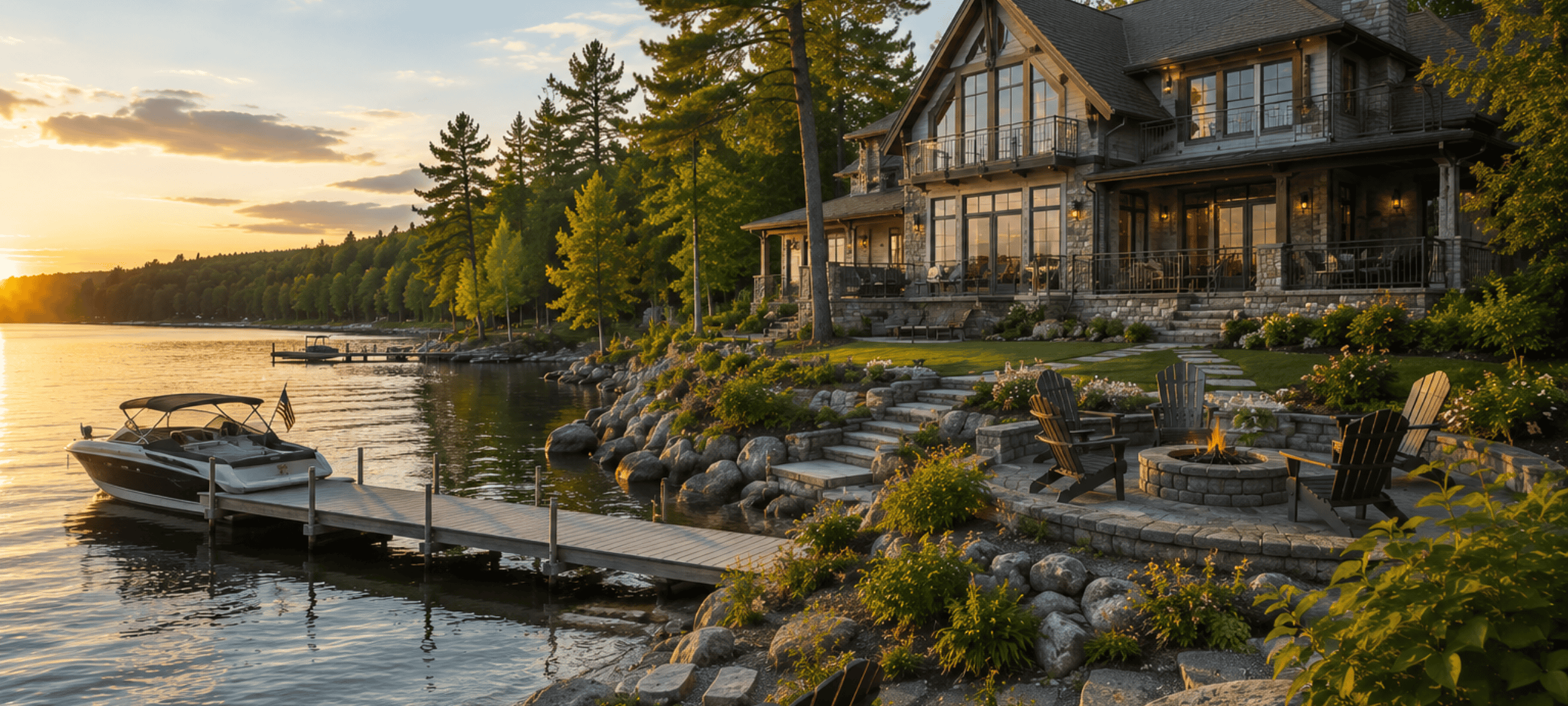
The most breathtaking sunset over Lake Michigan can quickly lose its luster if the ground beneath your feet is slowly receding into the waves. While the aesthetic appeal of a waterfront estate is undeniable, understanding what to look for when buying a lake house requires a lens that peers beyond the architectural beauty and into the complex reality of riparian rights. You seek more than just a property; you're looking for a sanctuary in Grand Traverse or Emmett County that serves as a permanent backdrop for your family's most cherished memories.
We understand that a luxury acquisition is as much about protecting your capital as it is about fulfilling a dream. This guide illuminates the critical nuances of Northern Michigan's shoreline, from the 18-mill tax implications for second homes to the stringent EGLE environmental regulations that govern your dock. By the end of this article, you'll have complete clarity on how to secure a property that offers both a serene retreat and a sound financial legacy. We will explore the vital checks for shoreline integrity, local zoning caps in places like Charlevoix, and the specific lake characteristics that dictate your boating lifestyle.
Key Takeaways
- Understand how shoreline orientation and water depth influence everything from your home's natural light to the specific vessels your dock can safely accommodate.
- Identify exactly what to look for when buying a lake house regarding EGLE regulations and the complexities of environmental permitting for shoreline modifications.
- Discover the nuances between the expansive "Big Water" experience of Lake Michigan and the serene, intimate character of Northern Michigan’s premier inland lakes.
- Evaluate the long-term investment potential and historical appreciation of luxury waterfront assets across the exclusive communities of Charlevoix, Emmett, and Grand Traverse counties.
- Master the strategic acquisition process by assembling a specialized team of local experts and conducting multi-phased site visits to ensure a seamless transition into your new lifestyle.
Evaluating the Shoreline and Water Dynamics
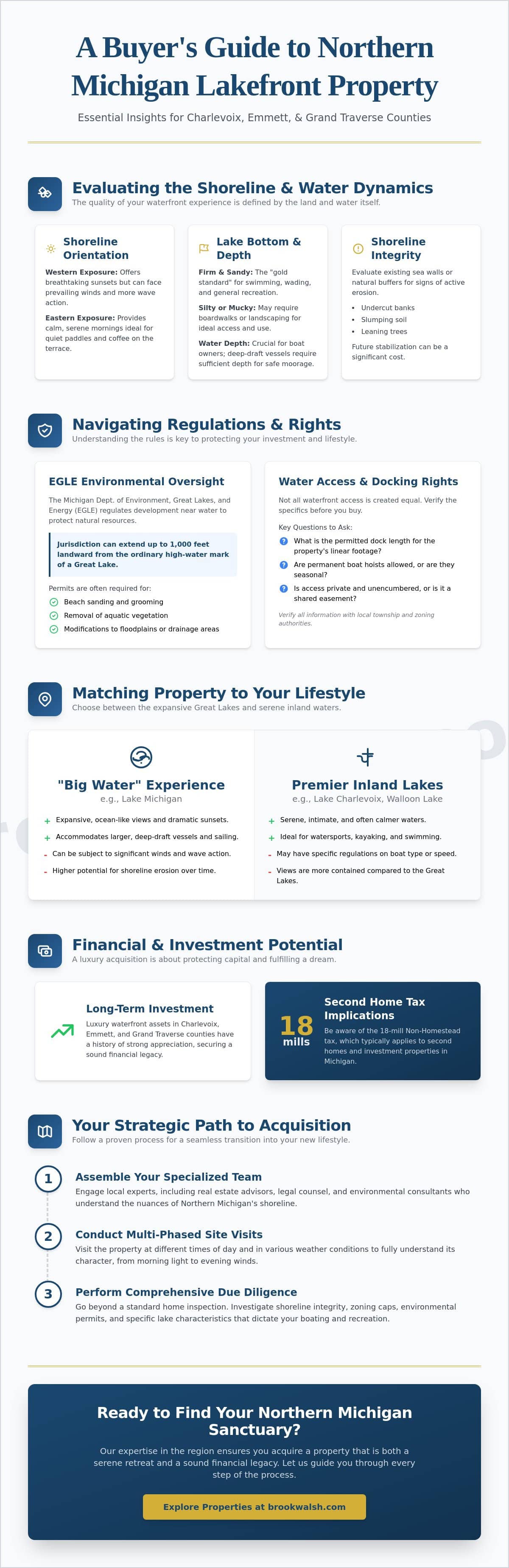
Acquiring a waterfront estate in Northern Michigan is an exercise in understanding the delicate interplay between land and liquid. When considering what to look for when buying a lake house, the physical structure is only half the equation. The orientation of your shoreline dictates your daily rhythm; a western exposure in Grand Traverse County offers those coveted, fiery sunsets but may subject your dock to prevailing winds. Conversely, an eastern-facing property in Emmett County provides calm, glass-like mornings perfect for a quiet paddle or a serene cup of coffee on the terrace.
Beyond the view, the composition of the lake bottom transforms the utility of your frontage. A firm, sandy bottom is the gold standard for swimming and wading, while a silty or mucky floor may require boardwalks or specific landscaping to remain functional. Water depth is equally critical. Owners of deep-draft vessels must ensure the bathymetry allows for safe approach and moorage, especially as seasonal fluctuations in the Great Lakes can shift property boundaries and expose or submerge critical infrastructure. These dynamics are often overlooked by those focused solely on the home's interior, yet they define the long-term enjoyment of the site.
To better understand the specific variables that define a high-quality waterfront investment, watch this detailed overview:
Shoreline Integrity and Erosion Control
The stability of your investment relies on the strength of its boundary. You must evaluate the current state of sea walls or natural buffers, looking for signs of active erosion like undercut banks, slumping soil, or leaning trees. In counties like Charlevoix, where the water's energy can be significant during storm cycles, the cost and feasibility of future shoreline stabilization can be a substantial carrying cost. Understanding your littoral rights is essential here, as it defines your legal authority to protect and use the land that meets the water while ensuring you remain compliant with state environmental standards.
Water Access and Docking Rights
Not all frontage is created equal when it comes to infrastructure. Determining what to look for when buying a lake house often begins with the legalities of the water's edge. You'll need to verify the specific length of the dock permitted for your linear footage and whether the local township allows for permanent boat hoists or requires seasonal removals. There is a profound difference between owning private, unencumbered access and navigating the shared easements found in some community developments. For those seeking the ultimate in autonomy, exploring waterfront lifestyle homes for sale ensures you find a property where your docking rights align with your maritime ambitions.
Navigating Northern Michigan Regulatory and Environmental Due Diligence
The allure of a pristine shoreline often masks a complex web of environmental oversight. Understanding what to look for when buying a lake house involves mastering the regulatory climate as much as the view. In Northern Michigan, the Michigan Department of Environment, Great Lakes, and Energy (EGLE) serves as the primary sentinel for our regional waters. Their jurisdiction is expansive; they regulate construction and development in designated environmental areas that can extend up to 1,000 feet landward from the ordinary high-water mark of a Great Lake. If your dream home sits on the coast of Grand Traverse or Charlevoix, your ability to modify the landscape is governed by these strict state mandates.
This oversight means that seemingly simple improvements, such as beach sanding or the removal of aquatic vegetation, require rigorous permitting processes. If your vision for a property in Emmett County involves altering the 100-year floodplain of a nearby stream, you'll need specific approval for any drainage area larger than two square miles. Local township setbacks also play a pivotal role, often dictating the footprint of any potential expansion or renovation. You might find a charming cottage that cannot be enlarged because it sits too close to a protected wetland, which EGLE monitors if it's within 500 feet of an inland lake or pond. Before committing to a purchase, it's wise to consult with a professional who can provide a detailed investment property analysis to ensure your development plans are legally viable.
Understanding Riparian Rights
In the context of Northern Michigan law, riparian rights grant property owners specific privileges, such as the right to access navigable water and the right to wharf out. Unlike other regions, your property lines may technically extend into the water, yet this ownership is limited by the public trust doctrine. You cannot build permanent structures like boathouses over the water without navigating a labyrinth of state and local approvals. It's a nuanced area of law where expert guidance is non-negotiable. Knowing what to look for when buying a lake house means verifying that these rights haven't been severed or limited by previous owners.
Environmental Impact and Conservation Easements
The value of a luxury waterfront asset is inextricably linked to the health of its watershed. You should investigate whether a property is subject to existing conservation easements, which protect the natural landscape but may permanently restrict future development. A comprehensive due diligence process should also analyze the presence of invasive species like zebra mussels or Eurasian milfoil, as these biological factors can affect everything from water clarity to long-term appreciation. For a broader perspective on the journey, you can review Everything to Know Before Diving In to see how these local regulations fit into the larger acquisition process.
Matching the Property to Your Northern Michigan Lifestyle
Selecting a waterfront residence is an exercise in matching your daily rhythm to the water’s specific character. What to look for when buying a lake house often begins with a fundamental choice: the expansive, oceanic horizon of Lake Michigan or the intimate, glass-like surfaces of our inland gems. Lake Michigan, frequently referred to as "Big Water," provides a dramatic backdrop of crashing waves and endless sunsets, yet it demands a deep respect for the elements often governed by Michigan EGLE shoreline regulations. These properties offer a sense of profound scale and solitude, while inland lakes like Walloon or Lake Charlevoix foster a different social energy, where the water is often calmer and more conducive to active water sports like wakeboarding or sailing.
Beyond the water type, you must evaluate the acoustic landscape and traffic patterns of your chosen cove. A property near a public launch in Grand Traverse County might experience a vibrant, high-energy atmosphere during peak summer weekends, while a secluded point in Emmett County offers a more contemplative silence. Proximity to regional hubs like Petoskey or Harbor Springs is another vital consideration. For many, the ideal retreat balances the privacy of a lakeside sanctuary with the convenience of world-class dining and cultural galleries just a short drive away. To refine your search based on these distinct regional characters, you may find it helpful to search by lifestyle, ensuring your property aligns with your personal definition of luxury.
The All-Season Lakeside Experience
A true Northern Michigan legacy home must perform flawlessly throughout the calendar year. When determining what to look for when buying a lake house, assessing the home’s winterization is paramount for those considering year-round residency. This includes evaluating the efficiency of heating systems and the reliability of snow removal services on private drives. Proximity to world-class skiing at Boyne Mountain or the meticulously groomed trails of local golf courses ensures that the transition from summer boating to winter recreation is seamless, keeping the property vibrant in every season.
Community and Social Fabric
The social environment of a lake is often defined by its history and the enclaves that line its shores. Established communities like Bay Harbor offer a structured, resort-like atmosphere with specific homeowners' association bylaws that maintain a high standard of aesthetic uniformity. In contrast, other areas may offer a more eclectic mix of seasonal vacationers and dedicated year-round neighbors. Understanding these nuances helps you find a community where the social fabric mirrors your own values, providing a sense of belonging that transcends the physical boundaries of the lot.
Financial Analysis and Investment Potential of Waterfront Assets
Acquiring a waterfront legacy in Northern Michigan is as much a financial strategy as it is a lifestyle choice. While the emotional pull of the shoreline is powerful, a sophisticated investor understands that these properties operate under a unique set of economic variables. When evaluating what to look for when buying a lake house, you must account for the non-homestead tax status. In Michigan, second homes don't qualify for the Principal Residence Exemption, which triggers an additional 18-mill tax for local schools. Coupled with an effective property tax rate of 1.25 percent and a 2026 inflation multiplier of 2.7 percent for taxable values, the carrying costs require precise calculation from the outset.
Financing these acquisitions also follows a distinct path. As of June 2026, interest rates for second homes typically range from 0.50 percent to 0.875 percent higher than primary residences. If your purchase exceeds the jumbo loan threshold of $832,750, your credit profile and down payment strategy become even more critical. Beyond the mortgage, you must factor in specialized insurance for seawalls and flood protection. High-moisture environments demand a more rigorous maintenance schedule, where the cost of preserving architectural integrity is a necessary reinvestment in the property’s long-term appreciation. To navigate these complexities with precision, it's essential to partner with an expert in investing in Northern Michigan real estate.
The Northern Michigan Rental Market
Short-term rental income serves as a potent hedge against the carrying costs of a luxury estate. However, the regulatory landscape is increasingly hyper-local. East Bay Township maintains a strict cap of 145 licenses, while the Village of Elk Rapids limits permits to just 25 per year. You'll also need to remit a 6 percent state Use Tax on all stays under 30 days. High-demand features like sunset views and professional-grade kitchens drive premium rates; however, success often hinges on professional management and ensuring septic system compliance to meet evolving township standards.
Resale Value and Market Liquidity
Liquidity varies significantly between different bodies of water. Certain inland lakes in Charlevoix and Emmett counties maintain higher resale velocity during market shifts due to their established prestige and limited inventory. What to look for when buying a lake house to ensure future liquidity includes "bulletproof" features like natural sandy frontage and proximity to regional hubs. You must also prepare for the uncapping of taxable value upon transfer, which adjusts the property tax base to the current assessed value. Thoughtful investment consulting helps transform a beautiful home into a high-performing component of your financial legacy.
Your Strategic Path to Acquiring the Perfect Lake House
The transition from aspiration to acquisition requires a disciplined, tactical approach that a standard residential purchase simply doesn't demand. When finalizing what to look for when buying a lake house, you must move beyond the aesthetic appeal of the Great Room to verify the invisible variables that dictate long-term value. This process begins by assembling a specialized team that understands the specific hydrology and legalities of Grand Traverse and Emmett counties. A generalist agent might miss the subtle signs of a failing seawall or the implications of a historical easement; a local waterfront expert and an environmental consultant are essential partners in protecting your capital.
Patience is your greatest asset during the due diligence phase. Conduct comprehensive site visits at various intervals of the day to truly understand the property's character. The serene morning light on a Charlevoix bay can shift into a high-energy, high-noise environment by mid-afternoon if the property sits near a popular recreational corridor. Reviewing title documents for hidden easements or historical usage rights is equally critical, as these can impact your privacy and littoral authority. Finally, ensure your inspection focuses heavily on the foundation’s interaction with the water table and the structural integrity of the dock, as these elements are the most vulnerable to Northern Michigan’s freeze-thaw cycles.
Selecting the Right Local Expertise
A generalist agent often lacks the depth required to navigate the labyrinth of riparian law and EGLE permitting. You deserve a broker who understands the specific nuances of Lake Charlevoix or Walloon Lake, from the prevailing wind patterns to the local township’s stance on short-term rental caps. Leveraging a professional waterfront lifestyle search allows you to filter options by the criteria that actually matter, such as water depth for specific hull types or sunset orientation. This level of specialization ensures you aren't just buying a house, but securing a specific regional experience that matches your lifestyle.
The Final Walkthrough and Due Diligence Checklist
Before the ink dries, your final walkthrough should be an exhaustive verification of the property's maritime infrastructure. Confirm the condition of all water-related mechanicals, including boat hoists and bubbler systems used for winter ice management. It's vital to ensure all riparian equipment and seasonal docks are explicitly included in the bill of sale to avoid unexpected post-closing costs. As you finalize your strategy for investing in Northern Michigan real estate, remember that what to look for when buying a lake house is ultimately a balance of data-driven analysis and the pursuit of a personal haven. With the right guide, your investment will serve as a cherished legacy for generations to come.
Your Future on the Northern Michigan Shoreline
Acquiring a waterfront legacy is a journey that transcends simple real estate; it's a commitment to a specific aquatic ecosystem and a complex regulatory environment. By mastering the nuances of shoreline orientation and the intricate web of EGLE mandates, you ensure your investment remains a source of tranquility rather than a liability. Understanding what to look for when buying a lake house requires a meticulous eye for detail, from the firm sandy bottom of a private cove to the hyper-local short-term rental caps in townships across Charlevoix and Grand Traverse counties.
Success in this market demands a partner who balances sophisticated local expertise with data-driven precision. Brook Walsh Real Estate provides specialized investment ROI projections and comprehensive vacation rental management services to ensure your retreat performs as well as it inspires. Whether you're seeking a quiet haven in Emmett County or a vibrant social enclave, our deep-rooted authority in the region's most coveted geographies provides the clarity you deserve. Find your Northern Michigan sanctuary with Brook Walsh Real Estate and begin the next chapter of your lakeside story with absolute confidence.
Frequently Asked Questions
Is buying a lake house a good investment in 2026?
Buying a lake house remains a robust investment in 2026, provided you account for the non-homestead tax implications and the state's 1.25 percent effective property tax rate. While the inflation multiplier for taxable value is set at 2.7 percent, the historical appreciation in counties like Charlevoix continues to outpace many inland markets. You should conduct a formal investment property analysis to ensure the carrying costs align with your long-term financial goals.
How does water depth affect my property value?
Water depth is a primary driver of property value because it dictates the type of maritime lifestyle the site can support. Deep-water frontage in Grand Traverse Bay commands a premium because it allows for larger yachts and sailboats without the risk of grounding during seasonal water level fluctuations. Conversely, shallow water may be ideal for a family focused on wading and swimming, though it may limit future resale to a specific niche of buyers.
What are the hidden costs of owning a waterfront home in Michigan?
Beyond the purchase price, hidden costs include the additional 18-mill tax for non-primary residences and the ongoing maintenance of shoreline infrastructure. You'll also encounter unique expenses like seasonal dock removal and specialized insurance premiums. Understanding what to look for when buying a lake house means factoring in these recurring costs, alongside the 6 percent state Use Tax if you intend to offer the property as a short-term rental.
Can I clear trees to improve my view of the lake?
Clearing trees or vegetation to enhance your view is strictly regulated by the Michigan Department of Environment, Great Lakes, and Energy (EGLE) and local township ordinances. You often need a permit to remove any growth within a certain distance of the high-water mark to prevent erosion and preserve the local watershed's health. Unauthorized clearing can result in significant civil fines, particularly in environmentally sensitive areas of Emmett County.
Do I need special insurance for a lake house?
Yes, standard homeowners insurance rarely provides sufficient protection for the unique risks associated with waterfront living. You'll likely need separate flood insurance and specific riders to cover seawalls, docks, and boat hoists. High-value properties in Northern Michigan often require customized policies that account for the increased replacement costs of luxury materials in a high-moisture environment, ensuring your financial legacy is fully protected from the elements.
How do I know if a lake is public or private?
Most lakes in Michigan are considered public under the public trust doctrine, meaning the water itself is open to everyone if they can access it legally. However, the land surrounding the lake is often privately owned, which effectively restricts physical access to the water's edge. To determine the status of a specific body of water, you should check for the presence of a DNR-maintained public launch or shared community easements within the property's title.
What is a seawall, and do I need one?
A seawall is a structural barrier designed to protect your shoreline from the erosive energy of waves and ice. Whether you need one depends on your property's exposure and the local soil composition. While some high-risk erosion areas in Charlevoix require these structures, modern environmental standards often favor natural buffers or living shorelines that support the local ecosystem while providing stabilization against the powerful currents of the Great Lakes.
How do I find out about local boating restrictions?
Local boating restrictions are typically managed by the Michigan DNR and specific township boards. You can find information regarding no-wake zones, engine horsepower limits, and high-speed hours in the Handbook of Michigan Boating Laws or by visiting the township office in Grand Traverse or Emmett County. Knowing these rules is a vital part of what to look for when buying a lake house to ensure the water matches your intended recreational use.
Posted by Brook Walsh onEnjoy this blog post? Click here to subscribe for updates
Leave A Comment