
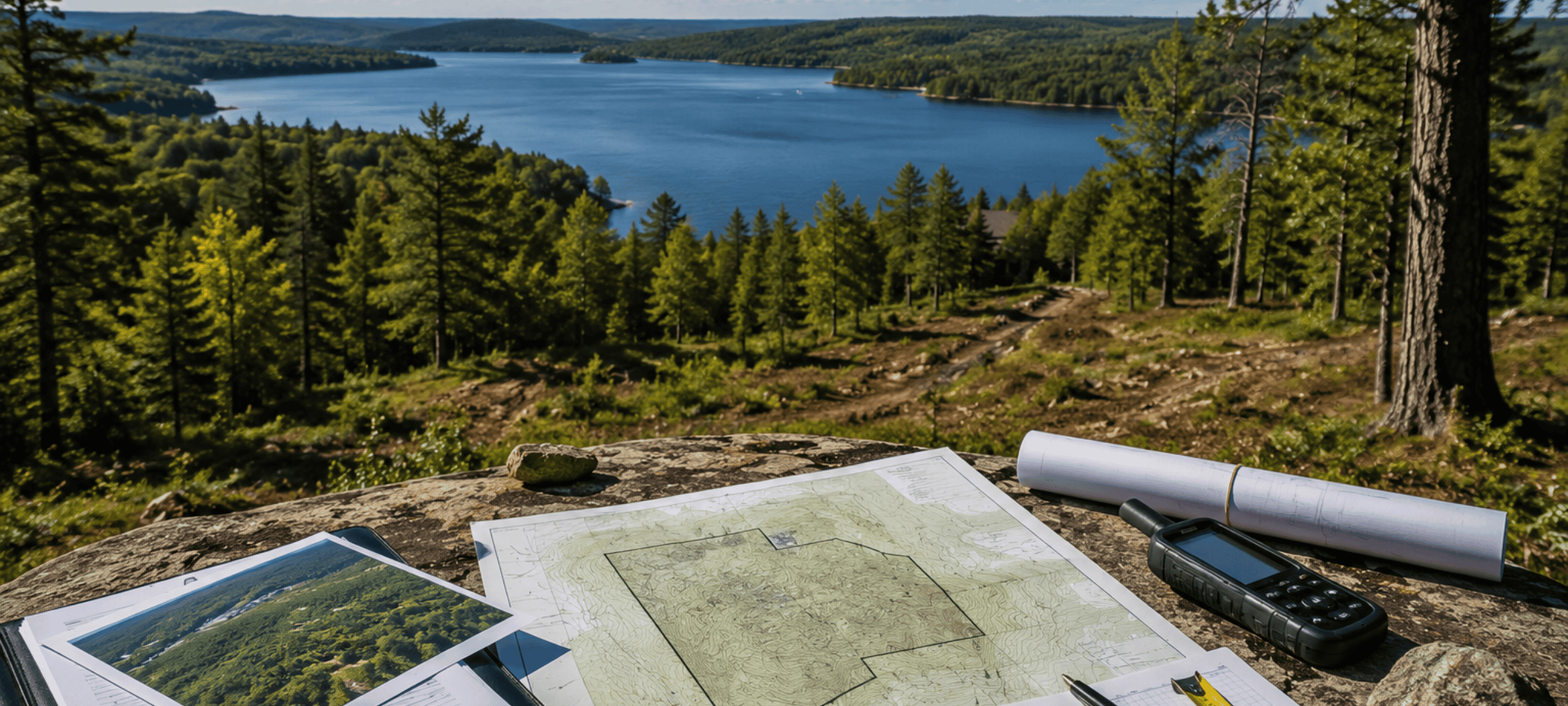
What if the pristine five-acre parcel you envision as your future sunset retreat in Charlevoix is legally and geologically incapable of supporting a foundation? It's a sobering thought for any investor, yet many overlook the hidden complexities of the "buildability gap" until it's too late. You likely recognize that Northern Michigan offers a rare blend of rugged beauty and sophisticated living, but you also feel the weight of uncertainty regarding shoreline regulations and infrastructure costs. Understanding what to know before buying land in northern Michigan is the essential first step in transforming a vision of escape into a tangible, high-value reality.
We're here to replace that anxiety with quiet confidence. This 2026 guide provides a professional framework for evaluating property across Grand Traverse and Emmett counties, ensuring your investment aligns with the lifestyle you've curated. You'll gain expert insights into the $18,000 reality of modern septic systems, the nuances of the 1.25% statewide property tax average, and the latest zoning reforms intended to streamline development. We'll examine the technical data and environmental friction points that define the current market; this approach positions you to secure a legacy property that is as functional as it is breathtaking.

Key Takeaways
- Learn how to bridge the buildability gap, ensuring your vision for a legacy estate is geologically and legally viable.
- Discover what to know before buying land in northern Michigan regarding the hidden infrastructure costs common in Emmet and Charlevoix counties.
- Navigate the complex intersection of EGLE oversight and local zoning to protect your architectural freedom.
- Evaluate property tax multipliers and potential exemptions to maximize the long-term ROI of your vacant land investment.
- Understand why a professional guide is essential for navigating the entire ownership lifecycle in the Grand Traverse region.
Bridging the Buildability Gap in Northern Michigan
The allure of the Northern Michigan region often begins with a single, sweeping view of Grand Traverse Bay or the rolling hills of Charlevoix. However, the most critical element of what to know before buying land in northern Michigan is the existence of the buildability gap. This term describes the often wide chasm between a raw, undeveloped parcel and a site that is truly construction-ready. While a lot may appear perfect to the untrained eye, it is merely a canvas that requires a rigorous technical evaluation before the first shovel hits the ground. It's a costly oversight to assume that every beautiful acre can support the weight of a luxury residence.
To better understand the nuances of evaluating these properties, watch this helpful video:
Identifying physical constraints early in your search is the only way to protect your capital. In 2026, the demand for premium acreage in Grand Traverse and Emmett counties remains high, yet the supply of easily buildable land is finite. You must look beyond the surface level. A site's true value isn't just in its acreage; it's in its capacity to host your specific vision without requiring astronomical site preparation costs. A discerning local expert looks for things the average buyer misses, such as subtle shifts in vegetation that signal drainage issues or soil types that may complicate a foundation.
Why Visual Aesthetics Can Be Deceiving
High-water tables and hidden wetlands are the most common silent project killers in our region. A property in Charlevoix might look dry and inviting during a summer viewing, but a high-water table can lead to significant structural challenges or outright building prohibitions. Topography also plays a massive role. The dramatic slopes that offer breathtaking views of the lake also dictate the complexity of your architectural design. Steep grades often require specialized retaining walls and advanced drainage systems, which can quickly inflate your construction budget. Without a professional eye, you risk purchasing a "swamp" or a cliffside that is more of a liability than an asset.
Aligning Acreage with Your Lifestyle Vision
Your land should be more than a plot of dirt; it should be the structural foundation of your daily happiness. Whether you desire immediate access to the world-class fairways of local golf communities or the quiet solitude of a wooded retreat near the ski hills, the land must align with your recreational priorities. Many investors find success by utilizing a lifestyle-driven search platform to filter potential parcels based on these specific desires. This approach ensures that your property isn't just buildable, but that it places you exactly where you want to be, whether that's steps from the water or seconds from the trailhead. A lifestyle-focused search bridges the gap between a simple transaction and a meaningful investment in your future way of life.
Essential Infrastructure and the Hidden Costs of Rural Land
Acquiring a secluded parcel in Grand Traverse or Emmet County is often the first step toward a bespoke architectural legacy. However, the "Infrastructure Gap" represents a significant financial variable that many investors overlook. This gap is the total investment required to bring essential services to a raw site. Understanding what to know before buying land in northern Michigan includes a clear-eyed assessment of these invisible costs, which can quickly rival the purchase price of the land itself. From the depths of the water table to the reach of the nearest fiber-optic line, every detail dictates the viability of your development.
The Critical Nature of Septic and Soil Evaluation
A "perc test" is perhaps the most vital contingency in any purchase agreement for vacant land. This evaluation determines how effectively the soil drains, a factor that dictates whether you can install a conventional septic system or if you'll require a more complex engineered alternative. In the Northern Lower Peninsula, a standard septic installation typically ranges from $8,000 to $18,000. Be particularly cautious with older parcels that claim "grandfathered" systems. Modern standards are far more stringent, and what worked for a seasonal cabin decades ago will rarely support a contemporary luxury build. If you're managing a larger wooded estate, you might also explore the Qualified Forest Program to offset carrying costs while you plan your infrastructure layout.
Utility Access and Modern Connectivity Requirements
Securing reliable utilities and modern connectivity is a cornerstone of what to know before buying land in northern Michigan. Bringing power and natural gas to a remote site is rarely a simple affair. Utility companies often charge a significant cost-per-foot for line extensions, especially if the terrain is challenging or heavily forested. For many, a private well is the only solution for water, with costs in Michigan currently ranging between $5,000 and $15,000, depending on depth. High-speed connectivity is no longer a luxury but a fundamental requirement for the modern professional. Confirming the availability of fiber or reliable satellite coverage is essential before committing to a site. These investments don't just facilitate your lifestyle; they dramatically enhance the resale value of the property. For those looking to maximize their returns, understanding the nuances of investing in Northern Michigan real estate is the key to a successful acquisition.
Finally, never underestimate the importance of access. Many premium lots in Charlevoix and Emmet counties are reached via private roads. It's imperative to review existing maintenance agreements to understand your share of snow removal and grading costs. A shared road without a formal agreement can lead to legal friction and accessibility issues during our legendary Michigan winters. These logistical details are the foundation upon which a successful luxury retreat is built.
Navigating the Regulatory Landscape of the North
The regulatory framework governing the North is a sophisticated tapestry of state oversight and local discretion. For the discerning investor, understanding the role of the Michigan Department of Environment, Great Lakes, and Energy (EGLE) is paramount. This agency maintains rigorous standards for wetlands, critical dunes, and shoreline protection, ensuring that development doesn't compromise the region's natural purity. When considering what to know before buying land in northern Michigan, you must account for the fact that a parcel's potential is often defined by these environmental boundaries. Regulatory friction isn't merely a hurdle; it's a mechanism that preserves the exclusivity and aesthetic value of the land you intend to call home.
The legislative environment in 2026 has introduced new opportunities and constraints for land development. Public Act 58 of 2025 has significantly altered land division rules, increasing the number of parcels a landowner can create from a parent parcel without a complex platting process. For the first 10 acres, the default limit is now 10 parcels, a shift that took effect for opting municipalities on March 24, 2026. Additionally, a package of zoning reform bills, including HB 5529 and 5532, has been introduced to allow duplexes and accessory dwelling units by right in many single-family zones. These changes provide greater architectural freedom for those looking to build multi-generational estates or guest cottages in Grand Traverse County.
Shoreline Regulations and Environmental Stewardship
Waterfront investment requires an even deeper level of diligence. Strict rules govern everything from vegetation removal to the placement of permanent docks. The high-water mark isn't just a physical measurement; it's a legal boundary that dictates where your construction can safely and legally begin. For those pursuing waterfront lifestyle homes, balancing luxury development with stewardship is essential. EGLE oversight ensures that the crystalline clarity of our lakes remains untarnished, which in turn protects the long-term value of your shoreline investment. Preserving the natural canopy and native flora is often a requirement, not a suggestion, for obtaining necessary permits.
County-Specific Zoning Nuances: Charlevoix and Emmet
Local planning commissions in Charlevoix and Emmet counties often have distinct philosophies regarding land use and architectural aesthetics. While Charlevoix may emphasize specific setbacks to maintain lake vistas, Emmet County's commissions often focus on the integration of outbuildings and custom luxury builds within the existing landscape. Verifying easements and right-of-way access is a critical step; a zoning review for a new single-family home can be as low as $75, yet the implications of those findings are worth millions. It's vital to ensure that your vision for a sprawling estate or a private retreat doesn't conflict with local master plans or future infrastructure projects. This localized expertise is what separates a successful acquisition from a frustrating legal entanglement.
Financial Strategies and Investment ROI for Vacant Land
Investing in vacant land within the Grand Traverse region is a sophisticated financial maneuver that requires more than just an appreciation for the scenery. Beyond the initial acquisition cost, the carrying costs of your property, including property taxes and potential association fees, serve as the baseline for your investment strategy. One of the most critical elements of what to know before buying land in northern michigan is how these ongoing expenses influence your long-term ROI. For those managing larger parcels, exploring agricultural or timber tax exemptions can significantly reduce these costs, turning a dormant asset into a more efficient holding. This strategic approach ensures that your land remains a source of wealth rather than a drain on capital.
Understanding Property Tax Classifications
Michigan's property tax system is structured around two distinct figures: assessed value and taxable value. In 2026, the statewide average effective property tax rate stands at 1.25%. While the inflation rate multiplier for 2026 is set at 1.027, capping taxable value increases at 2.7% for current owners, a new purchase triggers an "uncapping" event. This means the taxable value resets to match the state equalized value, often resulting in a substantial jump in your annual budget. For those looking at land within exclusive resort communities in Charlevoix or Emmet County, these tax considerations are balanced by the prestige and amenities that drive consistent demand. Understanding these nuances is essential for any serious investor.
ROI Projections for Lifestyle Property Investments
The historical appreciation of luxury lots in Petoskey and Harbor Springs reflects a market that values scarcity and quality. Michigan's farm real estate value saw a 7.8% increase in 2025, the highest in the country, signaling a robust appetite for land as a tangible asset. High-net-worth individuals increasingly view Northern Michigan acreage as a hedge against market volatility, providing an emotional haven that doubles as a stable investment. With the implementation of Public Act 58 of 2025, the potential for future parcel splits offers a clear path to recouping your initial investment while retaining the most desirable portion of the land for your personal estate. This flexibility is a key driver for long-term value in the 2026 market.
Successfully navigating these financial nuances requires a partner who understands the entire ownership lifecycle. If you're ready to refine your portfolio with a legacy property, you can explore professional investing in northern Michigan real estate services to ensure your acquisition aligns with your broader financial goals. This level of consulting transforms raw land into a high-performing component of your overall wealth strategy. You deserve a guide who treats your investment with the same level of care and precision that you do.
Securing Your Northern Michigan Legacy with Brook Walsh
Securing a piece of the North is more than a simple real estate transaction; it's an intentional act of curation. When you seek what to know before buying land in northern Michigan, you aren't just looking for a plot of earth. You're searching for a partner who understands that a parcel in Grand Traverse or Charlevoix is the first chapter of a much larger narrative. Brook Walsh serves as the premier guide for those who demand excellence, offering a depth of local expertise that transcends simple brokerage. We don't just find land; we identify the structural foundations of your future legacy. Our role is to ensure that every decision you make today serves the vision you have for your family's future in this coveted geography.
A Holistic Approach to Land Ownership
Brook Walsh provides a professional lens that covers the entire property lifecycle, from the initial soil test to the eventual management of a finished estate. Our dominance in the market for luxury lifestyle homes gives our land buyers a distinct advantage. We understand exactly what makes a property desirable for future resale or high-end use. Because we offer professional short-term rental management and investment property analysis, we can project the long-term viability of your development before you even break ground. This holistic approach ensures that your vacant land isn't just a static asset, but a dynamic part of a high-value portfolio. We focus on finding emotional havens that offer both personal sanctuary and exceptional financial performance in Emmet County and beyond.
Start Your Journey: Personalized Land Consultations
Your journey toward a Northern Michigan retreat deserves more than a generic search. It requires a data-driven, personalized consultation that accounts for the specific nuances of Boyne City and the surrounding lakeside communities. We invite you to experience a refined approach to land acquisition where your lifestyle goals dictate the search parameters. Our team provides the granular insights necessary to navigate the 2026 market with absolute precision. Whether you envision a sprawling waterfront estate or a secluded retreat near the region's premier golf courses, we possess the local roots and professional acumen to make it a reality. We're ready to help you secure your place in this exceptional region. It's time to transition from a dreamer to a steward of the land. Explore our curated land and development lots today to begin your legacy.
Securing Your Vision in the North
The journey to owning a piece of the North is a pursuit of both aesthetic beauty and structural integrity. By understanding the buildability gap and the true costs of rural infrastructure, you position yourself to make a decision that is as fiscally sound as it is personally fulfilling. Navigating the regulatory nuances of Grand Traverse and Charlevoix counties requires a discerning eye and a commitment to preserving the natural purity of our region. This guide has outlined the essential elements of what to know before buying land in northern Michigan; it spans from the complexities of modern septic codes to the potential for high-performing investment ROI.
As a specialist in luxury waterfront and lifestyle properties, Brook Walsh brings expert investment analysis to every transaction. As a broker and owner-operator with eXp Realty, he provides the steady hand and local dominance necessary to secure your future estate in Emmet County. You deserve an advisor who shares your appreciation for quality and exclusivity. Begin your sophisticated property search with Brook Walsh and transform your vision of a Northern Michigan sanctuary into a tangible reality. The landscape is waiting for its next steward.
Frequently Asked Questions
Is it harder to get a mortgage for vacant land in Northern Michigan?
Securing financing for vacant land is generally more rigorous than obtaining a traditional residential mortgage. Lenders typically require larger down payments, often ranging from 20% to 50%, and interest rates are usually higher to reflect the increased risk of undeveloped property. In 2026, land loan rates frequently fall between 4% and 10%, depending on the lender and the parcel's development potential. It's a critical component of what to know before buying land in northern Michigan if you don't intend to make a cash purchase.
What is a perc test, and why do I need one before buying land?
A percolation test, or perc test, measures how quickly the soil absorbs water to determine if a site can support a standard septic system. This evaluation is a non-negotiable step in your due diligence because the results dictate your infrastructure costs. If the soil fails to drain properly, you may be required to install a complex engineered system, which can cost significantly more than a conventional setup. Without a successful test, your vision for a luxury residence might be geologically impossible to realize.
Can I build a short-term rental on any vacant lot in Emmet County?
Short-term rental eligibility is not guaranteed and depends entirely on specific township zoning ordinances and private deed restrictions. While Emmet County is a premier destination, many exclusive communities and residential zones have strict prohibitions or require specialized permits for transient lodging. You must verify the local master plan and any existing homeowners' association bylaws before assuming a parcel can function as an investment property. Understanding these local nuances is essential for aligning your acquisition with your financial goals.
What are the typical property taxes for vacant land in Charlevoix?
Property taxes for vacant land are calculated based on the assessed value, with Michigan's 2026 statewide average effective rate at 1.25%. In Charlevoix County, small parcels under two acres can have high valuations due to their proximity to the water or resort amenities. It's important to remember that taxable values "uncap" upon transfer of ownership. This means your tax bill will likely reset to a higher level based on the current market value rather than the previous owner's capped rate.
How do EGLE regulations affect building near Lake Michigan?
The Michigan Department of Environment, Great Lakes, and Energy (EGLE) enforces strict setbacks and environmental protections for construction within high-risk erosion areas and critical dunes. Building near the shoreline often requires specialized permits and rigorous site reviews to protect the natural integrity of the coast. These regulations may limit where you can place a foundation or how much native vegetation you can remove. While these rules add a layer of complexity, they also preserve the long-term exclusivity and beauty of your waterfront investment.
What is the "Infrastructure Gap" and how do I calculate it?
The infrastructure gap is the cumulative cost of bringing essential services like electricity, water, and waste management to a raw building site. To calculate this, you must aggregate quotes for well drilling, which currently range from $5,000 to $15,000, and septic installation, often costing between $8,000 and $18,000. Don't forget to include utility line extension fees from the local power company. This calculation is a vital part of what to know before buying land in northern Michigan to ensure your budget remains intact.
Are there specific restrictions for building in golf course communities?
Golf course communities usually have an Architectural Review Committee (ARC) that enforces strict standards regarding home size, exterior materials, and landscaping. These restrictions are designed to maintain a cohesive aesthetic and protect the views and safety of the course. You may find limitations on the height of outbuildings or the types of fencing allowed on your property. While these rules can feel restrictive, they serve to protect the prestige and resale value of all homes within the enclave.
How do I verify if a parcel of land has legal access?
Legal access must be verified through a professional title search and a review of the property's recorded deed and easements. Never assume that a visible driveway or a shared two-track provides a legal right-of-way to the land. Without a recorded easement or direct frontage on a public road, a parcel could be legally landlocked. This would prevent you from obtaining building permits or securing a mortgage. Confirming legal access is a fundamental step in protecting your investment from future litigation or accessibility issues.
Posted by Brook Walsh onEnjoy this blog post? Click here to subscribe for updates
Leave A Comment