

What if the detail that gives your Northern Michigan waterfront home its character is also something a buyer needs clarified before making an offer? Knowing what to disclose when selling a waterfront property means looking beyond the home itself to the shoreline, water access, dock, and records that explain how the property works. Clear, specific information helps buyers understand what they’re considering.
It’s natural to have questions about which past issues to document, how to describe shared or deeded access, and where to find records gathered over years of ownership. Those details matter across Charlevoix, Emmet, and Grand Traverse counties, where each property has its own setting and history.
This checklist will help you organize a buyer-ready disclosure file before listing. Gather information about the home, shoreline, access, docks, and water systems, then separate documented facts from personal observations and unresolved questions. Whether your property is near Boyne City, Boyne Falls, Charlevoix, Petoskey, Harbor Springs, or East Jordan, a thoughtful presentation can help buyers understand its features and limitations.

Key Takeaways
- Separate formal disclosure requirements from helpful context for buyers, and verify which requirements apply to your property.
- Use deeds, easements, and other records to describe waterfront access and dock use accurately, rather than relying on informal assumptions.
- Organize known home, shoreline, access, and water-system concerns so relevant details are clear and consistent.
- For what to disclose when selling a waterfront property, sort records, personal observations, and questions needing professional interpretation into distinct categories.
- Present the appeal of your Northern Michigan waterfront home while keeping lifestyle descriptions distinct from claims about property condition or rights.
Table of Contents
- What to disclose when selling a waterfront property in Northern Michigan
- Describe Northern Michigan waterfront access, frontage, and docks precisely
- Disclose known shoreline, home, and water-system conditions
- Build a waterfront seller disclosure file before listing
- Present your waterfront property with confidence and local expertise
What to disclose when selling a waterfront property in Northern Michigan
A Northern Michigan waterfront sale calls for two kinds of clarity: meeting the disclosure requirements that apply to the property and communicating known details in a way buyers can understand. Michigan’s Seller Disclosure Act applies to many residential sales, but requirements depend on the property and current law. Confirm which rules apply before listing. A general Seller disclosure statement overview can provide context, but it doesn’t establish what’s required for a particular Michigan sale.
Beyond required forms, buyers benefit from a clear account of the property and its waterfront features. Start by gathering information about:
- Known home conditions, repairs, and recurring concerns
- How water access is described and supported by records
- Shoreline features, docks, and observed changes or limitations
- Documents that help establish property details, use, or prior work
A lake view may be the first thing buyers remember, but its beauty doesn’t replace precision. Describe what you know, distinguish confirmed details from unresolved questions, and avoid assurances that aren’t supported by your experience or records.
Start with known facts, not assumptions
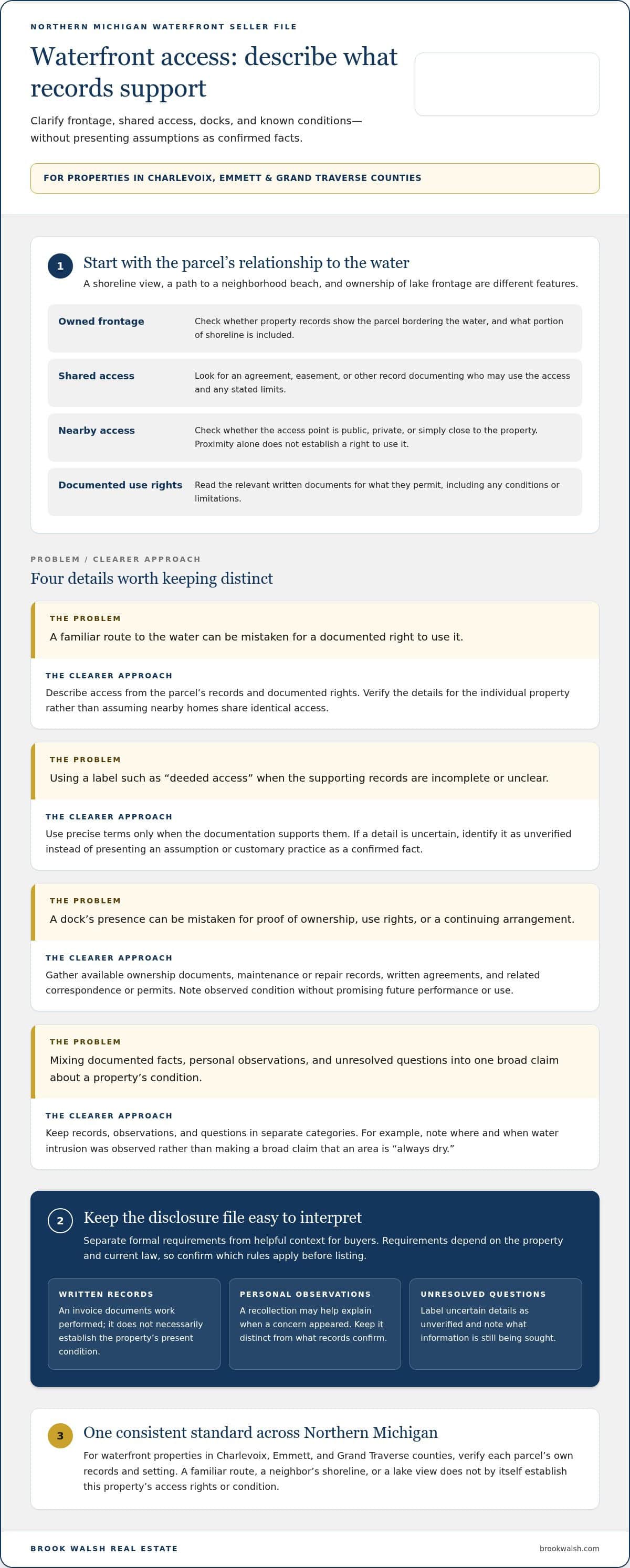
As you consider what to disclose when selling a waterfront property, keep personal observations, written records, and unresolved questions separate. A repair invoice documents work performed. Your recollection may help explain when a concern appeared. Neither necessarily establishes the property’s present condition. Be specific: note where and when you observed water intrusion instead of making a broad claim that an area is “always dry.”
If a detail remains uncertain, label it as unverified and note what information you’re seeking. Don’t present a neighbor’s account, a long-standing assumption, or customary practice as a confirmed fact about your parcel.
Apply the checklist to Northern Michigan homes
In Charlevoix, Emmet, and Grand Traverse counties, waterfront properties may be on different lakes, rivers, or Great Lakes shoreline. Each has its own parcel history and setting. A familiar access route on one lake doesn’t establish a right to use a similar route elsewhere. Likewise, what you observe along a neighboring property’s shoreline doesn’t prove what’s happening on your frontage.
County and municipal context can help you identify relevant records or processes, but details vary by property and location. Note the property’s location, the records you have, and any details that still need verification. Whether the home is near Charlevoix, Petoskey, or East Jordan, separating documented facts from assumptions helps buyers understand the property without diminishing the appeal of Northern Michigan waterfront living.
Describe Northern Michigan waterfront access, frontage, and docks precisely
A waterfront listing should make clear whether the parcel reaches the water, shares an access point, or sits near a place the owner uses. These distinctions shape a buyer’s understanding of the property. Describe access based on records and documented rights, not a familiar route or long-standing habit. Michigan Lakes and Streams Association cautions in its guidance on lake access that sellers should avoid implying rights the property may not carry. That context is useful, but it doesn’t replace legal review of a specific deed, easement, or agreement.
Separate lake frontage from shared or nearby access
Start with the parcel’s recorded relationship to the water, then explain how access works in practice. A shoreline view, a path to a neighborhood beach, and ownership of lake frontage are different features. In Charlevoix, Emmet, and Grand Traverse counties, verify the details for the individual parcel rather than assuming that nearby homes on the same lake have identical access.
| Access description | What to verify before describing it |
|---|---|
| Owned frontage | Whether property records show the parcel bordering the water, and what portion of shoreline is included. |
| Shared access | Whether an agreement, easement, or other record documents who may use the access and any stated limits. |
| Nearby access | Whether the access point is public, private, or simply close to the property; proximity alone doesn’t establish a right to use it. |
| Documented use rights | What the relevant written documents actually permit, including any conditions or limitations. |
Use terms such as “deeded access” only when the supporting documentation justifies that exact description. If records are incomplete or unclear, identify the uncertainty instead of presenting an assumption as a confirmed entitlement. This is central to what to disclose when selling a waterfront property: describe what the records support, and keep appealing views or convenient proximity separate from legal access.
Document docks, easements, and shoreline structures
A dock’s presence doesn’t establish who owns it, who may use it, or whether a particular docking arrangement continues. Record these details separately. Gather available ownership documents, maintenance or repair records, written agreements, and correspondence or permits related to the dock or other shoreline structures. Note the dock’s observed condition without promising future performance or use.
List questions the available documents don’t resolve, such as whether an easement applies to a particular route or whether a dock arrangement extends to a new owner. Don’t imply permanent mooring or exclusive use unless supporting records establish it. Brook Walsh Real Estate helps buyers and sellers navigate waterfront properties and present a home’s waterfront lifestyle features accurately, with descriptions of rights tied to the documents.
Disclose known shoreline, home, and water-system conditions
Waterfront condition details are easiest to understand when organized by location and supported by records. Buyers may be considering the home as well as the systems, shoreline, and routes that make time by the water possible. Focus on known, relevant facts. Distinguish a completed repair from an unresolved concern, and avoid assurances about insurance, environmental conditions, or system performance unless current documentation supports them.
- Home systems: Note known concerns involving the roof, foundation, drainage, or other major components, along with documented repairs.
- Shoreline features: Gather information about observed erosion, drainage patterns, seawalls, docks, and shoreline work.
- Access routes: Record known maintenance or safety issues on paths, steps, or other routes to the water.
- Water and wastewater systems: Collect available well and septic records, service information, evaluations, and repair documents.
Keep the timeline clear. An invoice may show that work was completed, while a later report or correspondence may describe a concern that remains open. Don’t present either document as proof of more than it establishes.
Record shoreline and lakeside history
In Charlevoix, Emmet, and Grand Traverse counties, shoreline history is specific to each property and setting. Gather available records for dock, seawall, erosion-control, drainage, or other shoreline work. Note dates and outcomes when they’re documented. If you observed a change, describe what you saw and when instead of predicting whether it will continue or resolve.
Keep project records and approvals with the related work. If you can’t establish whether a project received approval, don’t describe it as approved. Leave the question open for review rather than turning an incomplete file into a confident claim.
Organize home and utility condition information
Bring together inspection reports, repair invoices, service records, and relevant correspondence for the home and its systems. A useful record describes the issue, the work performed, and any documented follow-up. For example, distinguish a repaired roof leak from a recurring leak, and include dates or outcomes only when your records support them. If flooding or water intrusion is known, describe its location and history factually.
For well and septic systems, preserve available evaluations, maintenance records, and repair documentation. Don’t infer current system condition from an older report or make claims about water quality or insurance coverage without current supporting information.
Separate firsthand observations from professional findings. Legal questions about disclosure, or technical questions about shoreline work and system condition, call for review by an appropriately qualified professional. A clear record helps buyers understand the home and its waterfront setting without overstating what you know.
Build a waterfront seller disclosure file before listing
A well-organized disclosure file turns scattered paperwork and memories into a useful reference for preparing your listing. It doesn’t need to be elaborate. The goal is to know what’s documented, what you personally observed, and what still needs clarification before describing the property to buyers.
Work through the preparation in sequence:
- Inventory known facts. Note relevant property history, repairs, recurring concerns, and waterfront features you can describe from firsthand knowledge.
- Gather available records. Bring together property documents and reports that support, clarify, or add context to those facts.
- Identify gaps. Mark missing documents, unclear details, and questions that require legal or technical interpretation.
- Review the wording. Compare disclosure forms and marketing language so descriptions remain accurate and consistent.
Gather property records and prior reports
Create a secure digital or paper folder, then sort documents by topic and date. Useful records may include deeds, surveys, access agreements, repair receipts, inspection reports, and available shoreline project records. Add relevant well and septic documents, along with any insurance or flood-related paperwork you have. Keep original documents intact, use copies for working notes, and record the date and source of each item when they aren’t obvious.
For a waterfront home in Charlevoix, Emmet, or Grand Traverse County, tailor the file to the parcel’s location. County and municipal processes may differ, and requirements can depend on the property. Don’t assume a process that applied to one home or township applies to another. Organizing records by jurisdiction can help you see what relates to the property and what may need verification.
Review gaps and prepare clear explanations
Make a separate list of missing records and unanswered questions. A missing report isn’t proof of a problem, but it also doesn’t support a claim that something was inspected or approved. Keep that distinction visible in your notes. Label personal observations as observations, documented facts as documented facts, and unresolved points as questions.
Have uncertain rights or legal requirements reviewed by a qualified legal professional, and direct technical questions to an appropriately qualified professional. Then prepare concise descriptions that stay close to what you know. Check that disclosure forms, records, and listing materials don’t describe the same feature differently. Buyers comparing Northern Michigan waterfront homes consider both the setting and the details behind it, so a consistent, well-supported presentation helps them understand the property.
Use your file as a reference, not as a substitute for required forms or professional advice. A thoughtful record lets you present the home’s waterfront appeal with confidence while keeping claims grounded in available information.
Present your waterfront property with confidence and local expertise
A polished waterfront listing can evoke a Northern Michigan summer morning, the stillness of an inland lake, or changing light over the Great Lakes. That atmosphere matters, but buyers also need descriptions grounded in property facts. Consistent records and clear language help turn early interest into informed conversations about the home, its waterfront features, and known limitations.
Market the waterfront experience without overstating facts
Let the setting shine while keeping each claim precise. Describe a view as a view, frontage as frontage, and access according to the property records. If a dock is present, distinguish its visible features from documented ownership, permissions, or use rights. A photograph can show a shoreline’s character, but it can’t establish that access is exclusive or that a dock conveys with the sale.
Buyers exploring waterfront lifestyle homes are weighing both the experience and the details. Pair evocative photography with copy that accurately describes the parcel, shoreline, access, and known condition. Avoid broad promises about water quality, year-round use, or future shoreline stability unless facts and supporting records justify them. A measured description gives buyers room to understand the property on its own terms.
Turn preparation into a confident selling conversation
Before showings, prepare a concise reference to the home’s documented strengths and known limitations. Keep relevant records close at hand, and use the same factual descriptions across disclosure materials, listing copy, and buyer conversations. If new information emerges, update the materials so an earlier description doesn’t conflict with what you now know. Accuracy supports an appealing presentation by giving buyers a firm foundation for understanding the property.
Local context helps bring that presentation into focus. A home in Charlevoix County may have a different shoreline setting and access arrangement from a property in Emmet or Grand Traverse County. Even homes on the same lake can differ in frontage, records, and features. Whether the property is near Boyne City, Boyne Falls, Charlevoix, Petoskey, Harbor Springs, or East Jordan, local waterfront knowledge helps explain those distinctions without treating one property’s details as a template for another.
Understanding what to disclose when selling a waterfront property is part of presenting its lifestyle with care. Clear records support a consistent conversation, while thoughtful marketing can still capture the beauty of a lakeside retreat and its place in Northern Michigan.
If you’re preparing a Northern Michigan waterfront home for the market, discuss your waterfront sale with Brook Walsh Real Estate. Accurate property details and a considered presentation can help you introduce your home with clarity and confidence.
Set the stage for your next waterfront chapter
A waterfront home carries more than a view. It holds the promise of slow mornings by the water, family traditions, and a particular Northern Michigan way of life. Preparing carefully for a sale gives the next owner a clearer understanding of the property and lets you move forward with confidence.
Knowing what to disclose when selling a waterfront property is part of presenting that experience with care. The right words can honor what makes your home special while giving buyers a grounded picture of what they’re considering. That balance matters in a market where every shoreline, access arrangement, and home has its own story.
Brook Walsh Real Estate specializes in lifestyle-driven property searches and sales across Northern Michigan, including Charlevoix, Emmet, and Grand Traverse counties. The firm helps clients explore waterfront living and supports property ownership from purchase through management and eventual resale. For guidance as you prepare your next steps, discuss your Northern Michigan waterfront sale with Brook Walsh Real Estate.
Your next chapter can begin with clarity, care, and a confident introduction to the life your property offers.
Frequently Asked Questions
What happens if I discover a new property issue after completing a disclosure form?
Tell your real estate representative promptly and ask how to document the new information before moving forward. The appropriate update may depend on the timing, transaction documents, and applicable law, so don’t assume the original form covers a condition you learned about later. Keep a dated note of what you discovered and any related records. For guidance on legal obligations, consult a qualified Michigan real estate attorney.
Can a buyer still arrange an inspection after reviewing waterfront disclosures?
Yes, a buyer may request inspections, subject to the terms agreed to in the purchase contract. Reviewing disclosures doesn’t establish the home’s present condition or replace a buyer’s own evaluation. For a waterfront property, a buyer might seek closer review of a feature that matters to their plans, such as a basement area with a reported history of moisture. Review inspection timing and access arrangements through the purchase agreement.
Should I share an old inspection report with prospective buyers?
An older report may provide context, but it reflects observations made at a particular time, not a guarantee of current condition. Preserve the report in its original form, including its date and any stated limits. Get advice on how it should be shared in your transaction and whether it affects your disclosure obligations. If repairs followed, keep related records distinct so buyers can understand the sequence.
Do Northern Michigan lake levels change seasonally?
Lake levels can fluctuate over the course of the year, but the pattern and amount vary by waterbody and conditions. Avoid describing a particular level as permanent based on one visit or photograph. If water level is relevant to your property description, note when an observation or image was made and distinguish a seasonal view from a documented long-term condition. Don’t promise a specific water depth or shoreline appearance year-round.
Is a boundary survey useful when selling a waterfront property?
A current survey can help clarify mapped parcel lines and the location of visible improvements, depending on its scope. It may be useful when a buyer asks where a path, fence, or shoreline structure sits in relation to the property boundary. A survey doesn’t by itself establish access rights or settle every title question. For homes near Boyne City, Boyne Falls, Charlevoix, Petoskey, Harbor Springs, or East Jordan, use the survey together with relevant property records.
What should I do if I cannot find permits or records for older shoreline work?
Don’t assume missing paperwork proves the work was either authorized or unauthorized. Note what work you know about, what records you searched for, and what remains unclear. Preserve photographs, invoices, or correspondence that may help establish its history. Avoid describing the project as approved unless documentation supports that statement, and seek qualified guidance on unresolved questions before making claims about its status.
Posted by Brook Walsh onEnjoy this blog post? Click here to subscribe for updates
Leave A Comment