
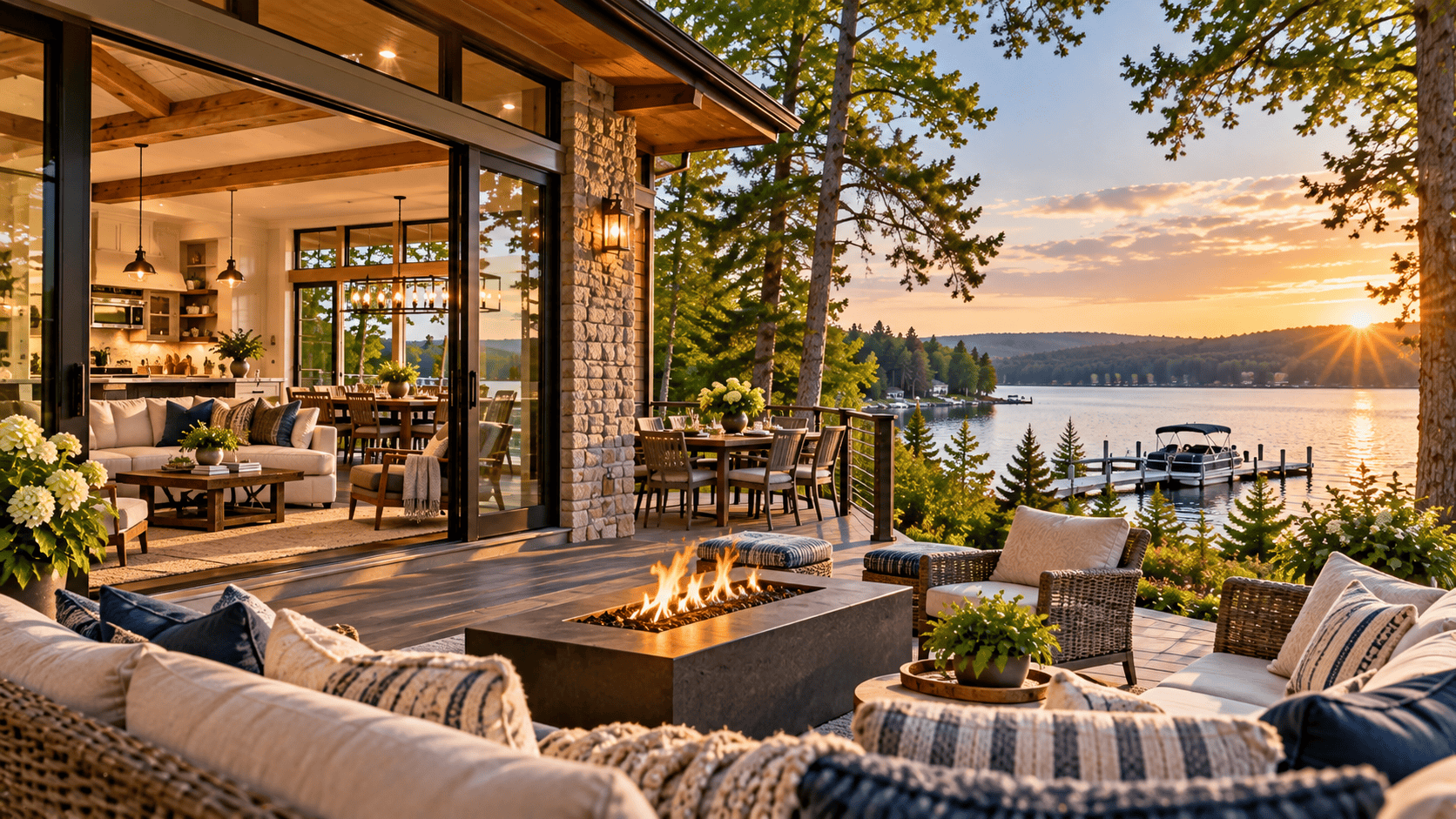
When Northern Michigan reached record peak lodging demand in July 2025 with an average daily rate of $445.91 and 81.1% occupancy, it confirmed the extraordinary earning power of regional properties. Understanding how to transition a property to a short-term rental unlocks this lucrative market, allowing you to transform a private haven into a premier lifestyle asset.
You already recognize the enduring appeal of our freshwater shores and alpine slopes, yet deciphering shifting township ordinances across Charlevoix, Emmet, and Grand Traverse counties can feel daunting. The friction of permit caps, unexpected furnishing expenses, and shifting seasonal demand often leaves owners hesitating. This guide delivers the regulatory clarity, refined design principles, and operational blueprint required to convert your residential home into a compliant, top-tier vacation rental. Ahead, explore the exact steps to secure your local license, capture premium nightly rates, and establish a turnkey hospitality experience.
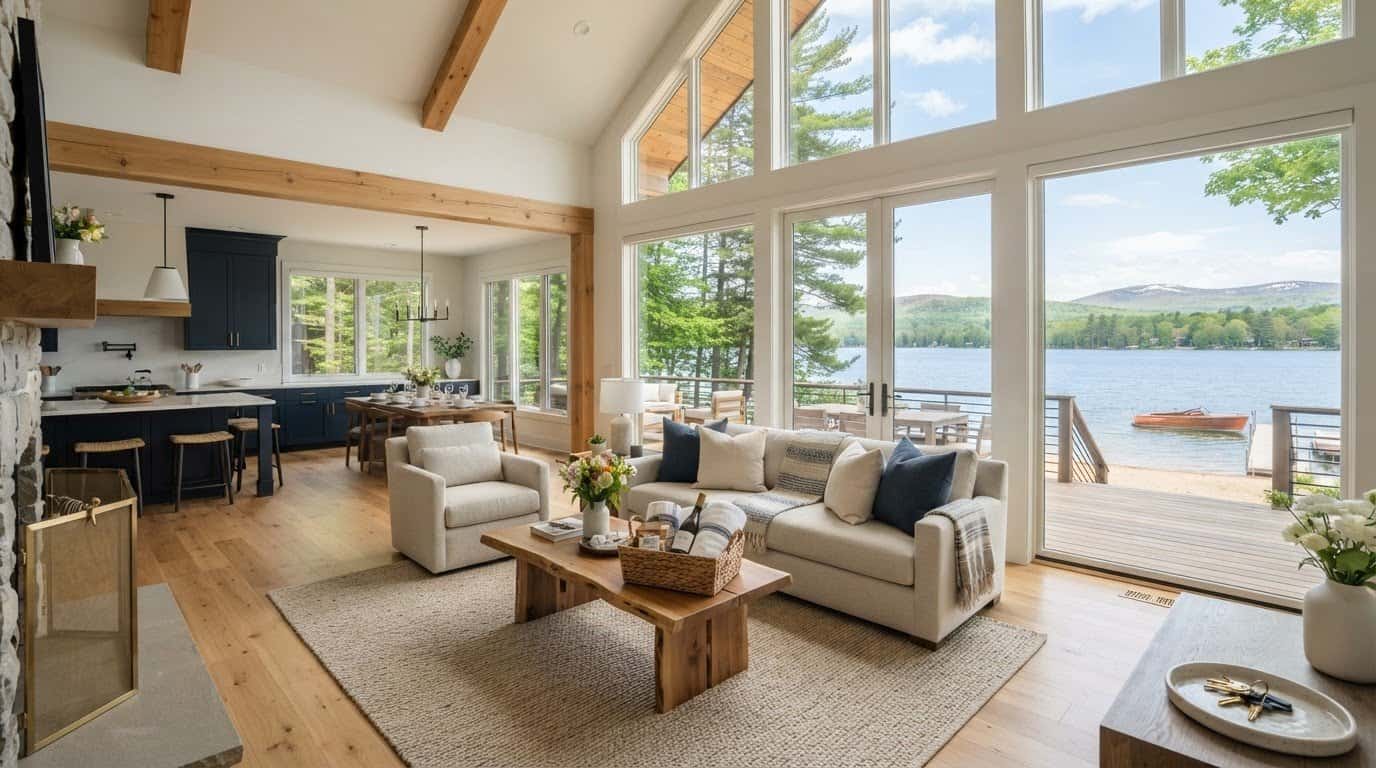
Key Takeaways
- Understand how municipal ordinances and licensing caps across Charlevoix, Emmet, and Grand Traverse counties determine property eligibility before allocating capital.
- Model true revenue potential by aligning pricing strategies with distinct regional demand peaks, from summer lake escapes to winter ski retreats.
- Discover how to transition a property to a short-term rental using safety upgrades and durable, luxury-grade design elements that elevate nightly value.
- Weigh the time commitment of personal hosting against professional short-term rental management to safeguard your asset and guest experience.
- Build immediate booking momentum through refined architectural presentation, high-impact listing photography, and dynamic platform optimization.
Table of Contents
- Evaluating Municipal Regulations and Property Feasibility in Northern Michigan
- Modeling Revenue Potential and Northern Michigan Seasonality
- How to Outfit and Prepare Your Property for Vacation Guests
- Operational Framework: Self-Hosting Versus Professional Management
- Launching Your Listing and Maximizing Long-Term Investment Returns
Evaluating Municipal Regulations and Property Feasibility in Northern Michigan
Before investing capital into interior design or marketing, you must verify the legal foundation of your property. Northern Michigan features a mosaic of hyper-local jurisdictions where ordinances change at township borders. Understanding short-term rental regulations across Charlevoix, Emmet, and Grand Traverse counties is the critical first benchmark when evaluating how to transition a property to a short-term rental.
Navigating Township Zoning and STR Licensing
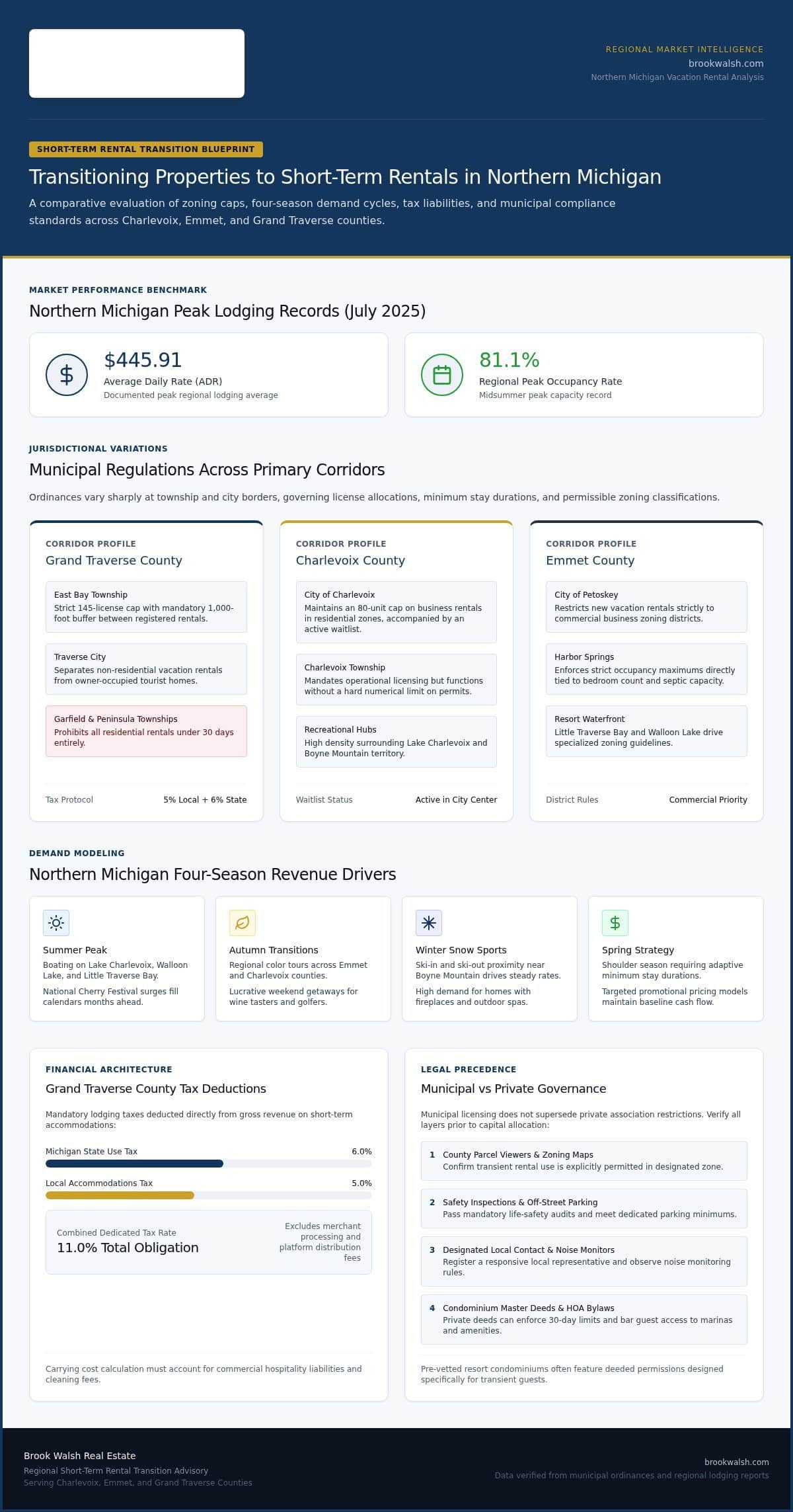
Municipal frameworks vary sharply across our regional resort corridors. In Grand Traverse County, Traverse City separates non-residential vacation home rentals from owner-occupied tourist homes, while neighboring Garfield and Peninsula townships prohibit residential rentals under thirty days entirely. East Bay Township enforces a strict 145-license cap and a 1,000-foot buffer between registered properties.
Moving north into Charlevoix County, the City of Charlevoix maintains an 80-unit cap on business rentals in residential zones, backed by an active waitlist. Conversely, Charlevoix Township requires licensing but operates without a hard numerical limit. In Emmet County, the City of Petoskey restricts new vacation rentals strictly to commercial business districts, while municipalities like Harbor Springs enforce occupancy caps tied to bedroom counts and septic capacity.
- Check local zoning maps via county parcel viewers to confirm short-term renting is an allowed use.
- Identify mandatory life-safety inspections, dedicated off-street parking minimums, and noise monitoring requirements.
- Submit formal municipal registrations, designate a responsive local contact, and schedule annual renewals before accepting guests.
Reviewing HOA Covenants and Condominium Bylaws
Municipal approval does not grant absolute operational freedom. Private deed restrictions, subdivision covenants, and condominium association bylaws hold legal precedence and can prohibit transient lodging regardless of township zoning. A master deed may enforce minimum thirty-day rental durations or restrict guest access to private community amenities such as marinas, clubhouses, and private beaches.
For investors seeking an effortless path forward, exploring pre-vetted resort properties like established condominium lifestyle homes for sale offers distinct advantages. These residences often feature deeded permissions designed specifically for transient guests, bypassing lengthy township waitlists. Verifying these governance documents early preserves your capital and clarifies how to transition a property to a short-term rental with total legal confidence.
Modeling Revenue Potential and Northern Michigan Seasonality
Transitioning an estate into a vacation retreat shifts your financial calculus from passive tenancy to an active hospitality enterprise. Gross vacation rental yields can easily outpace long-term lease rates, but achieving those returns requires studying regional micro-climates. A comprehensive financial model reveals how to transition a property to a short-term rental while safeguarding cash flow through every seasonal cycle.
Analyzing Four-Season Regional Travel Drivers
Northern Michigan operates on distinct seasonal rhythms that dictate occupancy and nightly pricing. Summer boating across Lake Charlevoix, Walloon Lake, and Little Traverse Bay commands peak market rates. In Grand Traverse County, midsummer events like the National Cherry Festival bring substantial visitor surges, filling regional calendars months in advance.
As temperatures cool, the hospitality narrative shifts rather than stops. Autumn color tours across Emmet and Charlevoix counties generate lucrative weekend getaways for wine tasters and golfers. Come winter, ski-in and ski-out proximity near Boyne Mountain drives consistent cold-weather occupancy for homes equipped with warm fireplaces and outdoor spas. Quieter spring lulls then require adaptive minimum-stay settings and targeted promotional pricing to maintain steady baselines.
Calculating True Operating Expenses and Cash Flow
Accurate underwriting accounts for regional carrying costs that long-term rentals never encounter. Tax structures represent an immediate deduction from top-line revenue. For instance, short-term rentals in Grand Traverse County carry a 5% local accommodations tax in addition to Michigan's 6% state use tax. Operating budgets must also account for hospitality-specific variables:
- Platform distribution fees, merchant processing, and specialized commercial hospitality liability insurance.
- Pristine turnover cleanings, linen laundering services, and luxury guest bath amenities.
- Demanding four-season property care, including dock installation, spa water chemistry balancing, and timely winter snow plowing.
Mastering these expense streams ensures your conversion remains viable and profitable year-round. Discerning owners often rely on professional investment property analysis to stress-test their numbers against authentic regional data before welcoming their first guests.
How to Outfit and Prepare Your Property for Vacation Guests
Outfitting a private residence for the luxury hospitality market requires balancing elevated aesthetics with commercial durability. Discerning guests expect the refined atmosphere of a boutique hotel alongside the intimate comforts of home. Mastering how to transition a property to a short-term rental means curating an intentional environment that commands premium nightly rates while protecting your physical asset.
Essential Safety, Code, and Infrastructure Upgrades
Your preparation begins with life safety and infrastructure resilience. Northern Michigan winters and high summer turnover place rigorous demands on household mechanicals. Addressing these requirements early ensures seamless municipal approvals and protects your peace of mind:
- Install interconnected smoke and carbon monoxide alarms inside every bedroom and on each living level.
- Place inspected fire extinguishers in key service areas, alongside subtle emergency egress plans and illuminated pathway nightlights.
- Audit electrical panels to confirm they can handle heavy simultaneous power draws from outdoor hot tubs, electric vehicle chargers, and modern climate controls.
- Install keyless smart entry deadbolts, high-speed Wi-Fi mesh systems, and smart water shut-off sensors to prevent catastrophic winter freeze damage.
Curating Luxury Regional Aesthetics and Amenities
Travelers seek spaces that echo the serenity of our Northern Michigan landscape. Living areas should balance natural textures like reclaimed timber, native stone, and bespoke ironwork with performance-grade fabrics that resist stains from sandy summer feet or wet ski gear. Keep palette selections grounded in crisp neutrals, lake blues, and warm forest greens.
Primary suites warrant special focus. Outfit each room with hotel-caliber hybrid mattresses, hypoallergenic pillows, and breathable, commercial-grade white linens that withstand frequent professional sanitization. In the bathrooms, plush oversized towels and locally sourced bath products establish an immediate sense of luxury.
Exterior spaces often drive the final booking decision. Adding a natural stone gas fire pit, an expanded cedar deck, and an inviting hot tub creates four-season appeal. Drawing inspiration from refined luxury lifestyle homes for sale throughout Emmet and Charlevoix counties ensures your interiors reflect authentic regional elegance. This deliberate approach reveals how to transition a property to a short-term rental that delivers exceptional guest experiences and commanding market performance.
Operational Framework: Self-Hosting Versus Professional Management
Choosing between hands-on hospitality and professional stewardship shapes your daily life. While self-management appears to maximize initial take-home earnings on paper, running a high-performing property from a distance demands significant personal bandwidth. Deciding how to manage operations is a pivotal consideration when discovering how to transition a property to a short-term rental successfully.
The Realities of Self-Managing a Vacation Rental
Managing an estate independently means functioning as an on-call hospitality concierge. Guests paying premium nightly rates expect immediate answers whether a smart lock falters late at night or a lakefront heating system needs attention during a freeze. If you don't reside minutes away, handling these calls quickly becomes overwhelming.
Turnover logistics create intense logistical pressure. Within a compressed four-hour window between checkout and arrival, you must coordinate dependable cleaning crews, inspect for damage, and replenish curated guest amenities across properties in Charlevoix, Emmet, or Grand Traverse counties. Managing dynamic calendar pricing by hand also carries risk; failing to adjust for sudden regional demand spikes can leave thousands of dollars in lodging revenue unrealized.
The Advantages of Professional Short-Term Rental Management
Engaging a dedicated management firm replaces daily operational friction with effortless stewardship. Seasoned local professionals protect your investment through layered guest screening protocols, strict occupancy controls, and reliable local vendor rosters. When mechanical issues emerge, pre-vetted regional tradespeople resolve them immediately without disrupting guest comfort.
Full-service hospitality teams also employ advanced dynamic pricing software. These platforms track regional pacing, local festival dates, and competing calendar inventory, fine-tuning your nightly rates to capture peak market premiums. Partnering with an expert team protects your physical asset while giving you total peace of mind.
If you prefer to capture passive returns while safeguarding your personal schedule, partner with a team that treats your retreat with unmatched care. Take the next step toward stress-free ownership by connecting with our team for expert Northern Michigan real estate investment consulting. Learning how to transition a property to a short-term rental with experienced local management transforms your property into a seamless, high-yield sanctuary.
Launching Your Listing and Maximizing Long-Term Investment Returns
Bringing your vision to market culminates in an impactful digital debut. The initial weeks after launching determine your property's trajectory across major booking channels. Understanding how to transition a property to a short-term rental effectively relies on capturing strong early booking velocity and securing unblemished five-star reviews, which signal quality to search algorithms and elevate your listing to prospective travelers.
Crafting High-Converting Listings with Professional Imagery
High-caliber visual presentation sets luxury properties apart in competitive regional markets. Twilight architectural photography captures the warm glow of indoor living spaces against the evening silhouette of Lake Michigan or Lake Charlevoix. In addition, aerial drone photography maps your home's proximity to ski lifts, golf fairways, or secluded shoreline access, helping travelers immediately grasp the estate's setting.
Compelling listings unite stunning visuals with evocative prose. Instead of generic bedroom inventories, spotlight curated lifestyle experiences. Describe slow mornings sipping coffee on a private cedar deck overlooking Grand Traverse Bay, or evenings gathered around a crackling stone hearth after an afternoon on the slopes of Boyne Mountain. Pair these vignettes with transparent house guidelines and detailed amenity lists to attract respectful, high-value guests.
Partnering with Brook Walsh for Seamless Property Stewardship
Overseeing licensing, interior styling, dynamic pricing, and ongoing guest communications requires disciplined attention to detail. Partnering with a dedicated regional specialist allows you to protect your personal schedule while unlocking the true earning capacity of your home. A professional team ensures seasonal maintenance is handled promptly, rates adjust dynamically to capture peak market rates, and guests receive five-star hospitality throughout their stay.
Whether you're transforming an existing family cottage or assessing fresh acquisitions across Charlevoix, Emmet, and Grand Traverse counties, local guidance simplifies how to transition a property to a short-term rental. To explore full-service short-term rental management or discuss strategic portfolio growth, connect with Brook Walsh Real Estate.
Transform Your Northern Michigan Property into a Premier Retreat
Successfully launching a vacation rental is an artful balance of strict municipal compliance, tailored interior elegance, and responsive hospitality. Navigating local ordinances across Charlevoix, Emmet, and Grand Traverse counties lays the essential groundwork, while thoughtful design and four-season pricing unlock premium nightly demand. Understanding how to transition a property to a short-term rental ensures your real estate operates not merely as a house, but as an enduring lifestyle asset.
You don't have to navigate this journey alone. With decades of specialized luxury real estate authority, we pair deep expertise in waterfront, golf, and ski-in/ski-out resort micro-markets with dedicated management solutions crafted for premier vacation homes. Whether you're ready to welcome your first seasonal guests or expand your regional portfolio, our team brings effortless stewardship to every stage. Connect with Brook Walsh Real Estate to evaluate your property’s rental potential and realize the full rewards of Northern Michigan ownership.
Frequently Asked Questions
Can I legally convert any residential property into a short-term rental in Northern Michigan?
No, legality depends entirely on township zoning and municipal caps. While some communities in Charlevoix or Emmet counties allow vacation rentals under specific licensing guidelines, other jurisdictions like Garfield and Peninsula townships prohibit residential rentals under thirty days completely. In towns like Petoskey, permits may be limited to commercial districts. Always verify your parcel's zoning classification and municipal waitlists before committing resources to how to transition a property to a short-term rental.
Do I need special commercial insurance when transitioning to a short-term rental?
Yes, standard homeowner policies explicitly exclude commercial hospitality operations and guest liabilities. Operating a short-term rental requires a dedicated commercial or specialized hospitality policy that protects against property damage, guest bodily injury, and lost income. In municipalities like Traverse City, maintaining a minimum of $1 million in liability coverage is mandatory to secure and keep your rental license in good standing.
How much time does it take to manage a vacation rental on my own?
Self-hosting typically demands ten to twenty hours each week, expanding during peak summer or ski seasons. Your tasks include fielding guest inquiries, handling dynamic pricing, inspecting turnovers between tight four-hour windows, and responding immediately to off-hours maintenance emergencies. For owners managing from outside Northern Michigan, coordinating local service providers quickly becomes an intensive second job rather than a passive investment.
What amenities generate the highest return on investment for Northern Michigan rentals?
Outdoor gathering spaces and wellness amenities yield the highest return across regional properties. Year-round hot tubs, bespoke stone fire pits, high-speed mesh Wi-Fi, and dedicated gear storage for skis or paddleboards drive higher nightly rates and elevate off-season occupancy. Modern touches like level-two electric vehicle chargers and premium hotel-grade bedding also help your listing stand out in competitive markets like Harbor Springs and Boyne City.
How do seasonal changes affect short-term rental bookings in Emmet and Charlevoix counties?
Demand peaks sharply during July and August, when summer lake visitors flock to Charlevoix, Petoskey, and East Jordan. Winter brings a second surge for properties near Boyne Mountain and local ski terrain. Autumn attracts steady weekend color-tour travel, while late spring and November see quieter booking volumes. Successful owners adjust minimum night requirements and dynamic pricing to capture off-peak weekend getaways.
Can an HOA or condo board prevent me from renting my home on Airbnb or Vrbo?
Yes, private deed restrictions, subdivision covenants, and condominium bylaws supersede municipal zoning permissions. Even if your township permits vacation rentals, an association can legally enforce minimum thirty-day stay requirements or ban transient guests entirely. Reviewing master deeds and association bylaws is an essential early step when learning how to transition a property to a short-term rental without facing fines or legal injunctions.
What is the difference between an annual residential lease and a short-term rental transition?
An annual residential lease provides fixed monthly income from a single long-term tenant who covers utilities and daily upkeep, offering stability with capped earning potential. In contrast, transitioning to a short-term rental treats your home as a dynamic hospitality asset. It unlocks substantially higher seasonal revenue and grants you personal owner access throughout the year, but requires active turnover coordination, utility coverage, and local tax compliance.
Posted by Brook Walsh onEnjoy this blog post? Click here to subscribe for updates
Leave A Comment