

Could a single legal structure be the ultimate safeguard for your Northern Michigan legacy, or is it merely an added layer of administrative complexity? When you invest in a waterfront haven in Charlevoix or a secluded estate in Emmet County, the goal is often to create an enduring asset for your family. The reality of managing high-end short-term rentals brings a unique set of anxieties, from the fear of personal liability to the intricate dance of tax pass-through rules. Understanding the LLC for rental property pros and cons is essential for any discerning investor looking to protect their personal wealth while maintaining a presence in this coveted geography.
You likely already recognize that your investment is more than just a transaction; it's a piece of the regional lifestyle you've come to love. We promise to help you discover if a Limited Liability Company is the right vehicle for your specific goals, whether you're seeking simplified estate planning or tax efficiency for a high-yield property in Grand Traverse County. This guide provides a clear look at how an LLC can shield your assets, the current 2026 tax implications, including the QBI deduction, and the practicalities of securing financing in today's shifting market.

Key Takeaways
- Discover how to establish a refined legal barrier that separates your personal assets from the liabilities of your waterfront or ski-side investment.
- Evaluate the critical LLC for rental property pros and cons to decide if this structure aligns with your long-term wealth preservation goals in Northern Michigan.
- Gain clarity on the specific tax advantages and annual filing requirements that accompany property ownership within a corporate framework.
- Learn how local short-term rental ordinances in communities like Petoskey and Harbor Springs impact your choice of business entity.
- Assess whether your current real estate portfolio in Grand Traverse or Charlevoix counties warrants the sophisticated estate planning benefits of an LLC.
Understanding the LLC Structure for Luxury Real Estate Investments
In the quiet, sun-drenched shores of Charlevoix and the rolling hills of Grand Traverse County, real estate is more than an entry on a balance sheet; it's a curated experience. For those looking to secure a legacy within these coveted geographies, Understanding the LLC Structure is the first step toward a sophisticated investment strategy. A Michigan LLC is a statutory entity created under the Michigan Limited Liability Company Act. It acts as a protective vessel, ensuring that your personal world remains distinct from the operational risks of a high-end rental.
To better understand how this structure functions for investors, watch this helpful video:
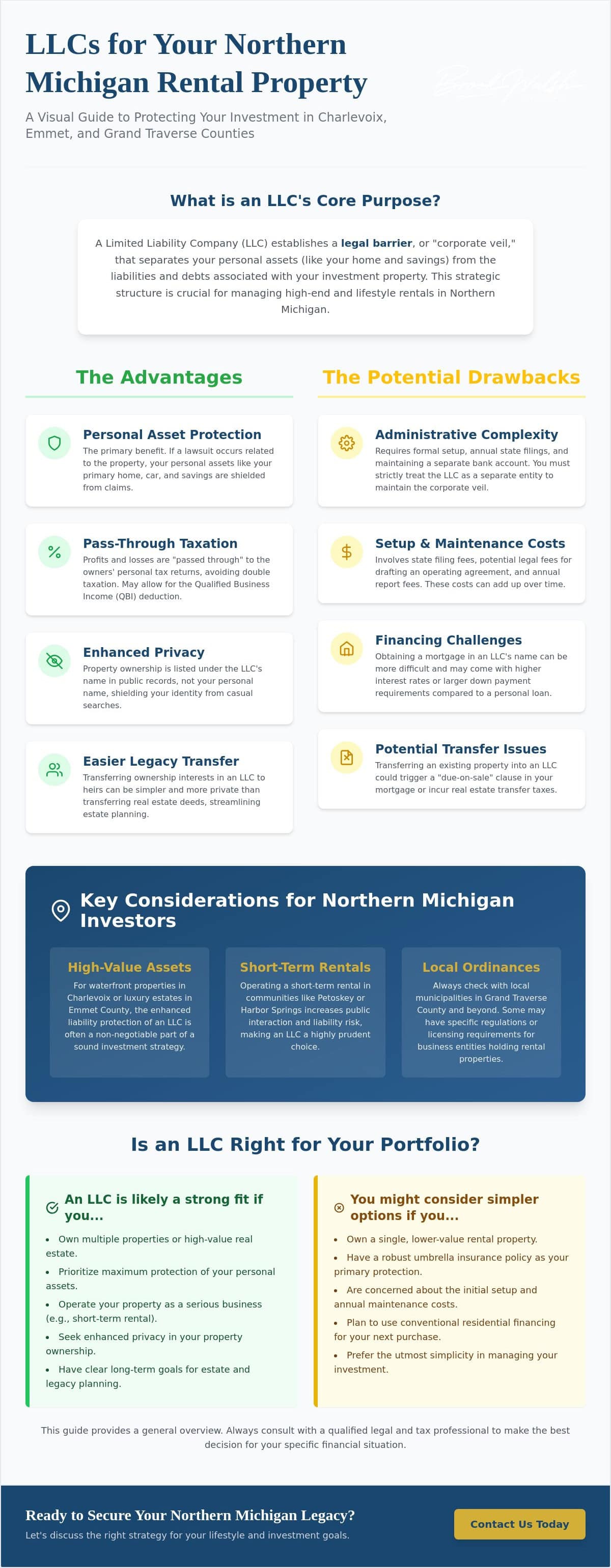
As we evaluate the LLC for rental property pros and cons, the most immediate benefit is the creation of a corporate veil. This legal barrier is particularly vital for luxury properties where the stakes are elevated. Whether you own waterfront lifestyle homes for sale in Petoskey or a ski-in/ski-out condo in Boyne City, an LLC ensures that property-related legal claims, such as guest injuries or contract disputes, don't jeopardize your personal wealth or primary residence.
The Core Purpose of a Rental LLC
The primary objective of this structure is to establish a clear legal boundary between your personal life and your investment portfolio. By holding title within an LLC, you ensure that property-specific debts and liabilities remain confined to the entity itself. This isn't merely a defensive move; it's a strategic one. In the 2026 tax landscape, where the Qualified Business Income (QBI) deduction remains a permanent fixture for pass-through entities, selecting the right structure is critical for maximizing your yield. For investors in Emmet County, this means your property can grow as a business asset while your personal estates remain untouched by its operational challenges.
LLC vs. Individual Ownership in Northern Michigan
While holding a property in your own name offers simplicity and potentially easier initial financing, it leaves your public profile exposed in local registries. Discerning investors often prefer the privacy an LLC provides, shielding their identity from casual searches in Grand Traverse County records. There is also a profound psychological peace of mind that comes with this separation. When guests enjoy your luxury vacation rental, you can focus on providing an exceptional experience, knowing you've built a robust shield around your family's broader financial interests. The role of the Operating Agreement becomes paramount here, especially for multi-generational properties, as it defines ownership and succession with a level of precision that individual titling cannot match.
Primary Advantages: Why Investors Choose LLCs for Lifestyle Properties
Selecting the right entity for your Northern Michigan investment is a decision that balances sophisticated protection with operational ease. For the discerning individual, choosing to hold an asset within a dedicated entity allows you to weigh the LLC for rental property pros and cons through the lens of long-term security and legacy preservation. This structure is particularly favored by those managing high-end short-term rentals in Charlevoix or Grand Traverse County, where the interaction between luxury guests and valuable property requires a formal legal boundary.
Beyond simple protection, an LLC enhances your professional standing. When you engage with high-end concierge services or specialized maintenance vendors in Petoskey, operating as a formal business entity signals a level of serious intent and professional commitment. This credibility extends to your guests, who often feel more secure booking a premium stay through a structured company rather than an individual. It transforms a personal hobby into a curated business enterprise.
Asset Protection and Liability Shielding
The most compelling reason to utilize an LLC is the robust shield it provides for your personal portfolio. Luxury properties often see a higher frequency of guest turnover, which naturally increases the risk of slip-and-fall incidents or contract disputes. By housing your rental within an LLC, you ensure that a legal claim against the property doesn't reach your primary residence or your personal savings. According to the U.S. Small Business Administration, determining Is an LLC Right for Your Northern Michigan Property? involves comparing these protections against your unique risk profile. It's vital to maintain this corporate veil by keeping business and personal finances entirely separate, ensuring the entity remains a distinct legal person in the eyes of Michigan courts.
Tax Flexibility and Pass-Through Benefits
Tax efficiency is another area where the LLC shines, particularly for high-net-worth investors. Unlike a corporation, which faces double taxation, an LLC allows income to flow directly to your personal tax return. This pass-through nature is highly beneficial under current 2026 tax laws, as the 20% Qualified Business Income deduction remains a permanent advantage for eligible taxpayers. You also gain the flexibility to deduct business-related travel when you visit Northern Michigan to oversee your investment in Northern Michigan real estate holdings. This structure simplifies your annual filings while maximizing the yield on your seasonal or year-round rental income.
For families looking to share ownership of a generational retreat, the LLC offers an elegant solution for multi-member management. You can clearly define roles, responsibilities, and succession plans within an Operating Agreement, making it much easier to transfer interests to the next generation without the need for complex property deed changes. This streamlined approach to estate planning ensures that your Northern Michigan legacy remains a source of joy rather than a point of administrative friction for your heirs.
Potential Drawbacks: Navigating the Complexity of LLC Ownership
While the shield of a corporate entity offers undeniable peace of mind, it's not without its own set of rhythmic demands. A balanced assessment of the LLC for rental property pros and cons reveals that sophistication often comes with administrative friction. For the investor in Grand Traverse County, this begins with the initial $50 filing fee for the Articles of Organization with the Michigan Department of Licensing and Regulatory Affairs. While this cost is modest, it's the precursor to a lifetime of meticulous record-keeping and annual $25 statement fees due every February 15th.
Securing a comprehensive guide to real estate LLCs can help you anticipate these recurring obligations, but it cannot entirely remove the hurdle of financing. As of June 2026, mortgage rates for investment properties typically sit 0.5% to 1% higher than those for primary residences. This means your waterfront sanctuary in Charlevoix may carry a higher interest rate if held within an LLC, as many traditional lenders prefer the simplicity of lending to an individual rather than a corporate entity. Insurance premiums also reflect this shift in structure; when a property is commercially titled, insurers may classify it as a business asset, which can lead to higher premiums compared to a standard homeowners policy.
Financing Challenges for LLC-Held Rentals
Lenders often view LLC-owned properties as higher risk, which typically results in down payment requirements of 25% or more. Many investors turn to DSCR (Debt Service Coverage Ratio) loans, which focus on the property's cash flow rather than personal income. In the second quarter of 2026, these loan rates ranged from 6.5% to 8.5%. If you already own a property and wish to transfer the title to an LLC, you must be wary of the "due on sale" clause. This provision allows a lender to demand full repayment if the ownership structure changes, potentially forcing a refinance at higher current rates. This is a vital consideration for those looking at investing in northern Michigan real estate, as the total cost of ownership must account for these subtle financial leaks.
Administrative Burden and Compliance
Maintaining the integrity of your corporate veil requires more than just a certificate on the wall. It demands a rigorous separation of finances, including dedicated bank accounts and separate accounting for all property-related expenses. Commingling personal and business funds is the primary reason LLC protections are forfeited in court. For owners of luxury lifestyle homes for sale, this means every maintenance check for a Petoskey estate or landscaping bill in Boyne City must be paid from the business account. Failure to respect these boundaries can invite a court to pierce the veil, leaving your personal wealth exposed to the very liabilities you sought to avoid. The goal is to ensure the protection remains worth the price of admission through disciplined management.
Local Considerations for Charlevoix, Emmet, and Grand Traverse Counties
The shores of Lake Michigan and the winding trails of the Traverse City region offer more than just scenic beauty; they present a complex regulatory environment for the modern investor. When evaluating the LLC for rental property pros and cons, you've got to look beyond general legal theory and examine the granular local ordinances that govern our specific communities. In Petoskey and Harbor Springs, for instance, short-term rental (STR) compliance is a moving target, with specific registration requirements that vary by zoning district. Holding these permits within an LLC can streamline the administrative process, especially when managing multiple assets across county lines.
Each county brings its own set of expectations and fiscal realities. In Grand Traverse County, where the median home price reached $479,900 in 2026, the high volume of cash transactions (35%) often necessitates a fast-moving and professional investment structure. An LLC provides that professional framework, allowing you to act with the precision required in a competitive market while keeping your personal identity private in local public records.
Zoning and Short-Term Rental Compliance
In Charlevoix, the city council and planning commissions have established clear frameworks for vacation rentals. An LLC serves as the official permit holder, simplifying the collection and remittance of local occupancy taxes. This structure provides a professional interface for local officials, ensuring that your investment remains in good standing. For those unsure how these rules apply to a specific parcel, engaging in real estate investment consulting is a prudent step to ensure your business model aligns with local land-use policies. In Boyne City, the interaction between an LLC and property tax assessments is particularly vital, as certain transfers of ownership can trigger an uncapping of the taxable value, leading to a significant increase in annual carrying costs.
Managing Luxury Lifestyle Assets Remotely
Owning a high-end escape in Bay Harbor or a historic cottage on Walloon Lake often requires a network of local specialists. From dock installation in the spring to meticulous winterization in the late autumn, the logistical demands of a waterfront property are substantial. Using an LLC to manage these vendor contracts provides an extra layer of professional distance and protection. It also facilitates a seamless integration with professional short-term rental management services, which are essential for out-of-area owners who can't personally oversee every guest turnover. This professional oversight ensures that the aesthetic and emotional value of your property is maintained to the highest standards.
The nuances of Northern Michigan's various counties mean that a one-size-fits-all approach rarely succeeds. Whether you're targeting the high-growth market of Grand Traverse or the established elegance of Emmet County, your entity choice must reflect the local reality. If you're ready to explore how these structures apply to specific luxury lifestyle homes for sale, we can help you find a property that fits both your lifestyle and your protection needs.
Making the Decision: Is an LLC Right for Your Northern Michigan Property?
The decision to formalize your investment through a corporate structure is the final piece of a well-crafted Northern Michigan real estate strategy. When weighing the LLC for rental property pros and cons, the answer often lies in the intersection of your portfolio's scale and your personal risk tolerance. If your holdings consist of a single, cherished family retreat that you occasionally rent to close associates, the administrative requirements might feel like a minor distraction. However, as you expand into multiple high-end assets across Charlevoix and Grand Traverse counties, the necessity of a robust liability shield becomes undeniable.
Many investors wonder if high-limit umbrella insurance can replace the need for a formal business entity. While insurance is an essential layer of protection, it's a reactive tool that relies on policy specificities and carrier approval. An LLC is a proactive legal barrier that defines the very nature of the asset's ownership. For the sophisticated investor, the analysis of LLC for rental property pros and cons is a vital step in ensuring that a single incident at a rental property doesn't unravel years of financial achievement. Combining both insurance and a corporate structure creates a comprehensive defense for your personal wealth.
A Strategic Framework for Decision Making
The value of the asset being protected should always dictate the complexity of the protection. For those pursuing waterfront lifestyle goals, the investment often represents a significant portion of a family legacy. You should evaluate the annual $25 Michigan filing fee and the necessity of separate accounting against the potential risk of personal exposure. If you own multiple properties, the benefits of an LLC structure grow exponentially; it allows you to silo risks so that a legal issue with one property doesn't impact the others. We always recommend a final consultation with a Michigan-based attorney and a tax professional who understands the specific nuances of the 2026 tax landscape and local property laws in Emmet County.
Next Steps for Your Investment Journey
Your path forward should be defined by the lifestyle you wish to lead and the heritage you intend to build. Whether you're identifying high-yield opportunities in ski-in/ski-out communities or looking for the quiet prestige of a golf course estate, the right structure is the foundation of your success. Brook Walsh Real Estate facilitates this transition by providing expert investment property analysis and seamless short-term rental management, ensuring your transition from buyer to owner is handled with precision.
Instead of a generic search, we invite you to begin a lifestyle-driven property search that aligns with your specific aesthetic and financial goals. Our team is here to help you move beyond the transaction, offering the guidance of a local expert who shares your appreciation for the unique character of Northern Michigan. Schedule a consultation today to refine your 2026 investment strategy and secure your place in this coveted geography.
Securing Your Northern Michigan Legacy
Balancing the LLC for rental property pros and cons is a nuanced journey that requires looking beyond the legal paperwork to the heart of your lifestyle goals. You've seen how a corporate shield can protect your personal wealth while simplifying the transfer of assets to future generations. You've also explored the necessity of navigating local short-term rental ordinances in communities like Harbor Springs and Petoskey with professional precision. Each decision you make today serves as the foundation for the enduring value of your Northern Michigan estate.
Brook Walsh provides the expert analysis of Northern Michigan ROI projections and deep expertise in the Charlevoix and Emmet county property markets needed to make these decisions with confidence. Our comprehensive vacation rental management ensures your luxury investment remains a source of pride and profit without the daily administrative burden. Discover high-yield investment opportunities with Brook Walsh. Your vision for a lakeside retreat or a mountain escape deserves a foundation built on expert authority and a shared passion for this unique region. We invite you to step into a future where your investments are as protected as they are prestigious.
Frequently Asked Questions
Do I need a separate LLC for each rental property in Michigan?
Holding each property in a separate LLC is a sophisticated strategy used to isolate risk within your portfolio. If a legal dispute arises at a Charlevoix waterfront estate, your other investments in Grand Traverse remain insulated within their own distinct entities. This siloing prevents a single liability from affecting your entire collection of assets, which is a common practice for investors holding multiple high-value properties where the stakes are elevated.
Can I transfer my existing Northern Michigan home into an LLC?
You can transfer an existing property into an LLC by executing a new deed, typically a quitclaim or warranty deed. This process moves the legal title from your personal name to the business entity. It is essential to contact your lender before proceeding to ensure the transfer doesn't trigger a "due on sale" clause. For many in Emmet County, this transition is a vital step in professionalizing their investment strategy.
Does an LLC protect me from all lawsuits related to my rental?
An LLC provides a shield for personal assets against property-specific claims but does not offer absolute immunity from all legal actions. It protects your primary residence and personal savings from incidents like guest injuries or contract disputes. However, understanding the LLC for rental property pros and cons involves recognizing that it won't protect against personal negligence or if you fail to maintain separate finances. Disciplined management is required to keep the protection intact.
What are the annual costs to maintain an LLC in Michigan for 2026?
In 2026, the annual cost to maintain a Michigan LLC is a $25 filing fee for the required annual statement. This document must be submitted to the Department of Licensing and Regulatory Affairs by February 15 each year to keep the entity in good standing. While the initial setup fee was a one-time $50, these recurring annual costs are a modest investment in the ongoing protection of your Northern Michigan lifestyle assets.
How does an LLC impact my ability to get a mortgage on a vacation home?
Financing an LLC-owned property usually requires a commercial or DSCR loan rather than a traditional residential mortgage. As of June 2026, these loan rates often range between 6.5% and 8.5%, which is typically higher than primary residence rates. Lenders also generally require a down payment of at least 25%. This increased cost is a trade-off for the privacy and asset protection that corporate ownership provides for your seasonal retreat.
Is an umbrella insurance policy better than forming an LLC?
Umbrella insurance and LLCs are complementary strategies that serve different protective functions for an investor. An insurance policy provides the funds to pay for damages and legal fees, while an LLC creates a legal barrier that prevents a claimant from reaching your personal accounts. Discerning investors in the Traverse City area often utilize both to ensure their wealth is protected by multiple layers of curated defense and financial security.
Does an LLC provide tax savings on my rental income?
An LLC is primarily a legal tool, though its pass-through nature offers significant tax efficiency for modern investors. It allows property income to be reported on your personal return, avoiding the double taxation faced by traditional corporations. In 2026, eligible investors can still benefit from the 20% Qualified Business Income deduction. This makes an LLC for rental property pros and cons a vital discussion for those seeking to maximize their high-yield returns.
How do I name my Northern Michigan rental property LLC?
Your LLC name must be unique within the Michigan state database and must include "Limited Liability Company" or the abbreviation "LLC." Many owners choose names that evoke the region's natural beauty or use the property's specific street address for administrative clarity. A name like "Petoskey Sunset Retreat LLC" establishes a professional identity while tethering the business to the refined regional lifestyle you are offering to your guests.
Posted by Brook Walsh onEnjoy this blog post? Click here to subscribe for updates
Leave A Comment