
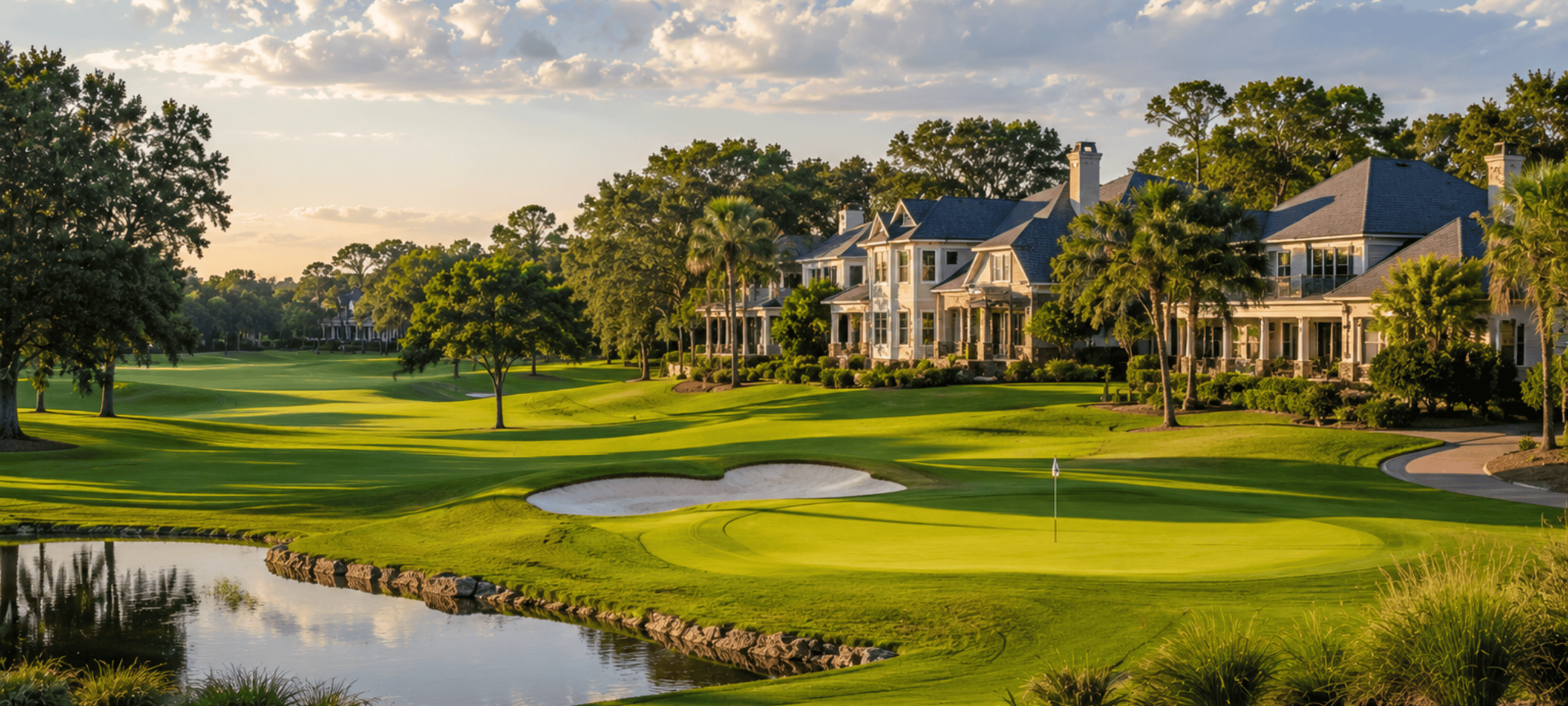
What if your most significant investment was also your greatest sanctuary, where the value of your home was tied as much to the quality of the turf as the strength of the market? You likely recognize that the allure of the fairway lifestyle is undeniable, offering a curated elegance that few other environments can match. However, you might also harbor valid anxieties regarding the long-term resale value or the potential for errant golf balls to disrupt your peace. Understanding the pros and cons of living in a golf course community is essential for anyone seeking to balance high-end luxury with practical property management in the Northern Michigan lifestyle.
I'll help you discover the nuanced balance between prestige, property value, and the daily realities of course-side living to determine if a golf community is your ideal sanctuary. In markets like Charlevoix, where golf community sales are exceeding $2 million as of April 2026, the financial stakes are as high as the social rewards. We'll examine the social and financial ROI of club memberships, provide a clear framework for evaluating specific lots, and analyze why luxury golf course communities now make up 8% of the Bay Harbor residential market. This article offers the clarity you need to choose a home that balances an unparalleled view with the privacy you deserve.

Key Takeaways
- Understand how a master-planned ecosystem provides a borrowed landscape, allowing you to enjoy acres of pristine greenery without personal maintenance responsibilities.
- Gain a clear framework for weighing the pros and cons of living in a golf course community, specifically regarding property value stability and the management of course-side noise.
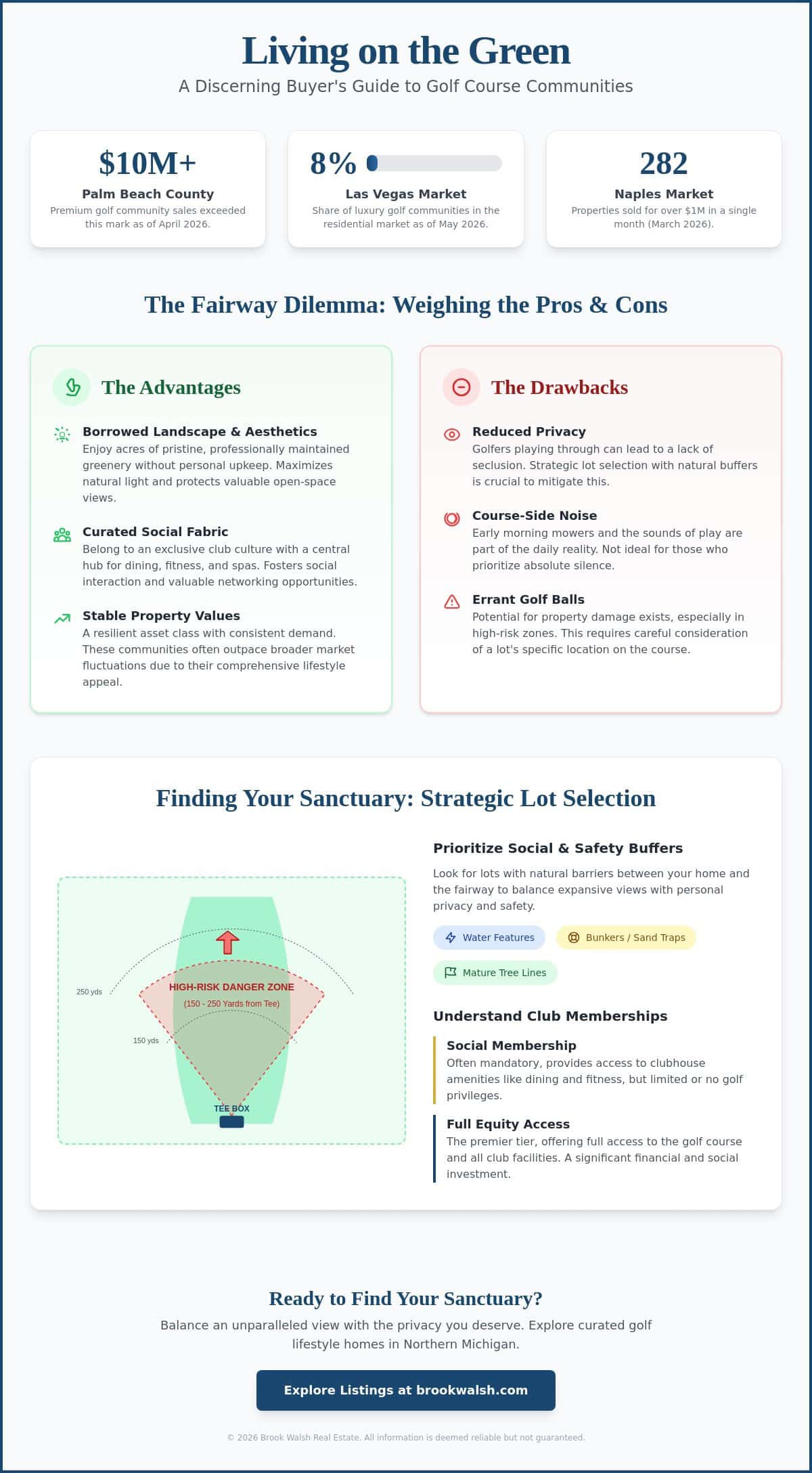
- Learn to navigate the distinct tiers of country club entry, from mandatory social memberships to full equity access, to optimize your financial and social ROI.
- Discover how to identify high-risk danger zones, particularly lots situated 150 to 250 yards from the tee, where errant golf balls are most prevalent.
- Master strategic lot selection by prioritizing social buffers like water features and bunkers that effectively balance an expansive view with your personal privacy.
Table of Contents
- The Allure of the Fairway: Defining the Golf Community Sanctuary
- The Advantages: Why Discerning Buyers Invest in the Green
- The Drawbacks: Navigating the Realities of Course-Side Living
- Financial and Governance Realities: HOAs and Memberships
- Finding Your Sanctuary: Strategic Lot Selection and Due Diligence
The Allure of the Fairway: Defining the Golf Community Sanctuary
A golf course community represents a meticulously master-planned ecosystem designed to provide an unparalleled level of aesthetic consistency. By 2026, the real estate market will have shifted decisively toward lifestyle-first acquisitions, where discerning buyers prioritize the emotional and aesthetic value of their environment over mere square footage. This transition is evident in markets like Charlevoix, where golf community homes led premium growth in the ultra-luxury segment as of April 2026. These properties are not just houses; they are essential emotional havens within a coveted geography, offering a sense of quiet confidence and prestige.
To gain a deeper perspective on this unique environment, watch this insightful video:
Understanding the pros and cons of living in a golf course community requires a discerning eye for detail. In March 2026, the Naples market saw 282 properties sold for $1 million or more, highlighting the enduring demand for this specific lifestyle. Exclusive, gated country club enclaves provide a level of privacy and security that public-access courses cannot match. The shift toward these sanctuaries is driven by a desire for a curated landscape that acts as a buffer against the unpredictability of the outside world. This stability is a hallmark of the Northern Michigan lifestyle, where the natural beauty of the region is integrated into the architectural details of every luxury home.
The Aesthetic Architecture of Golf Living
Professional landscaping ensures pristine curb appeal through every season, maintaining the value of the entire neighborhood. Living on the fairway provides the psychological benefit of a borrowed landscape, where you enjoy acres of manicured green without the burden of personal maintenance. These wide-open vistas influence home interior design, allowing for natural light maximization and the preservation of protected views. Such vistas are increasingly rare in modern residential development, making them a high-value investment. You can explore these unique environments through our golf lifestyle homes for sale, which highlight the profound connection between a resident and their environment.
Prestige and the Social Fabric
The social ROI of these communities is found in the sense of belonging to an exclusive club culture. The layout often encourages walking and golf cart travel, which fosters spontaneous social interaction among neighbors. The clubhouse serves as a central hub, offering fitness centers, spas, and fine dining that elevate the daily experience. This curated social ecosystem provides networking opportunities and a rhythm of life that feels both comprehensive and easy to follow. It is a lifestyle that suggests you deserve a guide who shares your appreciation for the finer details of life and the unique character of the region.
The Advantages: Why Discerning Buyers Invest in the Green
Choosing a residence within these manicured borders is a strategic decision that transcends simple homeownership. It is about securing a resort-at-home experience that simplifies your leisure time while anchoring your capital in a resilient asset class. In May 2026, luxury golf course communities make up approximately 8% of the residential market, showcasing a stability that outpaces broader market fluctuations. This segment remains attractive because it offers a comprehensive lifestyle package that includes wellness centers, fine dining, and growing trends like professional-grade pickleball courts. When evaluating the pros and cons of living on a golf course, the consistent demand for these integrated amenities often outweighs the maintenance costs for the discerning investor.
Security remains a cornerstone of this lifestyle. Gated enclaves frequently employ 24/7 patrols and restricted access protocols, creating a sense of quiet confidence for residents. This environment allows you to focus on the aesthetic and emotional value of your home rather than the logistics of protection. It is a sanctuary where the transition from a busy professional life to a calm, steady evening is seamless. If you are seeking a property that reflects your appreciation for the finer details, you might search for your ideal home by lifestyle to find a community that aligns with these high standards.
Investment Resilience and Resale Value
Golf-frontage properties typically command a significant premium, often ranging from 15% to 30% over comparable homes without course views. This scarcity factor is particularly pronounced in high-demand regions where developable land is finite. As of May 2026, the projected annual price appreciation for luxury properties over $1 million in these communities sits between 2.5% and 3.5%. HOA-enforced standards play a critical role here. They prevent neighborhood blight and ensure that every facade maintains the pristine character of the Northern Michigan Lifestyle. This collective commitment to excellence protects your long-term ROI in a way that standard subdivisions cannot match.
The Multi-Generational Lifestyle Benefit
While many associate these enclaves with retirement, the 2026 market sees a surge in younger families seeking secure, low-traffic environments. The cart culture within these gates allows for effortless social visits and local errands, fostering a safe atmosphere for all ages. It is a unique social ecosystem where the profound connection between a person and their environment is nurtured daily. You can explore our luxury lifestyle homes for sale to see how these elements harmonize to create an exquisite living experience for every generation. This multi-generational appeal ensures that the pros and cons of living in a golf course community remain balanced in favor of long-term satisfaction and community growth.
The Drawbacks: Navigating the Realities of Course-Side Living
While the allure of a fairway view is unparalleled, a sophisticated buyer understands that every sanctuary has its unique operational rhythms. Navigating the Pros and Cons of Living Next to a Golf Course requires looking beyond the pristine aesthetics to the daily realities of course-side life. One such reality is the privacy trade-off. Your backyard, while offering an exquisite vista, occasionally becomes a spectator gallery for the weekend foursome. Additionally, most community deeds include an easement allowing the club or players limited access to retrieve balls or maintain the course edge. These aren't deterrents but factors to weigh when evaluating the pros and cons of living in a golf course community to ensure the lifestyle matches your expectations for seclusion.
Managing the 'Ball Strike' Risk
The physical risk of errant golf balls is a common concern that requires a grounded, expert perspective. Legally, many jurisdictions apply the concept of "assumption of risk," suggesting that by purchasing a home on a fairway, the owner accepts a degree of liability for damage. To mitigate this, discerning owners invest in architectural glass solutions, such as laminated impact-resistant panes, and strategic landscaping. Tall, dense evergreens or decorative trellises can act as a natural buffer without sacrificing the view. It's essential to review the specific CC&Rs of the neighborhood, as some communities have updated their rules in 2026 to clarify ball retrieval rights and property damage protocols. This due diligence ensures your home remains a secure emotional haven.
Operational Noise and Activity Rhythms
The chorus of a golf community isn't limited to morning birds. Maintenance crews typically begin their work at 5:00 AM to ensure the greens are pristine for early tee times. This dawn chorus of commercial mowers is a rhythmic part of the "Up North" lifestyle that residents eventually find predictable. It's a detail to consider during your initial research. Tournament weekends also introduce a different energy, potentially increasing local traffic and limiting club access for residents. When selecting a lot, consider the proximity to cart paths. While the hum of electric carts is generally quiet, the social chatter from passing golfers can be more audible than expected. For those prioritizing absolute quiet, investing in northern Michigan real estate requires a careful analysis of lot positioning to balance the desire for a view with the need for a quiet retreat.
Financial and Governance Realities: HOAs and Memberships
Understanding the pros and cons of living in a golf course community requires a deep dive into the financial architecture that sustains these exquisite environments. As of April 2026, HOA fees in premier locations like The Woodlands range from $200 to $400 per month, while annual fees in gated communities like Dunes West are approximately $2,020. These costs represent an investment in a managed social ecosystem, covering essential services such as 24/7 security, pristine landscaping, and infrastructure maintenance. To truly appreciate the value of these structures, you should learn more about investing in lifestyle real estate to see how professional management preserves long-term property values.
The financial commitment often extends beyond the standard HOA fee. Many communities require mandatory memberships that can significantly impact your annual carry costs. In January 2026, initiation fees at elite clubs range from $4,000 to as high as $150,000 for a one-time contribution. It's also vital to account for annual dues, which typically fall between $500 and $15,000 depending on the exclusivity of the club. These figures highlight the importance of evaluating the social and financial ROI of your potential home. If you're ready to explore these opportunities, you can request an investment property analysis to ensure your purchase aligns with your long-term goals.
Unpacking the Cost of the Sanctuary
Golf community HOAs are often higher than standard residential associations because they maintain a specialized, high-maintenance landscape. You must distinguish between equity and non-equity memberships. Equity memberships offer a share of club ownership and potential returns upon resignation, whereas non-equity memberships simply provide access. Financial health is paramount; always review the club's debt-to-equity ratio and membership retention rates from the 2025 fiscal year. Be prepared for special assessments, which are one-time fees for major course renovations or clubhouse upgrades that ensure the community remains a top-tier sanctuary.
Restrictive Covenants and Lifestyle Control
Strict architectural guidelines are the invisible hands that maintain the aesthetic of the Northern Michigan Lifestyle. While these rules limit personal customization, they prevent neighborhood blight and protect your investment. Common covenants in 2026 include specific regulations for golf cart storage, exterior paint palettes, and even the species of trees allowed in your garden. Due diligence is non-negotiable. You should read the minutes of the last three HOA board meetings to identify any recurring issues or planned fee increases. This step ensures you're entering a community that is as well-governed as it is beautiful.
Finding Your Sanctuary: Strategic Lot Selection and Due Diligence
Identifying the perfect lot is an exercise in precision. You must look beyond the initial charm of the view to the technical layout of the course itself. Understanding the pros and cons of living in a golf course community means recognizing that not all fairway frontage is created equal. One of the most critical steps in your due diligence is identifying the danger zones. Statistics from 2025 show that lots situated between 150 and 250 yards from the tee box are at the highest risk for ball strikes. This is the typical landing area for the average amateur golfer, making these properties more susceptible to accidental damage than those closer to the tee or the green.
To mitigate these risks, you should look for a social buffer. Properties separated from the active field of play by water features or expansive sand bunkers offer a layer of protection without sacrificing the pristine vista. It is also essential to audit the club's long-term master plan. With the 2026 Florida Infill Redevelopment Act and similar legislative trends elsewhere, understanding how the course might evolve is vital for protecting your sanctuary. Consulting with a lifestyle specialist broker who understands the specific vibe of various enclaves can provide a perspective that data alone cannot, ensuring your purchase aligns with the Northern Michigan Lifestyle.
Strategic Positioning on the Course
Positioning your home behind a tee box often provides superior privacy and safety compared to living alongside a fairway. You'll avoid the direct line of fire while still enjoying the manicured greenery. Corner lots overlooking a dogleg are also highly coveted. They offer unique, multi-angled views that many lack. Additionally, evaluate the height of the green relative to your patio. A green that sits slightly lower than your living space can maximize your privacy, preventing golfers from having a direct line of sight into your home. These granular details are what separate a standard property from a true retreat.
The Final Walkthrough Checklist
Perform a walkthrough during peak hours before finalizing your investment. A Saturday at 9:00 AM provides a realistic assessment of noise levels and golfer activity. During the inspection, look closely at the siding and roof for existing ball pockmarks. These subtle signs are the most honest indicators of the lot's history with errant shots. You can browse our premier golf-lifestyle homes to see how strategic lot selection defines the region's most exclusive properties. This final layer of scrutiny ensures your home is a secure emotional haven, balancing the pros and cons of living in a golf course community with professional foresight.
Securing Your Future in the Northern Michigan Lifestyle
Deciding on a fairway residence requires a sophisticated understanding of how lot positioning and club governance impact your long-term ROI. By 2026, the market will have proven that properties within these master-planned ecosystems offer a unique resilience, especially when you account for the 15% to 30% premium associated with protected views. Success in this environment depends on your ability to navigate the pros and cons of living in a golf course community with a discerning eye for detail. Whether it's avoiding the high-risk landing zones or vetting the financial health of the club's 2025 fiscal records, your due diligence is the foundation of a lasting sanctuary.
As a specialist in high-yield luxury investments and lifestyle-driven property searches, I offer deep knowledge of master-planned community governance to guide your next move. You deserve a partner who understands the aesthetic and emotional value of the Northern Michigan experience. I invite you to discover your next sanctuary in our curated golf community listings and experience the quiet confidence of a perfectly selected home. Your ideal retreat is within reach, and I'm here to ensure it exceeds every expectation.
Frequently Asked Questions
Who is responsible for a broken window from a golf ball?
The homeowner is typically responsible for repairing a broken window under the legal principle of assumption of risk. By choosing a residence on a fairway, you acknowledge the inherent possibility of errant shots entering your property. While some golfers may offer to pay for the damage, most community CC&Rs protect the club and its players from liability. Investing in impact-resistant glass is a proactive way to secure your sanctuary without sacrificing the view.
Are golf course homes a good investment in 2026?
Golf course homes remain a resilient investment in 2026, with luxury properties in markets projected to appreciate between 2.5% and 3.5% annually. The scarcity of fairway lots ensures steady demand even during periods when the broader residential market experiences a cooling. These properties offer a comprehensive lifestyle package that maintains high resale value through strict architectural standards and world-class amenities that appeal to a wide range of discerning buyers.
What is the difference between a social and a full golf membership?
A social membership generally grants access to the clubhouse, dining facilities, and wellness centers, while a full membership adds unlimited tee times and practice facility access. Social memberships often cost between $500 and $5,000 annually, making them an attractive entry point for those who prioritize the social ecosystem over the game itself. Understanding this distinction is a key part of weighing the pros and cons of living in a golf course community if you don't play the sport regularly.
How loud are the lawnmowers on a golf course?
Commercial mowers produce a rhythmic hum that typically begins around 5:00 AM to ensure the greens are pristine for the first tee times of the day. While the noise is audible, it's predictable and usually subsides by mid-morning as the crews move further down the course. Many residents find this dawn chorus a small trade-off for the benefit of enjoying a manicured landscape that requires no personal maintenance on their part.
Can golfers enter my yard to retrieve their ball?
Most property deeds include a limited easement that allows golfers to enter the edge of your yard on foot to retrieve errant balls. These rules generally prohibit players from hitting the ball from your property or driving carts onto your lawn. It's essential to review your specific community’s CC&Rs to clarify the exact boundaries of these retrieval rights and ensure your sense of privacy remains uncompromised.
Do I have to be a golfer to live in a golf course community?
You don't need to be a golfer to appreciate the security, prestige, and aesthetic consistency of a master-planned golf enclave. Many residents choose these communities for the resort-at-home experience, focusing on the fitness centers, spas, and curated social events rather than the fairways. It's a lifestyle choice that emphasizes a profound connection between a person and their environment, regardless of whether they ever pick up a club.
How much are typical HOA fees in a luxury golf community?
Typical HOA fees vary significantly by region, with monthly costs in areas like The Woodlands ranging from $200 to $400 as of April 2026. In other gated communities, annual fees are approximately $20,000 to cover extensive amenities and security. These fees are separate from club memberships and are essential for maintaining the pristine character and long-term value of your Northern Michigan Lifestyle sanctuary.
What should I look for in a golf community's financial report?
Prioritize the debt-to-equity ratio and the health of the capital reserve fund when reviewing a community's financial report. A robust reserve fund ensures the club can handle course renovations or clubhouse upgrades without imposing sudden special assessments on the homeowners. You should also examine membership retention rates from the 2025 fiscal year to gauge the long-term stability and social vibrancy of the community you're considering.
Posted by Brook Walsh onEnjoy this blog post? Click here to subscribe for updates
Leave A Comment