
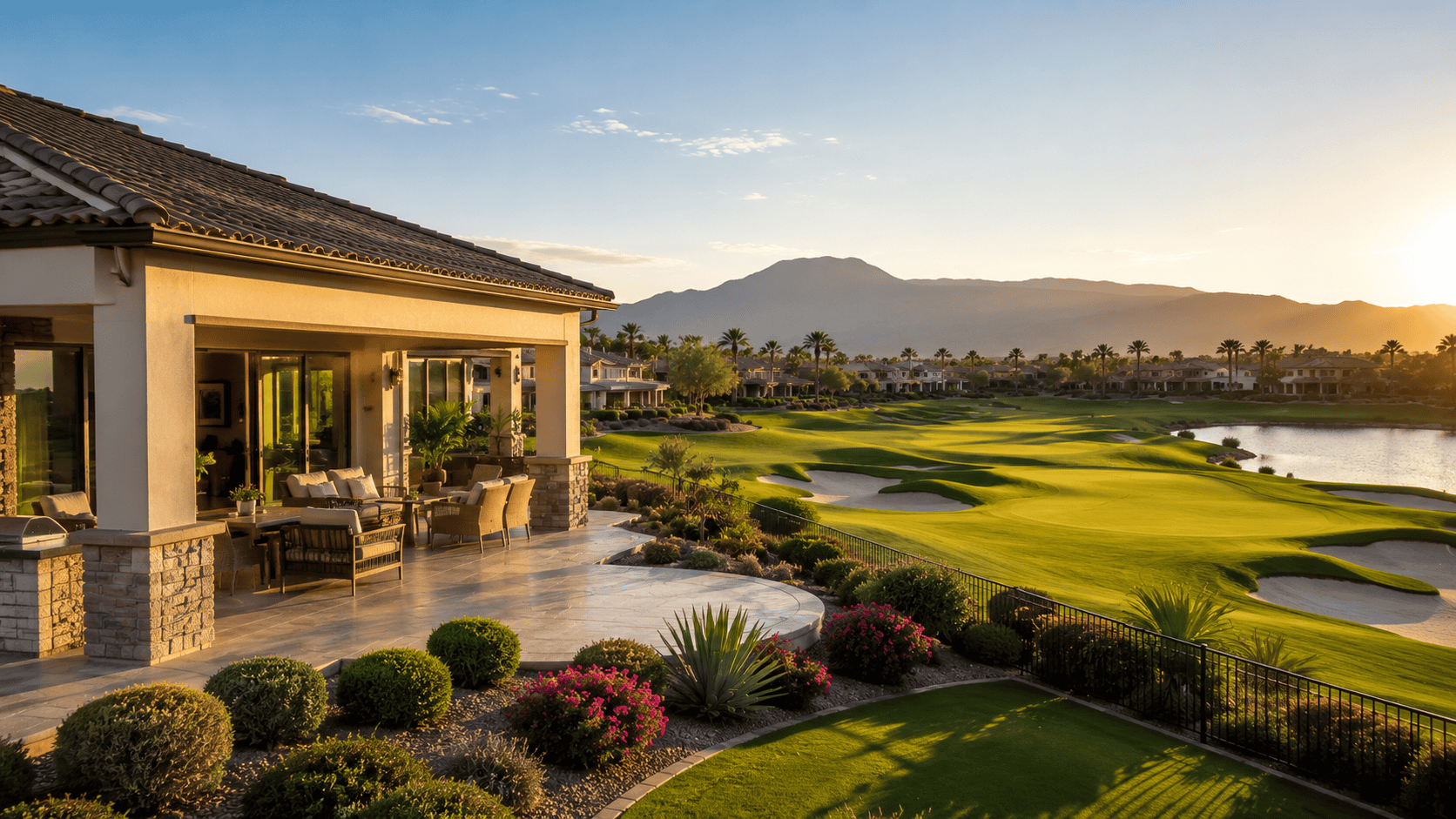
Did you know that properties bordering the fairway often command a national "green premium" of up to 20% compared to their off-course counterparts? For many discerning buyers in Charlevoix or Grand Traverse, the allure of morning mist over a manicured green and the quiet prestige of a clubhouse address is undeniable. You've likely questioned if this aesthetic appeal translates into a sound financial decision. You want to know: is a golf course home a good investment in a 2026 market that's finally finding its equilibrium?
It's a valid concern, especially when balancing recurring HOA fees against the potential for noise or privacy shifts. This guide will help you discover the financial resilience and lifestyle prestige of these properties to determine if they align with your investment portfolio. We'll examine the specific short-term rental landscape across Emmet County, analyze the "green premium" within Northern Michigan's unique geography, and provide the data you need to invest with absolute confidence in this sophisticated regional market. By understanding the intersection of scarcity and demand, you can transform a passion for the game into a strategic sanctuary.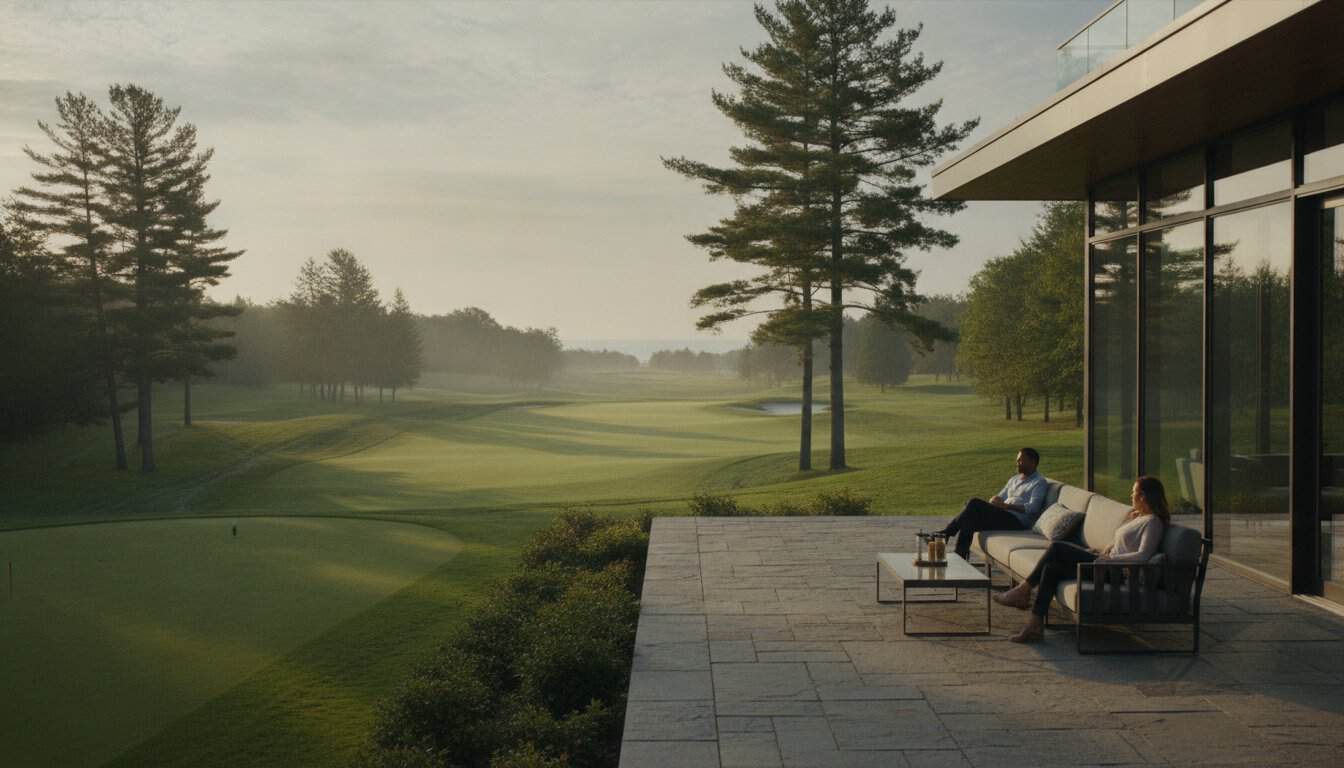
Key Takeaways
- Understand how the "Green Premium" acts as a hedge against market volatility by capitalizing on the finite availability of fairway-frontage land in Charlevoix and Emmet counties.
- Analyze the comprehensive cost-to-gain ratio to see if a golf course home is a good investment when weighed against specialized insurance and club membership fees.
- Explore the high-yield potential of short-term rentals in renowned resort corridors, where the demand for luxury golf access drives significant peak-season ROI.
- Uncover the advantages of the multi-season lifestyle model that pairs premier golfing with the winter allure of skiing and lakefront recreation in Grand Traverse.
- Learn why localized expertise is the deciding factor in identifying properties poised for growth due to upcoming community enhancements or regulatory shifts.
Table of Contents
- The Financial Foundation: Resale Value and Market Resilience
- Evaluating the Green Premium: Costs vs. Long-Term Gains
- The Short-Term Rental Potential: Generating ROI in Resort Communities
- Beyond the Fairway: The Multi-Season Lifestyle Advantage
- Navigating the Northern Michigan Market: Why Local Expertise Matters
The Financial Foundation: Resale Value and Market Resilience
The concept of the "Green Premium" is a cornerstone of luxury real estate valuation. When asking if a golf course home is a good investment, you have to look at the historical data regarding properties adjacent to fairways. These residences often command prices 15% to 30% higher than comparable homes without course frontage. This valuation isn't merely a reflection of the sport's popularity; it's a premium paid for a guaranteed landscape that won't be replaced by new development. It's an investment in a view that remains curated and pristine in perpetuity.
In regions like Charlevoix and Grand Traverse, the scarcity factor plays a vital role in protecting long-term value. Golf course acreage is finite. Once a course is established, the surrounding land becomes a precious commodity. This scarcity creates a natural "floor" for property values. Even during broader economic shifts, the prestige associated with golf course communities tends to buffer these assets against the volatility often seen in standard residential sectors. You aren't just buying a house; you're securing a stake in a limited geographical resource.
To gain a deeper perspective on the financial logic behind these acquisitions, watch this helpful video:
The Scarcity of the View
A permanent, professionally manicured view is a tangible asset that appraisers weigh heavily. Unlike a standard wooded lot where neighbors might eventually clear trees or build obstructive structures, a fairway view offers a sense of infinite, manicured space. This psychological appeal is profound for buyers seeking serenity and order. The unobstructed view premium remains a primary driver of appraisal value, ensuring that your sightline remains as elegant as the day you purchased the property.
Market Performance in Northern Michigan
Resort-adjacent properties in Petoskey and Harbor Springs have shown remarkable resilience over the last decade. These golf course communities are no longer just summer retreats; they've transitioned into year-round lifestyle hubs. Buyers are increasingly looking at investing in Northern Michigan real estate as a way to diversify their portfolios with assets that offer both emotional and financial returns. In Emmet and Charlevoix counties, the combination of world-class greens and proximity to Lake Michigan creates a unique micro-market where demand consistently outpaces supply. This sustained interest confirms that for many, a golf course home is a good investment that transcends the boundaries of the 18th hole.
Evaluating the Green Premium: Costs vs. Long-Term Gains
Deciding if a golf course home is a good investment requires a clear-eyed look at the balance between initial acquisition costs and the trajectory of equity growth. While the entry point for these properties is higher, historical data suggests they appreciate over time more reliably than standard residential lots. You're paying for more than just square footage. You're investing in an environment that is meticulously maintained by a collective, ensuring your surroundings never lose their curated elegance.
Beyond the mortgage, you must account for the specialized expenses that sustain this lifestyle. HOA fees in elite Northern Michigan communities can vary. For instance, fees in the Bay Harbor Golf Club area are approximately $500 per month, while communities like Springbrook Golf Club may be closer to $300. These aren't just administrative costs; they are the lifeblood of the community's prestige. They fund the manicured common areas and infrastructure that keep the neighborhood's aesthetic appeal at its peak. You should also consider Michigan's property tax landscape, where the average effective rate for 2026 sits between 1.19% and 1.25% of market value.
A frequent point of discussion is the trade-off between the expansive feel of the fairway and personal privacy. Modern community planning in Charlevoix and Emmet counties addresses this through strategic setbacks and natural berms. While you gain a backyard that feels like a private park, you do share that vista with the occasional golfer. For most investors, the visual serenity of hundreds of acres of rolling green far outweighs the occasional presence of a cart in the distance. It's about choosing an emotional haven that offers a sense of infinite space.
Understanding Membership and HOA Structures
Luxury communities in Grand Traverse often differ in their membership requirements. Some require mandatory social memberships to support the clubhouse and dining facilities, while others keep golf memberships optional. A well-funded HOA is your greatest ally in protecting resale value. Strict architectural standards ensure that every renovation in the neighborhood only enhances your own property’s worth. If you're curious about specific community requirements, exploring golf lifestyle homes for sale can provide a clearer picture of regional variations.
Strategic Lot Selection
Not all fairway lots offer the same return on investment. Tee-box views are often quieter and safer from errant balls, whereas green-side locations offer high-drama vistas but more foot traffic. Mid-fairway lots typically provide the best balance of panoramic views and privacy. Lot orientation can impact both natural light and errant ball probability, and choosing a site on the "miss" side of a dogleg can significantly reduce risk while keeping the view intact. Internal lots usually command higher prices than those on the community perimeter because they remain insulated from external road noise.
The Short-Term Rental Potential: Generating ROI in Resort Communities
Northern Michigan's resort corridor is more than a scenic escape; it's a high-performance engine for short-term rental income. When investors evaluate if a golf course home is a good investment, they often look beyond simple appreciation to the immediate cash flow generated by seasonal vacationers. In communities like Boyne Mountain or the luxury enclaves of Emmet County, properties don't just sit idle during the transitions between peak seasons. Current investment trends indicate that properties offering specialized amenities, like direct fairway access, significantly outperform standard residential rentals in the same zip code. A golf-lifestyle rental often commands a substantial nightly premium during peak summer months compared to a non-amenitized home nearby.
The "shoulder season" advantage is perhaps the most compelling financial argument for these properties. While standard waterfront homes may see a dip in interest once the lake temperatures drop, golf course homes attract a consistent stream of guests through the vibrant autumn months. The crisp air and changing foliage of Charlevoix and Grand Traverse counties create a secondary peak for golf enthusiasts. This multi-season utility ensures that your asset remains productive for a larger portion of the year, bridging the gap between the summer sun and the first snowfall on the slopes. This hybrid appeal is a unique characteristic of the Northern Michigan market that protects your bottom line.
Maximizing Occupancy Rates
Proximity to championship courses allows owners to set premium nightly rates that reflect the exclusivity of the experience. The appeal of resort lifestyle homes for corporate retreats and specialized golf groups cannot be overstated. These guests often seek high-end finishes, gourmet kitchens, and expansive outdoor living spaces that overlook the greens. To drive five-star reviews, focus on amenities like high-speed connectivity for working vacations and curated outdoor fire pits that allow guests to soak in the twilight views after a day on the course. High occupancy is less about finding guests and more about offering a sanctuary they can't find elsewhere.
Professional Management as an ROI Safeguard
Maintaining a luxury asset requires a level of oversight that goes beyond basic cleaning services. Expert short-term rental management is essential to mitigate the wear and tear that can occur with high-end properties. At Brook Walsh, we utilize data-driven pricing models to ensure your rental income is maximized based on local event calendars and real-time demand shifts. This approach transforms the concept of lifestyle investing into a hands-off professional transaction. By entrusting your property to a team that understands the nuances of the Charlevoix and Petoskey markets, you ensure that your investment remains a pristine emotional haven for yourself and a high-performing asset for your portfolio.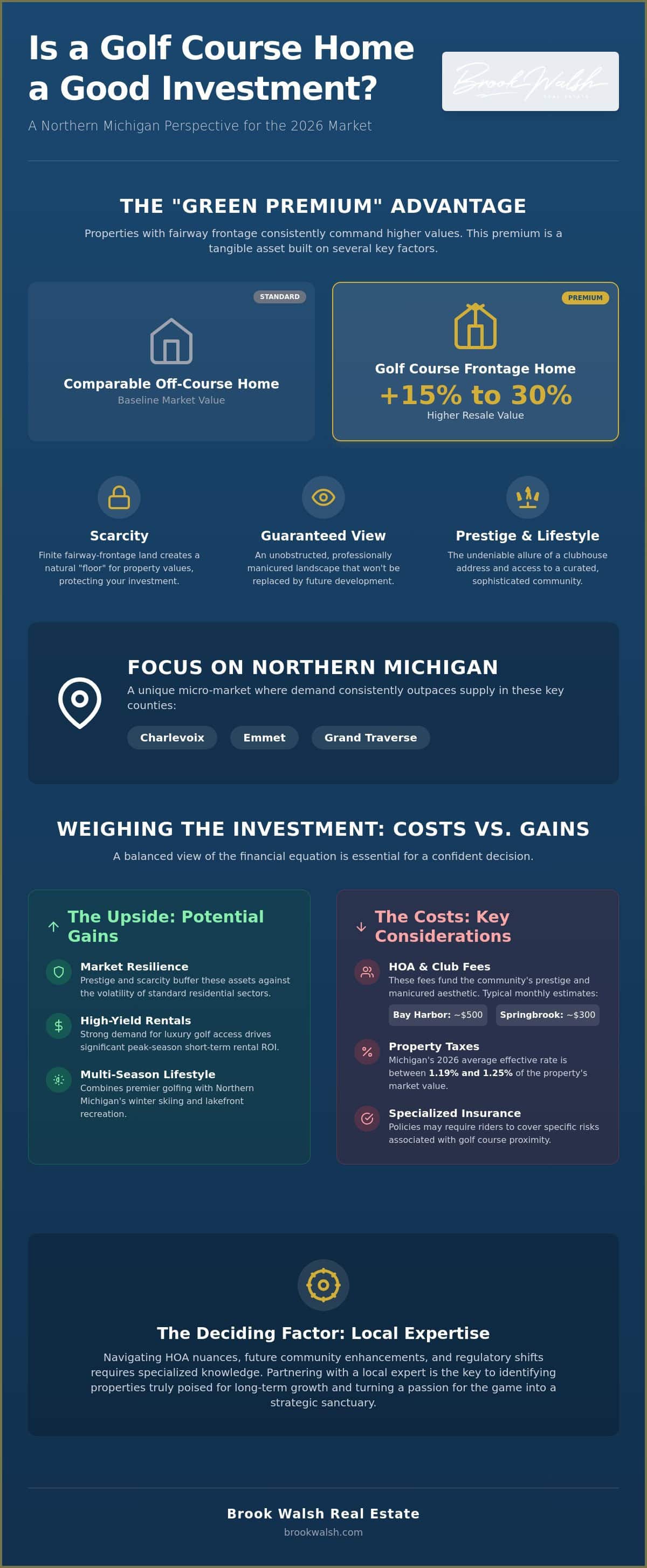
Beyond the Fairway: The Multi-Season Lifestyle Advantage
A common misconception suggests that the value of a fairway-front property begins and ends with the summer sun. In reality, the most astute buyers in Northern Michigan focus on a "Lifestyle Hybrid" model that provides utility across all four seasons. When analyzing if a golf course home is a good investment, it's essential to look at the property’s proximity to the region's other natural treasures. In Grand Traverse and Emmett counties, these estates often serve as the primary gateway to world-class skiing, intricate hiking networks, and autumn foliage tours. You aren't just purchasing a piece of land; you're securing a permanent seat in a theater of seasonal change.
This versatility is a major reason why homes in golf lifestyle communities are increasingly sought after as primary residences. The clubhouses in Charlevoix act as sophisticated social anchors, providing a space for networking and high-end events that persist long after the 18th hole is closed for the winter. This social infrastructure creates a sense of belonging that standard residential developments simply cannot replicate. It's about the emotional and aesthetic value of the regional experience, where the club becomes an extension of your own living room.
The Year-Round Resort Ecosystem
Communities in Harbor Springs and Petoskey have mastered the transition from summer greens to winter wonderlands. Many of these developments are designed with an "active luxury" demographic in mind, attracting younger investors who demand immediate access to mountain biking and snowshoeing trails. The proximity to waterfront lifestyle homes adds another layer of value, as many golf residents enjoy deeded lake access or shared dockage. This interconnected ecosystem ensures that the demand for these properties remains high regardless of the month on the calendar.
Architectural and Aesthetic Value
The visual language of these estates has evolved into a blend of "modern cottage" and "mountain luxury" architecture. These designs prioritize natural materials like stone and reclaimed wood, ensuring the structures harmonize with the Northern Michigan landscape. For those wondering if a golf course home is a good investment for their long-term legacy, the answer often lies in this architectural permanence. The aesthetic of the community as a whole supports individual property appreciation, as strict architectural guidelines prevent the introduction of jarring or dated designs. It's a curated haven where every architectural detail serves as an emotional anchor within a secure, gated environment.
Browse our latest luxury lifestyle homes for sale to see how these multi-season assets can elevate your portfolio.
Navigating the Northern Michigan Market: Why Local Expertise Matters
Standard real estate searches often fail to capture the nuances of a region defined by its topography and seasonal rhythms. In Northern Michigan, the distance between a standard residential lot and a premier fairway address is measured in more than just yards; it's measured in the quality of the daily experience. Determining if a golf course home is a good investment requires a lens that filters for specific community dynamics rather than just zip codes. You need an advisor who understands that a property in Grand Traverse might offer a different social cadence than one in the heart of Charlevoix or Emmet County.
Local brokerage insight is your greatest safeguard against unforeseen variables. We monitor upcoming course renovations, potential shifts in club management, and the financial health of homeowner associations. These granular details can significantly impact both your lifestyle and your long-term ROI. The "Brook Walsh Advantage" is built on the philosophy of matching discerning buyers with properties that fit their specific recreational DNA. Whether you prioritize a quiet sanctuary near the tee box or a high-energy hub near the clubhouse, we ensure the transaction aligns with your personal and financial aspirations.
Utilizing Lifestyle Search Platforms
To find the most targeted opportunities, we recommend searching by lifestyle rather than traditional parameters. This approach allows you to identify clusters of properties that offer the exact amenities you crave, from private beach access to proximity to the village center. For those seeking a lower entry point into these prestigious enclaves, filtering for condominium lifestyle homes can provide the same elite views and club access with a more streamlined maintenance profile. Using localized data ensures that your purchase is a "quiet confidence" investment, backed by a deep understanding of the regional landscape.
The Path to Acquisition
When you're ready to evaluate a golf property in Petoskey or Boyne City, the final walkthrough is your moment to verify the property's alignment with your goals. It's about seeing the "invisible" assets that contribute to a home's resilience. Consider this checklist for your final assessment:
- Verify the property’s orientation for optimal natural light and protection from errant golf balls.
- Assess the condition of community infrastructure, including cart paths and common landscaping.
- Confirm the specific membership tier associated with the property and any pending assessments.
- Evaluate the "rental readiness" of the home, focusing on storage for guests' sporting equipment.
- Review the 2026 property tax projections, keeping in mind Michigan's 2.7% inflation cap on taxable value growth.
The journey to owning a piece of Northern Michigan’s fairway heritage should be as smooth as a well-placed putt. It requires a guide who values precision, exclusivity, and the profound connection between a person and their environment. We invite you to explore Northern Michigan luxury lifestyle homes and discover how a golf course home is a good investment for your future and your peace of mind.
Securing Your Sanctuary on the Fairway
The decision to acquire a property in these elite corridors rests on the balance of aesthetic allure and financial logic. You now understand that the Green Premium is a reflection of scarcity and that the multi-season nature of Northern Michigan ensures your asset remains productive year-round. Whether you're eyeing the rolling hills of Grand Traverse or the refined estates of Charlevoix and Emmet, the data confirms that a golf course home is a good investment when approached with professional precision. We provide the specialized expertise and data-driven ROI projections for vacation rentals that you need to move forward with quiet confidence.
Our proprietary lifestyle search platform is designed to distill the complexities of the market into a curated selection of opportunities that mirror your personal values. It's time to transition from aspiration to ownership. Begin your lifestyle-driven property search with Brook Walsh and find the emotional haven you deserve in a region that rewards those who appreciate the finer details of life. Your legacy within this coveted geography is waiting to be written.
Frequently Asked Questions
Is a golf course home harder to sell than a standard home?
Properties within these enclaves often sell faster than standard residential homes when they're positioned as lifestyle assets. The inherent scarcity of fairway-frontage land in Charlevoix and Emmet counties creates a consistent pool of motivated buyers. These individuals aren't just looking for a house; they're seeking entry into a specific social ecosystem. This targeted demand helps maintain liquidity even when the broader market experiences a normalization period.
How much do errant golf balls typically affect property value?
The impact on valuation is generally negligible if the property is situated in a low-risk zone, such as a mid-fairway or tee-box location. Modern course designs in Grand Traverse prioritize deep setbacks and natural buffers to protect residences. Most investors find that the visual serenity and the national green premium far outweigh the minor risks associated with the game. Strategic lot selection is the key to minimizing any perceived drawback.
Do I have to be a golfer to buy a home in a golf community?
You don't need to play the game to appreciate the "emotional haven" these communities provide. Many residents in Petoskey and Harbor Springs choose these locations for the manicured landscapes, walking trails, and high-end clubhouse dining. The value lies in the curated environment and the quiet prestige of the neighborhood. It's a lifestyle choice that prioritizes order, security, and a profound connection to a professionally maintained landscape.
Are HOA fees higher for golf course properties in Northern Michigan?
Association fees are typically higher because they fund a more extensive array of amenities and infrastructure. In premier communities, you might see monthly dues ranging from $300 to $500 to cover everything from professional landscaping to clubhouse maintenance. While this is an added cost, it's also a safeguard. These fees ensure the community's aesthetic remains pristine, which is why a golf course home is a good investment for long-term equity protection.
Can I use my golf course home as a short-term rental on Airbnb or VRBO?
Short-term rental viability depends entirely on specific township ordinances and individual community bylaws. While resort-adjacent properties in Boyne City often have high rental demand, you must navigate a fragmented regulatory landscape. For instance, some areas in Grand Traverse have strict caps on the number of available licenses. Investigating these local rules is a critical step in determining if a golf course home is a good investment for your specific portfolio goals.
What happens if the golf course in my community closes?
A course closure is rare in established Northern Michigan resort corridors, but it can lead to the land being repurposed as permanent green space or redeveloped. High-end communities in Charlevoix often have strong financial reserves and active memberships that protect the course's longevity. Working with a local expert allows you to analyze the financial health of the club before you commit to a purchase, ensuring your vista remains protected.
Is the "green premium" still relevant in 2026?
The premium remains a cornerstone of luxury real estate, with fairway-adjacent homes often commanding prices 12% to 20% higher than those just outside the community. In 2026, buyers are increasingly motivated by built-in amenities and a sense of community. This shift in buyer psychology has reinforced the value of these properties. The finite nature of land in Emmet County ensures that the premium isn't just a trend, but a permanent market characteristic.
How do golf course homes in Northern Michigan perform compared to waterfront properties?
Golf properties offer a more accessible entry point into the luxury market while providing comparable lifestyle prestige. While waterfront homes in Grand Traverse often command the highest price per square foot, golf homes provide a balanced ROI through lower maintenance and high multi-season rental demand. They serve as an excellent alternative for investors who want the beauty of Northern Michigan without the intensive upkeep often required for lakefront estates.
Posted by Brook Walsh onEnjoy this blog post? Click here to subscribe for updates
Leave A Comment