
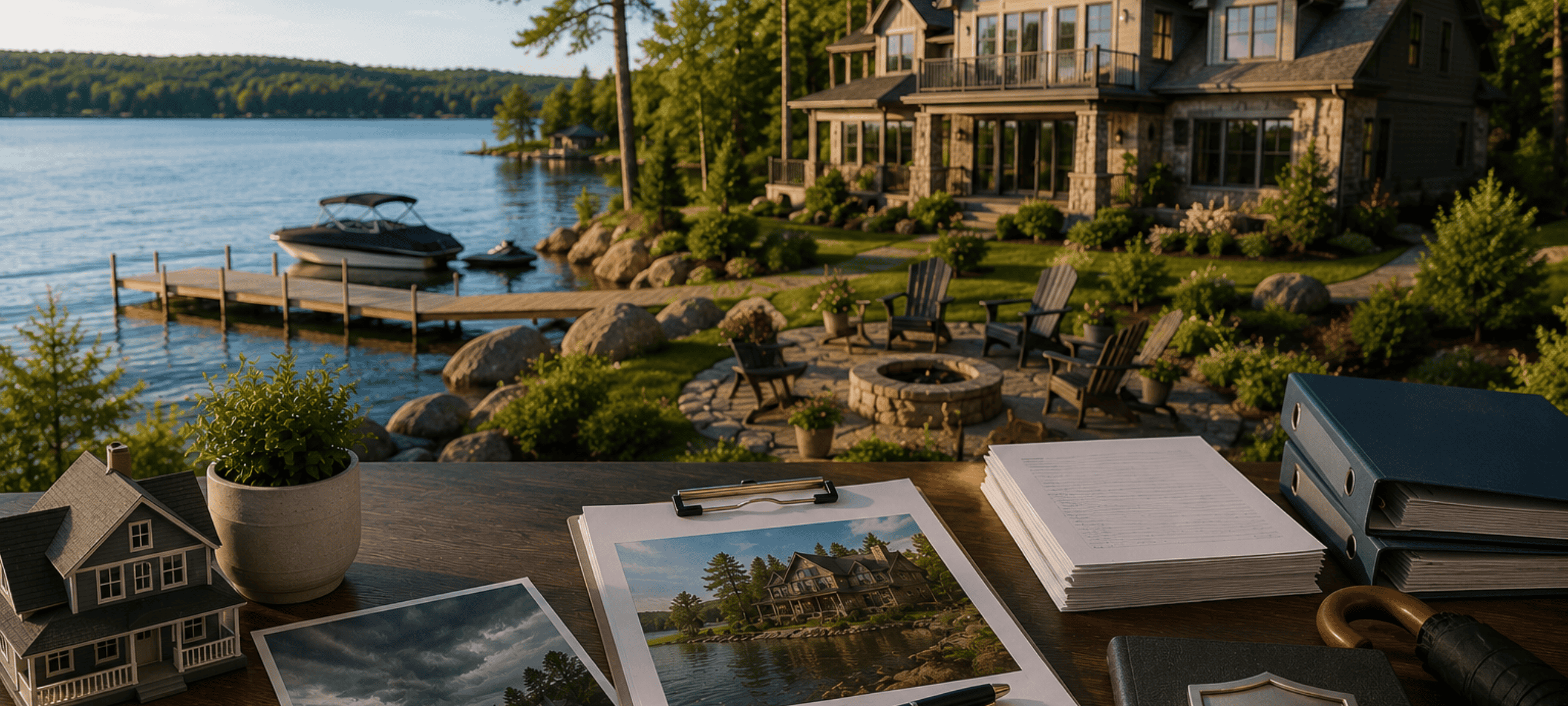
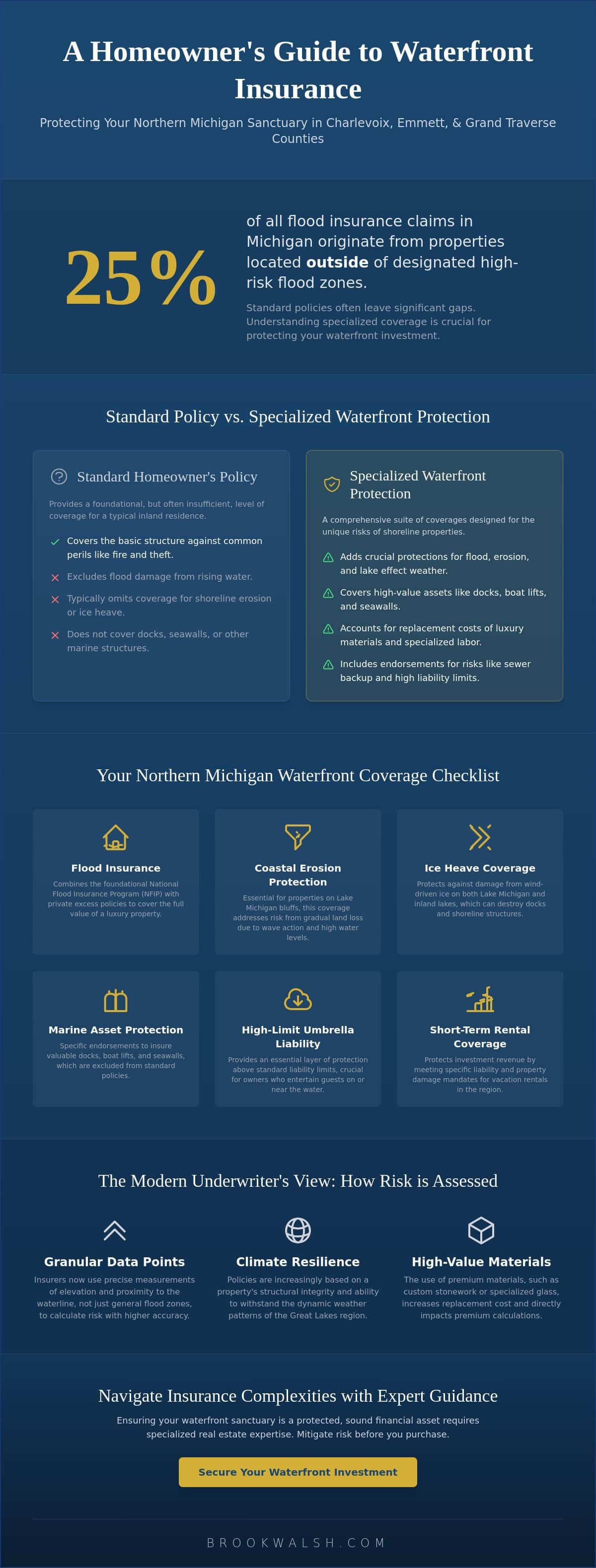
Did you know that 25% of all flood insurance claims in Michigan come from properties outside of high-risk zones? For those looking to secure a legacy on the shores of Lake Michigan or the crystal waters of Lake Charlevoix, the beauty of the horizon often masks the intricate insurance requirements for waterfront homes. You understand that a luxury waterfront estate is more than a property; it's a sanctuary where memories are forged against a backdrop of pure, blue water. However, the anxiety of hidden costs and the shifting reality of water levels can often cloud the excitement of a new acquisition.
This guide clarifies the essential coverages and regional nuances of Charlevoix, Emmett, and Grand Traverse counties, from erosion protection to the impact of FEMA Risk Rating 2.0. We'll also examine how the 2026 legislative changes regarding policy transparency affect your long-term ROI. You'll gain a clear checklist of necessary protections, providing the confidence to move forward with your purchase while ensuring your home remains an enduring haven and a sound financial asset.
Key Takeaways
- Distinguish between standard hazard policies and the specialized protections necessary for the unique architectural and environmental demands of Northern Michigan shoreline estates.
- Master the specific insurance requirements for waterfront homes to navigate the complexities of flood coverage and the unpredictable lake effect weather patterns of the region.
- Identify localized risks such as coastal erosion on Lake Michigan bluffs and ice heaving on inland lakes to ensure your property remains a secure sanctuary.
- Secure your marine assets by understanding the nuances of insuring docks, boat lifts, and seawalls against the harsh elements of the Great Lakes.
- Protect your investment revenue potential by learning the liability and short-term rental insurance mandates required in Charlevoix, Emmett, and Grand Traverse counties.
Understanding the Unique Landscape of Waterfront Insurance
Owning a home on the water in Charlevoix or Traverse City represents a pinnacle of personal achievement. It's a place where the rhythm of the waves dictates the pace of life, and every sunset feels like a private showing. However, the insurance requirements for waterfront homes in these coveted enclaves differ vastly from those of a traditional inland residence. While a standard hazard policy covers the basic structure, it often fails to account for the unique hydrodynamic forces and environmental sensitivities of a Great Lakes shoreline.
The luxury market in Northern Michigan commands a more nuanced approach. High-value assets situated within delicate ecosystems require policies that reflect the replacement cost of premium materials and the specialized labor required to build along the coast. To better understand this concept, watch this helpful video:
Proximity to the shore is the primary driver of risk in the eyes of an underwriter. In the 2026 market, insurers view high-value assets through a lens of climate resilience and structural integrity. For those exploring waterfront lifestyle homes for sale, recognizing that your home is an investment in a specific way of life means acknowledging the technical protections required to sustain it. A sophisticated insurance profile is not just a requirement; it's a strategic component of your real estate portfolio.
The Definition of Waterfront Risk in 2026
Carriers now categorize risk using granular data points. Proximity to the waterline is measured in precise feet and elevation levels rather than general zones. These measurements directly impact the insurance requirements for waterfront homes, as insurers seek to quantify potential wave action and shoreline stability. The National Flood Insurance Program (NFIP) provides a foundational layer of protection, yet for estates in Grand Traverse or Emmett counties, private excess flood insurance is often necessary to cover the full value of a luxury build. Modern construction materials like specialized glass or custom stonework also drive premiums upward because their replacement requires rare materials and artisans.
Why Northern Michigan Requires a Specialized Approach
The weather patterns in Charlevoix and Emmett counties are distinct from the rest of the Midwest. Lake Michigan’s fetch can create significant wave action and wind-driven ice, known as ice heaving, which can devastate docks and shoreline structures. Historical water level data plays a critical role in underwriting here. With Michigan homeowners' insurance rates averaging between $1,822 and $2,396 in 2026, waterfront owners should expect to pay a premium for the peace of mind that their sanctuary remains protected against these regional dynamics. This specialized approach ensures that the emotional and aesthetic value of your property is preserved for generations.
Essential Coverage Beyond Standard Homeowners Policies
A standard homeowners policy acts as a foundation, yet the insurance requirements for waterfront homes in Northern Michigan demand a more sophisticated architecture of protection. The horizon may be tranquil, but the financial exposure is real. Whether you're securing a modern glass masterpiece or a timeless cedar-shake cottage, your policy must reflect the specific environmental pressures of the Great Lakes. Beyond the structure itself, you must account for specialized risks that traditional inland policies simply ignore, such as hydrostatic pressure against foundation walls and the liability of guest watercraft.
For properties with finished lakeside walkouts, common in the rolling topography of Grand Traverse County, sewer backup and sump pump failure endorsements are non-negotiable. A single failure during a spring thaw can compromise a meticulously designed lower level. Additionally, high-limit umbrella liability is essential for those who embrace the regional lifestyle of entertaining. This coverage provides a necessary shield if a guest is injured on a dock or while using a paddleboard. If you are currently investing in Northern Michigan real estate, reviewing these specific endorsements early in the due diligence period ensures your ROI remains protected from the start.
Navigating Flood Insurance and FEMA Maps
Understanding flood risk requires a discerning eye for detail. While only 7% of Michigan homes sit in official Special Hazard Areas, approximately 25% of all flood claims originate from moderate to low risk zones. You can find comprehensive data through FEMA's flood insurance information to begin your research. For luxury estates in Charlevoix and Emmett counties, the National Flood Insurance Program (NFIP) limits often fall short of the home’s actual value. In these cases, excess flood insurance provides the necessary ceiling to cover high-end finishes and custom architectural details. An Elevation Certificate is a document prepared by a licensed surveyor that certifies the building's elevation in relation to the base flood elevation, a critical factor for accurate 2026 premium pricing.
Windstorm and Lake Effect Protection
The lake effect isn't just a winter phenomenon; it brings high-velocity winds that test the resilience of every structure. Windstorm deductibles for Lake Michigan properties are often structured differently than inland homes, sometimes appearing as a percentage of the total insured value rather than a flat dollar amount. It's vital to ensure that your policy extends to secondary structures. Guest houses, boat sheds, and even detached garages require explicit inclusion to be protected from the unpredictable gusts that sweep across the bay. Mitigating these risks through impact-resistant glass or reinforced roofing can sometimes lead to more favorable terms from elite carriers who specialize in the luxury coastal market.
Regional Risks: Lake Michigan Coastal vs. Inland Lake Properties
The distinction between a Lake Michigan estate and a home on an inland lake like Walloon or Lake Charlevoix is not merely aesthetic; it is structural. In Grand Traverse and Emmett counties, the insurance requirements for waterfront homes are heavily influenced by the specific geology of the shoreline. While Lake Michigan offers sweeping, oceanic horizons, it also presents the challenge of high-energy wave action and shifting sandy soils. Inland lakes, by contrast, offer a more sheltered environment but introduce risks unique to freshwater dynamics, such as the seasonal movement of ice. Understanding these nuances is essential for any discerning investor seeking to preserve the value of their retreat.
Ground instability is a particular concern in the sandy corridors of Grand Traverse. The very soil that provides excellent drainage for vineyards can be a liability when it supports a heavy luxury structure near a receding shoreline. Many standard policies exclude earth movement, leaving a significant gap if the ground beneath a patio or guest house begins to shift. When you are viewing waterfront lifestyle homes for sale, it's vital to pair your aesthetic appreciation with a technical evaluation of the lot's stability and the specific riders required to protect it.
The Great Lakes Erosion Crisis and Insurance
Emmett County is renowned for its dramatic bluffs, offering some of the most prestigious views in the Midwest. These elevations provide a sense of exclusivity, yet they are susceptible to erosion during high water cycles. Standard insurance rarely covers the gradual loss of land, making the maintenance and insurance of seawalls and revetments a critical priority. High water levels can compromise long-term insurability if a property lacks modern shoreline protection. You can explore regional risk profiles and modern mitigation strategies at FloodSmart.gov to see how these environmental shifts impact your coverage options in 2026.
Inland Lake Nuances: Ice and Freshwater Dynamics
On inland lakes, the primary winter threat isn't wind-driven waves, but ice. Ice heaving occurs when expanding ice sheets exert thousands of pounds of pressure against permanent docks and boat lifts. This is a unique Northern Michigan risk that most national carriers don't include in a basic policy. Additionally, liability considerations for private beaches and shared lake access points require careful attention. While Walloon Lake may feel safer than the open coast, the legal exposure of a private beach requires high-limit liability riders. Comparing the insurance profiles of Lake Michigan versus inland lakes reveals that while premiums may differ, the need for specialized, local expertise remains constant.
Protecting Your Investment: Insurance for Vacation Rentals and Docks
The allure of sharing your Northern Michigan sanctuary through short-term rentals is a compelling aspect of investing in Northern Michigan real estate. Yet, the transition from a private retreat to a guest-ready haven shifts the insurance requirements for waterfront homes into a commercial territory. A standard homeowners policy is designed for personal use; it rarely extends to the frequent turnover of guests that defines the luxury rental market in Charlevoix or Traverse City. Your sanctuary deserves a policy that acknowledges its role as a high-performing asset without compromising the quiet confidence of your lifestyle.
The Short-Term Rental Insurance Gap
Many owners are surprised to find that standard policies explicitly exclude business activities, which include most rental scenarios. In 2026, municipalities like Traverse City have solidified this by requiring proof of $1 million in liability coverage to maintain a short-term rental permit. Beyond liability, you must consider loss of use coverage, which protects your anticipated rental income if a claim renders the property uninhabitable. This ensures that a temporary setback doesn't become a long-term financial burden. Professional vacation rental management is often the most effective way to ensure your property remains compliant with these evolving local ordinances while maintaining the high standards expected in the luxury market.
Insuring Marine Assets and Infrastructure
Marine structures like docks, boat lifts, and seawalls are the most exposed elements of your estate, yet they are frequently underinsured. When reviewing your policy, look for the distinction between actual cash value and replacement cost. For a custom dock in Grand Traverse Bay, actual cash value may not cover the modern materials and specialized marine contractors required for a full rebuild after a storm. In 2026, typical coverage limits for high-end boat lifts usually cap at $50,000 unless they are specifically scheduled on your policy. Regular seawall maintenance is also a prerequisite for many elite carriers; they want to see that the primary defense of the property is structurally sound before offering coverage.
High-end waterfront living often includes amenities like floating trampolines, slides, or shared docks. These features create an evocative lifestyle but also represent significant liability risks that require specific riders to your policy. Equipment breakdown coverage is another essential consideration for modern smart homes, protecting the sophisticated HVAC and automation systems from power surges or mechanical failure. These systems are the heart of your home's comfort and exclusivity. If you're looking to maximize your property's potential, our team provides professional investment in Northern Michigan real estate insights to ensure your insurance strategy aligns with your financial goals.
Navigating the Purchase: How Luxury Real Estate Expertise Mitigates Risk
The acquisition of a premier estate in Charlevoix, Emmett, or Grand Traverse is a journey that requires both aesthetic vision and technical precision. While the initial draw of a property is often its sweeping views or architectural elegance, the long-term viability of the investment rests on a foundation of rigorous due diligence. Understanding the insurance requirements for waterfront homes is a critical component of this process, and it should begin long before the final walk-through. A sophisticated buyer recognizes that an uninsurable property, or one with prohibitive premiums, is a liability that can diminish the joy of the regional experience.
At Brook Walsh Real Estate, we prioritize identifying properties with favorable insurance profiles. This involves a deep analysis of the shoreline’s history, the structural integrity of existing marine assets, and the property’s standing with elite carriers. We leverage long-standing relationships with specialized Northern Michigan underwriters who understand the nuances of the local market. These professionals can provide preliminary quotes and risk assessments during the inspection period, ensuring you have a complete financial picture before committing to a purchase. This proactive approach transforms a complex transaction into a seamless transition into your new lifestyle.
The Role of Your Broker in Insurance Planning
Your broker should act as a discerning filter during your search for waterfront lifestyle homes for sale. One of the most effective tools in our arsenal is the insurance CLUE report, which we recommend requesting during the escrow period. This report reveals the five-year claims history of a property, helping to identify "red flag" issues like previous water damage or recurring shoreline stability problems that might not be visible to the naked eye. By addressing these factors early, we ensure that the insurance requirements for waterfront homes are met with confidence rather than surprise, protecting your ROI from the day of closing.
Securing Your Northern Michigan Legacy
Finalizing a waterfront purchase is about more than just securing a deed; it's about establishing a legacy within a specific, coveted geography. Balancing curated elegance with expert risk management allows you to enjoy your home as the emotional haven it was intended to be. Whether you are seeking the dramatic bluffs of Lake Michigan or the tranquil clarity of an inland lake, having a trusted advisor by your side ensures that every detail is scrutinized. We invite you to explore our exclusive listings and experience a guide who shares your appreciation for quality, exclusivity, and the profound connection between a person and their environment. Your sanctuary deserves nothing less than the steady hands of a local expert who understands that a well-protected home is the ultimate luxury.
Securing Your Legacy on the Northern Michigan Shoreline
Protecting a luxury estate in Charlevoix, Emmett, or Grand Traverse requires more than just a standard policy; it demands a strategic understanding of the unique environmental and regulatory landscape. You've seen how specialized riders for shoreline erosion and marine structures are essential to preserving both your property's integrity and its long-term ROI. By mastering the insurance requirements for waterfront homes, you transform potential anxieties into a clear, manageable path toward ownership.
As a specialist in Charlevoix, Emmett, and Grand Traverse counties, I provide the expert investment advice for lifestyle properties and comprehensive vacation rental management services necessary to navigate this sophisticated market with quiet confidence. Your waterfront home is an essential emotional haven, and it deserves a guide who shares your appreciation for the finer details of life and the profound connection between a person and their environment.
Explore Northern Michigan Waterfront Estates with Brook Walsh and begin your journey toward a well-protected, iconic lifestyle. The horizon is waiting for you.
Frequently Asked Questions
Is flood insurance required for all waterfront homes in Northern Michigan?
Flood insurance is only mandatory if you have a federally backed mortgage and your property sits in a Special Flood Hazard Area. However, for those navigating the insurance requirements for waterfront homes in Northern Michigan, it remains a vital safeguard regardless of lender mandates. With over 366,000 properties in Michigan facing a severe flood risk over the next 30 years, relying solely on official designations can leave your sanctuary vulnerable to the rising waters of the Great Lakes.
Does standard homeowners insurance cover damage to my dock or boat lift?
Standard homeowners' insurance rarely covers structures built over or near the water. Docks and boat lifts are exposed to unique risks like ice heaving and wind-driven wave action, which typically require a specific marine structure endorsement. Without this addition, the architectural features that define your lakeside lifestyle may be left unprotected. It's essential to review the distinction between actual cash value and replacement cost for these high-value assets to ensure full recovery after a storm.
How does the "Lake Effect" impact my insurance premiums in Petoskey?
The lake effect creates specific weather patterns in Petoskey and throughout Emmett County that insurers categorize as higher risk. Increased wind speeds and heavy snow loads often result in higher premiums or specialized windstorm deductibles. These deductibles are frequently calculated as a percentage of your home's total value rather than a flat dollar amount. This ensures that the policy remains robust enough to handle the structural stress caused by the unpredictable Michigan climate during the winter months.
Can I get insurance for shoreline erosion on Lake Michigan?
Insurance for gradual shoreline erosion is almost non-existent in the standard market. Most policies explicitly exclude the slow loss of land, viewing it as a maintenance issue rather than a sudden peril. To protect your investment in Grand Traverse or Charlevoix, you must focus on shoreline stabilization and seawall integrity. While some specialized carriers offer earth movement riders, they rarely cover the receding bluffs characteristic of the Lake Michigan coast, making proactive maintenance your best defense.
What insurance riders do I need if I plan to rent my home on Airbnb?
You must secure a short-term rental rider or a dedicated commercial policy if you intend to list your property on Airbnb. A standard policy may deny claims related to guest activity, leaving you personally liable for accidents. In Traverse City, you are legally required to provide proof of $1 million in liability coverage to obtain a short-term rental permit. This protection ensures your investment property analysis remains accurate and your revenue stream stays secure throughout the peak summer season.
How do FEMA flood map changes in 2026 affect my current property?
FEMA changes under Risk Rating 2.0 now utilize granular property data rather than broad zones to determine risk. While this led to rate decreases for 56% of Michigan policyholders, luxury estates may see adjustments based on their specific elevation and proximity to the water. Effective January 1, 2026, Senate Bill 545 requires your insurer to notify you of any material change, such as a premium increase exceeding 10%, giving you time to consult with your advisor.
Are seawalls covered under a typical waterfront insurance policy?
Seawalls are typically excluded from a standard waterfront insurance policy. These structures are viewed as land improvements, and damage from water pressure or gradual wear is rarely covered by basic hazard insurance. You may find coverage through specialized endorsements, but insurers often require a professional inspection to verify the wall is in good repair. Maintaining these defenses is a critical part of the insurance requirements for waterfront homes to ensure the primary residence remains insurable.
What is the difference between replacement cost and actual cash value for lakefront homes?
Replacement cost coverage pays to rebuild your home with materials of like kind and quality at current market prices. Actual cash value only pays the depreciated value of the structure, which can lead to a significant financial shortfall for older luxury estates. Given the rising costs of premium building materials in Northern Michigan, replacement cost is the only way to ensure your home remains a sanctuary of curated elegance after a total loss.
Posted by Brook Walsh onEnjoy this blog post? Click here to subscribe for updates
Leave A Comment