
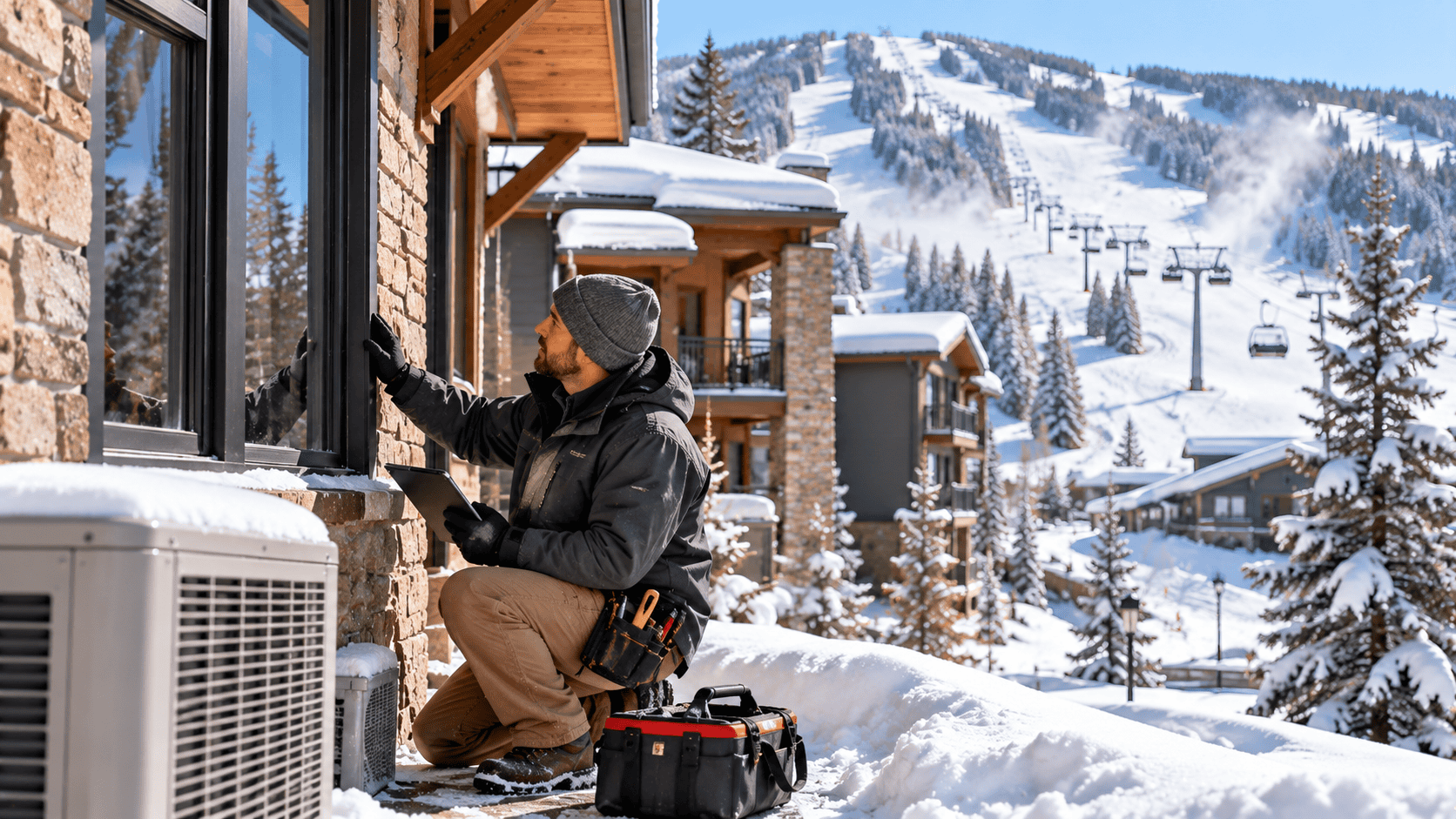
What if the maintenance issue that interrupts a ski weekend isn’t the one you expected, or the one you’re responsible for fixing? The common maintenance issues with ski condos in Northern Michigan often start with winter wear, including ice dams, frozen pipes, and exterior damage after freeze-thaw cycles. But spotting a concern is only the first step.
Before buying or planning a season of personal use and rentals, it helps to know who handles a repair. In a condominium, responsibility depends on the association’s governing documents and any management agreement. Assuming that an issue is automatically the owner’s or association’s responsibility can lead to confusion when a repair is needed.
This checklist explains what to look for inside a unit and in shared areas, which records and questions to review, and how to track concerns between visits. It covers checks before and after winter, ways to clarify owner and association responsibilities, and why maintenance history matters when evaluating a ski condo. Whether you’re looking in Boyne City, Boyne Falls, Charlevoix, Petoskey, Harbor Springs, or East Jordan, a clear process can help you assess how ownership fits your plans.
Key Takeaways
- Use a focused checklist to assess common maintenance issues with ski condos, including visible signs of plumbing, moisture, heating, ventilation, and appliance concerns.
- Review association documents and service agreements to clarify who handles private unit areas, shared elements, and maintenance coordination.
- Set a seasonal routine for arrival checks, checks during vacancy, and departure preparation.
- Review maintenance records and ask how reported concerns are tracked and followed up before committing to a property.
- For a ski condo in Northern Michigan, assess the building and ownership documents with appropriate qualified professionals.
Table of Contents
- Common Ski Condo Maintenance Issues in Northern Michigan: What Owners Should Watch
- Interior and Building-System Problems to Check in a Ski Condo
- Who Handles Ski Condo Maintenance: Owner, Association, or Manager?
- A Seasonal Ski Condo Maintenance Checklist for Northern Michigan Owners
- Plan Ski Condo Ownership With the Right Maintenance Support
Common Ski Condo Maintenance Issues in Northern Michigan: What Owners Should Watch
Seasonal condominium maintenance means checking the unit and shared areas as weather, occupancy, and use change. Common maintenance issues with ski condos can involve plumbing, heating, roofs, walkways, and drainage after winter weather. The details vary by building. A condo near Boyne City or Boyne Falls may have different maintenance needs from a property in Charlevoix, Petoskey, Harbor Springs, or East Jordan, depending on its condition, exposure, use, and association arrangements.
Use this checklist as a guide for what to observe, not as a prediction that a particular problem will occur. Vacancy and guest turnover can affect how often a property needs attention. Ask about the unit’s maintenance history and the building’s inspection routine rather than assuming every condo follows the same schedule. Because a condominium includes both private and shared property, confirm how responsibilities and reporting are handled at the specific building.
How winter conditions can affect a ski condo
Cold weather makes plumbing and heating performance important to monitor, especially when a property is vacant. Note visible leaks, changes in heating performance, or concerns around exposed pipework, and report them rather than trying to diagnose the cause. Snow and ice can also affect roofs, entrances, walkways, and drainage paths. Ask the association or manager what inspections take place, who coordinates snow removal, and how to report a concern. Confirm winterization recommendations for the unit with a qualified local professional.
Why seasonal occupancy changes the maintenance routine
A condo that sits empty between visits may need a different checking routine from one occupied year-round. Owners can note visible conditions when they arrive or leave, while association staff or contractors may be assigned to shared areas. Guest turnover adds another handoff: clarify who records concerns between stays, who receives those reports, and how follow-up is shared with the owner. Don’t assume that a manager’s role includes inspections or repairs. Check the service agreement and association process.
Regular checks can bring changes to attention sooner and help you decide when to report them for assessment.
When evaluating a property, ask how it is checked during vacancy, how winter concerns are reported, and where maintenance records are kept. Clear answers help you understand whether there is an established routine and which tasks belong to you, the association, or its contractors.
Interior and Building-System Problems to Check in a Ski Condo
A short walkthrough is more useful when you know what to observe and how to record it. Common maintenance issues with ski condos may not be obvious at first glance. Note what you see, where it appears, and when you noticed it. Then use the property’s reporting process rather than trying to diagnose the cause yourself.
Plumbing, moisture, and interior finishes
Include visible plumbing and nearby finishes in your walkthrough. Look beneath sinks, around toilets, beside dishwashers and refrigerators with water connections, and near exposed pipework. Note dampness, visible leaks, or changes to surrounding surfaces. Check ceilings and walls for stains, bubbling or peeling finishes, and musty odors. These are signs to report and investigate, not proof of a specific problem. If you see an active leak or recurring moisture, record what you observed and notify the responsible contact promptly.
Keep a simple maintenance log with the date, location, photos when useful, service notes, the person or organization you contacted, and any follow-up still needed. A clear record helps you compare conditions between visits and gives an owner, association, or manager useful context about whether a concern has changed.
Heating, ventilation, and appliances
During a visit, note whether heating controls respond and whether the system seems to perform differently than expected. Unusual sounds or changes are worth reporting, but suspected faults should be assessed by a qualified professional. Observe whether bathroom exhaust fans operate and whether rooms feel poorly ventilated. Record what you notice instead of dismantling equipment.
Check appliances through ordinary use. Note whether they start and operate as expected, and record unusual noises, visible leaks, or warning indicators. If you’re unsure of the cause, don’t attempt a repair. Document the symptom and contact the person or organization responsible under the condo’s arrangements. For broader cold-climate context, the University of Minnesota Extension’s guide to winter home maintenance and safety offers homeowner information to complement property-specific advice.
For each concern, ask who should receive the report, how follow-up is tracked, and whether the service agreement or association documents assign coordination to a particular party. A property manager’s role can vary, so confirm its scope rather than assuming it includes inspection or repair work.
As you compare ownership options, reviewing Northern Michigan condominium properties alongside your maintenance priorities can help clarify which setting and ownership structure fit your plans.
Who Handles Ski Condo Maintenance: Owner, Association, or Manager?
Responsibility can be less obvious than the maintenance concern itself. A leak inside a unit, for example, might involve a private fixture, a shared line, or both. Don’t rely on assumptions about what an owner or association handles. The condominium’s governing documents and any management agreement are the key references for understanding the process at that property.
Use this table as a guide to questions to ask, not as a definitive assignment of duties:
| Area or task | What to clarify |
|---|---|
| Private unit areas | Ask which interior elements owners are expected to monitor, how concerns should be reported, and whether the association must be notified about issues that could affect other units. |
| Shared areas and building systems | Confirm which common areas and building systems the association maintains, how inspections are arranged, and where related maintenance records can be reviewed. |
| Management coordination | Check whether the manager handles owner or guest reports, coordinates access for inspections or vendors, and provides updates. The agreement defines the scope. |
Unclear boundaries can leave owners unsure whom to contact, how access will be arranged, what costs to plan for, or whether follow-up has been completed. For common maintenance issues with ski condos, a clear reporting route helps keep a concern from falling between the unit, association, and manager.
Which maintenance questions should buyers ask the association?
Before committing, ask how owners submit maintenance concerns and how they receive status updates or confirmation of completion. Request available maintenance records, budgets, meeting materials, and governing documents. If needed, review them with appropriate professionals. Ask which shared spaces and building systems the association maintains, how owners are informed about planned work, and how unresolved issues are communicated.
What should a property manager coordinate?
A manager’s role may include coordinating inspections, arranging vendor access, relaying guest reports, or updating owners, but don’t assume these services are included. Read the management agreement and ask who handles each step, who approves work, and how records are shared. This matters if the condo may be used as a rental, since clear communication helps define the owner’s routine and the manager’s scope.
For buyers weighing upkeep alongside rental and investment goals, Northern Michigan investment property guidance can help frame the broader ownership questions. The building’s condition, documents, and management scope should all inform that assessment.
A Seasonal Ski Condo Maintenance Checklist for Northern Michigan Owners
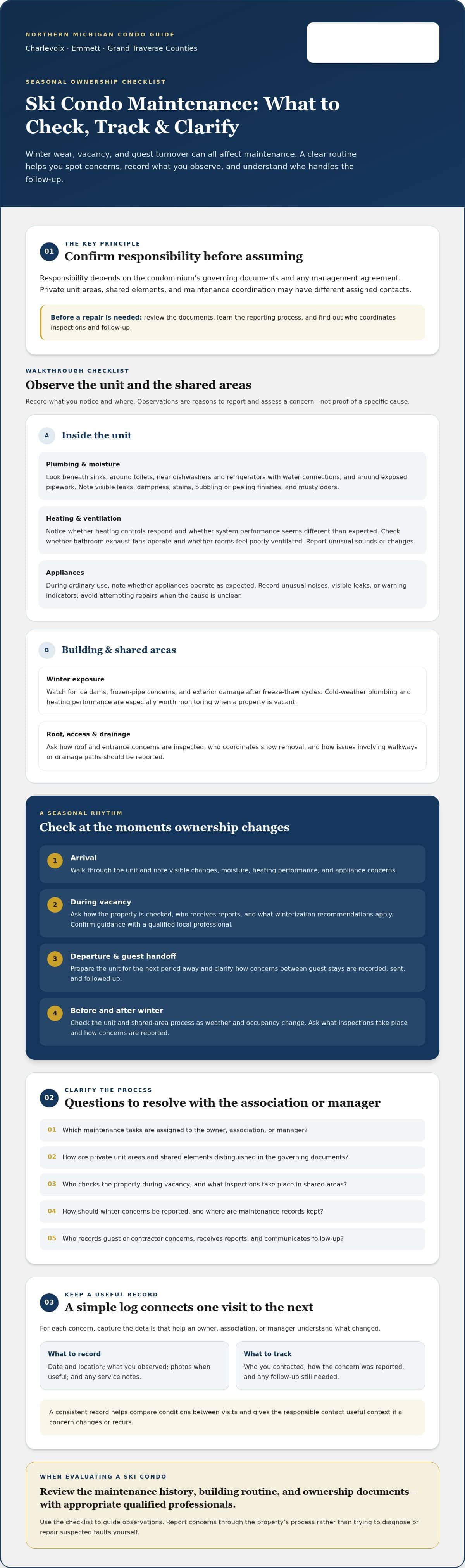
A dependable routine gives every visit a purpose: review records, observe visible conditions, report concerns through the right channel, and track what happens next. This approach applies to ski condos across Northern Michigan, whether you use the property personally, leave it vacant between visits, or welcome guests.
Before arrival and before leaving the condo vacant
When you arrive, look for anything that seems different from your last visit. Check for visible leaks, unusual odors, moisture marks, or heating concerns. Record what you notice, then contact the association or manager through the property’s stated process if it needs attention.
Before leaving, follow property-specific guidance instead of relying on a generic winterization routine. Confirm with the association, manager, or a qualified local professional which steps are appropriate for that unit and building. Know how authorized access is arranged, whom to contact about an urgent issue, and how to reach the responsible party. Settle these details before the property is vacant.
During vacancy: keep a light but consistent record
If someone checks the property while you’re away, clarify who performs the checks and what they are expected to observe. A manager’s or association’s responsibilities depend on the relevant agreement and procedures. Ask how access is arranged, how concerns are reported, and how you’ll receive updates. Check-in routines and winter precautions vary by building, so confirm the approach with qualified local contacts.
A simple issue-reporting and follow-up routine
A useful maintenance log records what you observed, where you saw it, and what happened next. Add a photo when it helps show the condition. Record when you reported the concern, the response, any professional assessment, and whether further action is outstanding.
- Record: Note the date, location, and observable symptom. Describe what you saw without guessing at the cause.
- Report: Send the concern through the association’s or manager’s stated process, and keep a copy of the communication.
- Track: Record updates, professional assessments, and the next step. If completion hasn’t been confirmed, mark the item as unresolved and follow the established process.
A clear record helps distinguish a new observation from a previously reported concern and keeps follow-up visible between visits. To explore condominium options as part of your Northern Michigan ownership plans, view Northern Michigan condominiums.
Plan Ski Condo Ownership With the Right Maintenance Support
A ski condo can be a Northern Michigan retreat and, depending on your plans, a rental property. Before buying, look beyond the unit’s visible condition. Maintenance records, association procedures, and the scope of any management arrangement help you understand what ownership may involve in Boyne City, Boyne Falls, Charlevoix, Petoskey, Harbor Springs, or East Jordan.
Questions to resolve before buying a ski condo
Ask for available records showing what maintenance has been completed, which concerns remain open, and whether follow-up is documented. Then clarify how the association handles reports about shared areas and building systems: whom should an owner contact, how are updates provided, and how is completion communicated? Review the governing documents and available budgets or meeting materials. Consider having appropriate qualified professionals assess the property and documents.
Your intended use matters, too. A condo used for occasional personal stays may call for a different ownership routine than one with frequent guest turnover. Before committing, ask:
- What upkeep has been completed, and what follow-up is still recorded?
- How are concerns in shared areas reported, assigned, and tracked?
- What does any management agreement include, and what remains the owner’s responsibility?
- Do the property’s condition and upkeep arrangements fit your plans for personal use or rental?
These questions bring common maintenance issues with ski condos into focus without assuming every building or association works the same way. For property-condition concerns, seek an assessment from an appropriately qualified professional. For questions about the documents, consult a professional suited to that review.
When local real-estate guidance can help
A local real-estate advisor can help you frame questions about a property’s location, ownership structure, records, and intended use. That guidance complements, but doesn’t replace, a qualified property assessment or professional review of association documents. If rental use is part of your plan, ask what short-term rental management includes and how responsibilities are defined. Management support should not be treated as a repair guarantee.
For a closer look at Northern Michigan condominium homes, consider how each property’s upkeep arrangements align with the way you hope to use it. Brook Walsh Real Estate can help you explore local property options and consider how ownership and investment goals fit together.
Make Your Northern Michigan Condo Plans With Confidence
Common maintenance issues with ski condos are easier to navigate when seasonal observations are paired with a clear understanding of who handles each concern. Review the unit’s and building’s maintenance history, learn how the association receives and follows up on reports, and confirm what any property manager’s agreement includes. For a condo in Northern Michigan, assess property-specific questions with the appropriate qualified professionals.
A thoughtful ownership plan also considers how you’ll use the property. Whether you want a personal retreat or are weighing rental potential, local market expertise and investment guidance can help you evaluate lifestyle and ownership considerations. Vacation-rental management is another option to explore if you want operational support, with responsibilities clarified in advance.
Brook Walsh Real Estate supports Northern Michigan property searches, including ski-in/ski-out condominiums and investment opportunities. Explore Northern Michigan real estate with Brook Walsh Real Estate to discuss the setting, ownership structure, and support that fit your plans.
Frequently Asked Questions
What are the most common maintenance issues with ski condos?
Common maintenance issues with ski condos can include plumbing leaks, moisture, heating performance, ventilation, appliance condition, and weather-exposed shared areas such as entrances or walkways. Actual concerns depend on the building’s condition, occupancy, and maintenance history. Treat staining, unusual odors, or changes in system performance as reasons to document and report what you observe, not as proof of a specific fault. A qualified professional can assess suspected system problems.
Who is responsible for maintenance in a ski condo?
Responsibility depends on the condo’s governing documents, association arrangements, and any management agreement. Private units and shared building areas may be treated differently, but there is no universal division of duties. Before buying, review the relevant documents and ask the association how concerns are reported, who coordinates assessment, and how follow-up is communicated. Clarify the manager’s role separately, since the agreement defines its scope.
How do I prepare a ski condo for winter vacancy?
Follow property-specific instructions from the association, manager, or qualified local professionals instead of relying on a generic winterization routine. Plumbing, heating, and other precautions depend on the unit and its systems. Before leaving, record the condo’s condition, confirm how authorized access is arranged, and keep current contact details for urgent concerns. Ask who monitors or reports issues during vacancy and how updates will reach you.
What should I inspect when arriving at a ski condo?
Look for visible leaks, unusual odors, moisture marks, heating concerns, or changes in how appliances operate. Note the date and location of anything unusual, and take a photo if it helps record the condition. Report concerns through the process established for the owner, association, or manager. Visible signs don’t confirm a diagnosis. Suspected faults involving plumbing, heating, or other systems should be assessed by a qualified professional.
How often should a ski condo be checked when it is vacant?
There isn’t one inspection schedule that fits every condo. Building condition, association practices, and management arrangements differ, so confirm monitoring expectations with the association or manager and follow qualified professionals’ guidance for the property’s systems. A dated log of checks, observations, notifications, and follow-up can help maintain continuity between visits. This is useful for owners in Boyne City, Boyne Falls, Charlevoix, Petoskey, Harbor Springs, and East Jordan.
What maintenance records should I review before buying a ski condo?
Ask for available maintenance records, inspection information, association documents, and details about outstanding or planned work. Clarify what shared-area maintenance arrangements cover and how concerns inside a unit are reported. Records vary by property, so confirm what can be provided with the seller and association. Review documents and assess the property with appropriate real-estate, legal, or other qualified professionals before drawing conclusions about its condition or responsibilities.
Posted by Brook Walsh onEnjoy this blog post? Click here to subscribe for updates
Leave A Comment