
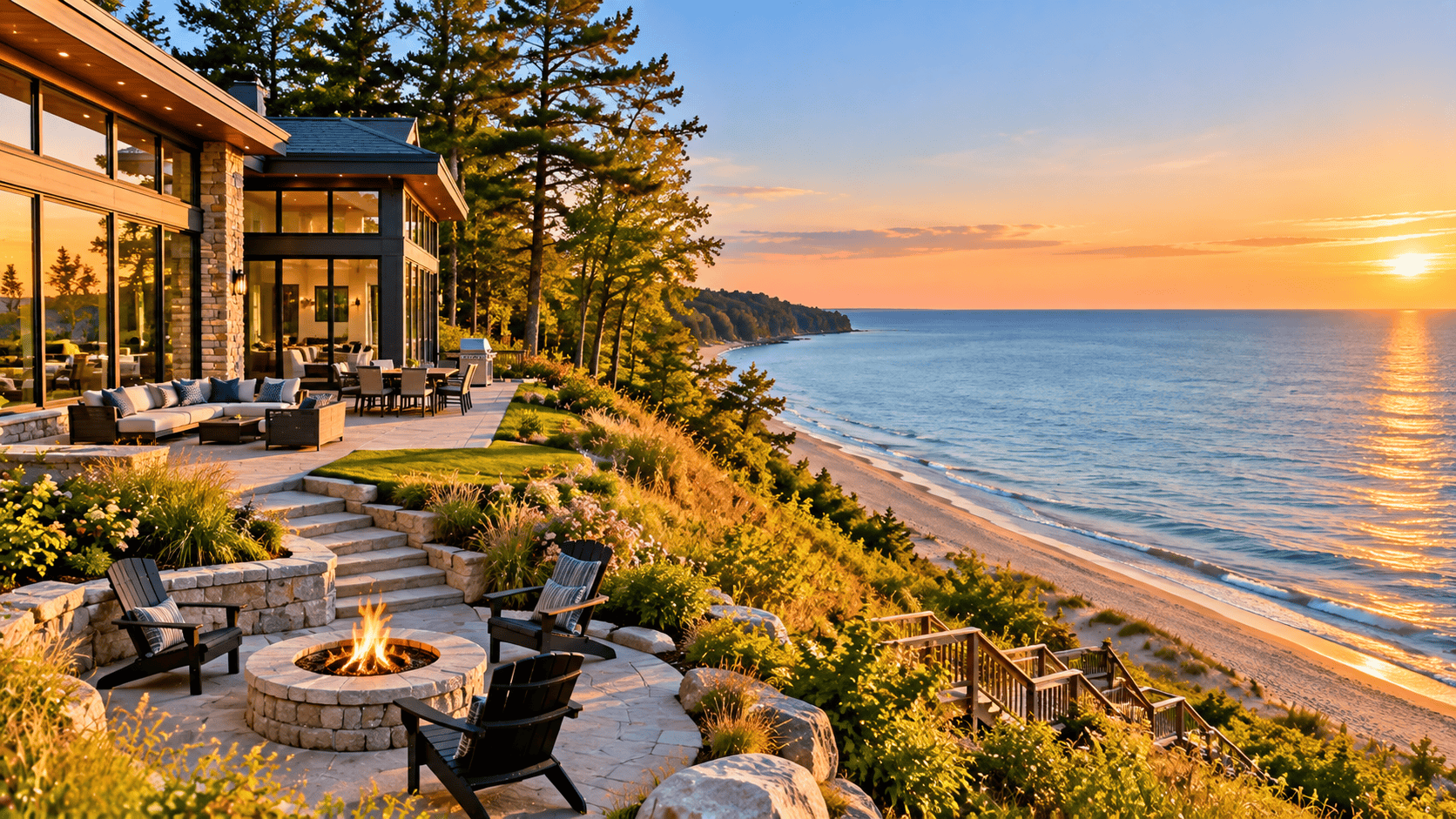
What if the most beautiful Lake Michigan view isn’t the right waterfront property for the way you plan to live? When buying Lake Michigan waterfront property, the shoreline shapes more than the scenery. It affects how you reach and use the water, how the home fits your life through the seasons, and what you’ll need to consider as an owner.
The appeal is easy to understand. A quiet morning by the water or a summer evening on the shore can make a Northern Michigan home feel like a true retreat. But shoreline settings and property features vary across Charlevoix, Emmet, and Grand Traverse counties. A home suited to seasonal escapes may not meet the needs of year-round living, and a striking view doesn’t tell you everything about access or the parcel.
This guide explains how to compare shoreline condition, water access, property records, and the features that matter to your plans. It also outlines practical ownership questions to address as you consider homes around Charlevoix, Boyne City, Boyne Falls, East Jordan, Petoskey, Harbor Springs, and other Northern Michigan communities. With a clear process and local perspective, you can look beyond the view and focus on a home that fits your priorities.
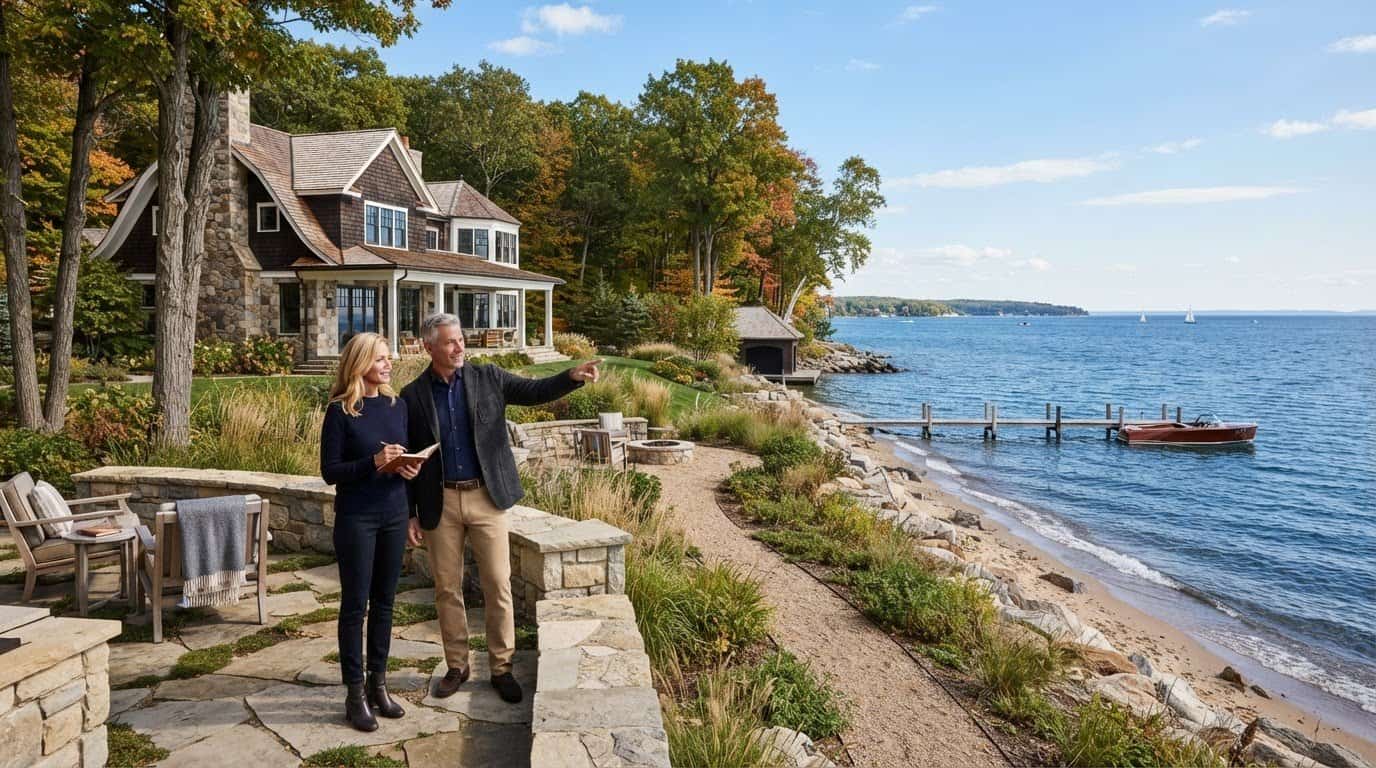
Key Takeaways
- Start with the shoreline: assess visible conditions, documented access, boundaries, and how the setting fits your plans.
- When buying Lake Michigan waterfront property, compare the parcel and community, not just the county name or the view.
- Explore waterfront opportunities across Charlevoix, Emmet, and Grand Traverse counties, while evaluating every property individually.
- Before shaping an offer, organize your review around intended use, title, access, property condition, and applicable local requirements.
- Let your seasonal or year-round priorities guide the search so the home supports the life you want to lead in Northern Michigan.
Table of Contents
- Why buying Lake Michigan waterfront property calls for a shoreline-first plan
- How to evaluate Lake Michigan shoreline, access, and property condition
- Compare waterfront homes across Charlevoix, Emmet, and Grand Traverse counties
- What to investigate before making an offer on a Lake Michigan home
- Plan your Lake Michigan purchase around the life you want to lead
Why buying Lake Michigan waterfront property calls for a shoreline-first plan
A Lake Michigan home can offer a striking horizon, changing light across the water, and a setting that brings everyday life closer to the outdoors. But the view is only one part of the purchase. Before choosing a home for its architecture or finishes, consider the shoreline, the parcel’s layout, how you reach the water, and how you expect to use the property.
A shoreline-first approach means evaluating the water’s edge, access, boundaries, and intended use alongside the home itself. A broad view doesn’t establish direct access to the water, and the visible edge of a parcel may not show its recorded boundaries. Treat access and boundaries as separate questions, and review the documents for each property rather than relying on appearances.
What makes Lake Michigan waterfront ownership different?
Exposure, shoreline character, and the home’s position on the land all shape the daily experience. A property set above the water may offer a different route to the shore than one with a more gradual approach. The home’s orientation and outdoor spaces can affect where you find morning light, shelter, or a view. Visit the property and consider how these features fit your routines instead of relying on listing photographs.
Lake Michigan’s scale and geography are part of its appeal; the Lake Michigan overview offers useful context. Erosion, bluff stability, flooding, and changing water levels are property-specific considerations, not evidence that every waterfront home has a problem. For an individual parcel, review available shoreline history and condition information rather than concluding a general description or a neighboring property.
Which Northern Michigan locations belong in your search?
Start with the life you want the property to support, then define a practical search area across Charlevoix, Emmet, and Grand Traverse counties. Charlevoix, Boyne City, Boyne Falls, and East Jordan are among the communities to consider in Charlevoix County. In Emmet County, look at communities such as Petoskey and Harbor Springs. Traverse City may anchor a search in Grand Traverse County. The right comparison depends on the specific community and parcel, as well as your priorities.
As you narrow the geography, compare travel patterns, nearby amenities, shoreline character, and whether a home suits seasonal stays or year-round use. This helps distinguish a captivating view from a property that fits your plans. Explore Northern Michigan waterfront homes as you refine the setting and lifestyle you’re seeking.
How to evaluate Lake Michigan shoreline, access, and property condition
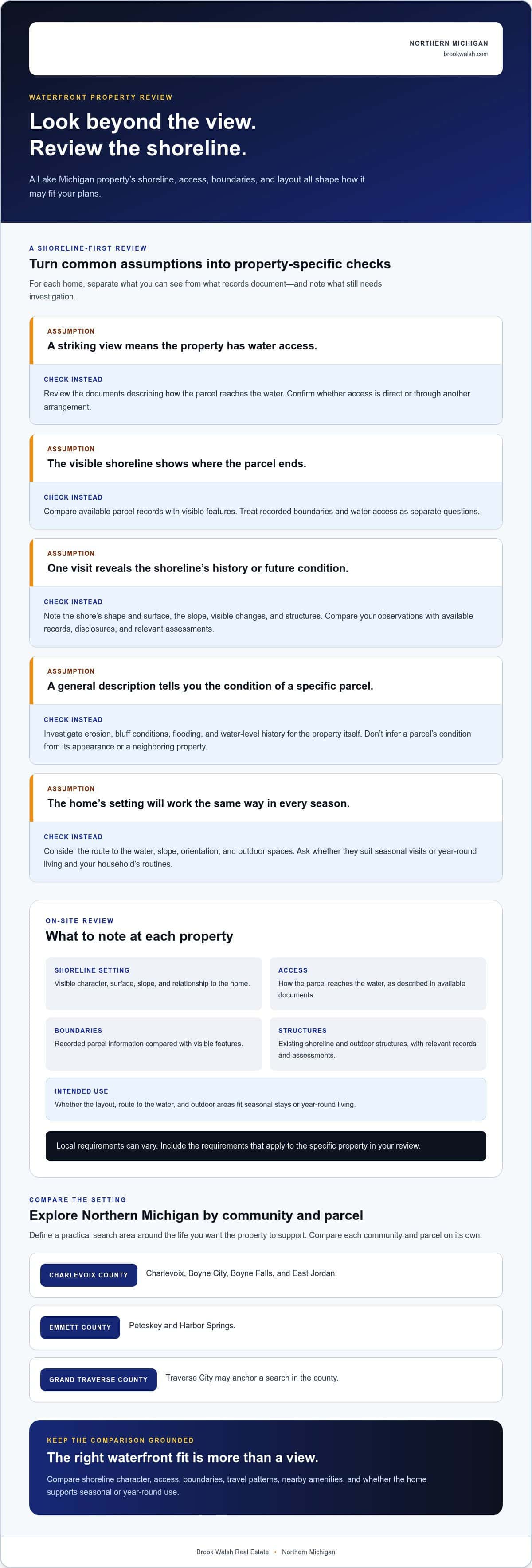
A waterfront property deserves a review that goes beyond the view. As you compare homes, separate what you can observe from what records document and what still needs property-specific investigation. For each property, note the shoreline and route to the water, review available parcel and access information, and list questions that remain. This gives you a clearer basis for judging whether the property suits quiet weekends by the water or year-round living.
What should buyers look for along the shoreline?
Walk the property and note the shoreline’s shape and surface, the slope between the home and water, and any visible changes or structures. Record what you observe, but don’t treat one visit as proof of the shoreline’s history or future condition. Compare your observations with available property records, disclosures, and relevant assessments. Investigate erosion, bluff conditions, flooding, and water-level history for the specific parcel instead of inferring them from appearance or nearby properties.
Consider how the shoreline affects your route to the water, outdoor use, and potential upkeep. A steep approach, for example, may work differently for your household than a more gradual route. Think about the seasons when you expect to use the home and whether the existing structures and outdoor areas support those routines.
How can buyers understand access, boundaries, and exposure?
Use this checklist to keep the review organized:
- Shoreline setting: Note the shore’s visible character, slope, and relationship to the home.
- Access: Review documents describing how the parcel reaches the water and whether access is direct or through another arrangement.
- Boundaries: Compare available parcel records with visible features. Don’t assume the apparent shoreline edge marks a property line.
- Structures: Note existing shoreline and outdoor structures, then review relevant records and assessments for property-specific context.
- Intended use: Consider whether the layout, route to the water, and outdoor spaces suit seasonal visits or year-round living.
Waterfront access and legal property boundaries are separate questions. Review how access is documented, then review where the parcel’s boundaries are recorded. Exposure, slope, and proximity to the water also deserve attention. Local requirements can vary, so include the requirements that apply to the specific property in your review rather than assuming every parcel is subject to the same conditions.
Careful comparison matters when buying Lake Michigan waterfront property across Northern Michigan’s varied shorelines. A focused search for Northern Michigan waterfront homes can keep property details and lifestyle priorities in view as you assess your options.
Compare waterfront homes across Charlevoix, Emmet, and Grand Traverse counties
County names help organize a Northern Michigan search, but they don’t determine which waterfront home is right for you. Communities and individual parcels differ, so compare each property with your routines, preferred setting, and ownership plans. Use the table as a framework for asking focused questions, not as a ranking of counties or a promise about what you’ll find in each one.
| County | Nearby community examples | Setting and property style to assess | Buyer priorities to weigh |
|---|---|---|---|
| Charlevoix | Charlevoix, Boyne City, East Jordan | Consider the parcel’s shoreline, home layout, and relationship to its community. | Balance your preferred privacy with access to the community features that matter to you. |
| Emmet | Petoskey, Harbor Springs | Compare each property’s water access, setting, and suitability for seasonal or year-round use. | Consider how the location fits your routines and preferred pace of life. |
| Grand Traverse | Grand Traverse County communities | Assess the individual shoreline, property layout, and connection to the surrounding area. | Weigh the privacy you want against proximity to valued amenities and activities. |
How do waterfront settings differ from one community to another?
Use community names to focus your search, then assess each home in its own context. A buyer considering Charlevoix or Boyne City may prioritize a different mix of privacy and nearby amenities than someone looking around Petoskey, Harbor Springs, or East Jordan. Those preferences don’t mean one community is inherently more private or convenient than another. Compare each property’s actual setting with the routines you expect to have there.
Which waterfront property features fit your plans?
First, distinguish your primary goal: year-round living, seasonal use, or potential rental interest. For a year-round home, consider whether its layout and setting suit daily life through the seasons. For a retreat, think about how the shoreline and outdoor spaces fit your visits and ownership preferences. If rental potential matters, assess it separately alongside maintenance, personal use, and applicable local requirements.
Refine your priorities with lifestyle-based property searches, then compare properties against what matters most to you. If investment goals are part of your plan, Northern Michigan real estate investment guidance can help you evaluate the ownership perspective.
What to investigate before making an offer on a Lake Michigan home
A clear review connects the property you see with the way you plan to own and use it. Before shaping an offer, move through the questions in sequence: define your intended use, review the home and parcel, investigate property-specific concerns, and consider how the findings fit your priorities.
- Clarify use: Decide whether the home is intended for year-round living, seasonal stays, or personal use combined with rental interest.
- Review the property: Examine available title and parcel information, access details, boundaries, visible conditions, and relevant disclosures.
- Investigate concerns: Identify questions about the home, site, shoreline, and applicable local requirements that need property-specific answers.
- Shape offer decisions: Weigh the findings against your intended use, priorities, and comfort with the property.
Which property details need careful review?
Consider the home and its setting together. Review available records for title, parcel boundaries, and documented access, then compare them with what you observe on site. Read relevant disclosures and note the condition of the home, outdoor areas, and existing structures. A beautiful interior can’t answer questions about the parcel, just as a compelling shoreline doesn’t establish the home’s condition.
Give shoreline matters their own careful review. Verify claims about erosion, bluff conditions, flooding, or water-level history using current information relevant to the specific property. Conditions can’t be reliably inferred from a neighboring parcel or a single visit. This guide can help organize questions, but it isn’t legal, engineering, or environmental advice.
How should buyers prepare to make an informed offer?
Translate what you learn into decisions. If you’re planning year-round living, weigh the property’s condition and location against daily needs. For seasonal use, consider how the site and upkeep align with the time you expect to spend there. If rental interest is part of your plan, include applicable local requirements in your review rather than assuming they’re consistent across Northern Michigan communities. The scope of review depends on the property and the questions it raises, so avoid relying on generic assumptions or cost estimates.
Local context helps you understand how a property fits its community and intended lifestyle. The property’s records and condition provide details about the parcel itself. Once your priorities are clear, compare waterfront homes with a more informed eye.
Plan your Lake Michigan purchase around the life you want to lead
A waterfront home should feel compelling in everyday life, not only during a showing. As you narrow your choices across Charlevoix, Emmet, and Grand Traverse counties, consider the shoreline, community setting, property condition, and ownership plans together. This helps you focus on homes that suit your priorities and recognize where a property involves trade-offs.
How can your intended use guide the final shortlist?
For a year-round home, weigh the property’s layout, condition, and community setting against the routines you expect through the seasons. For a seasonal retreat, consider how shoreline access and outdoor spaces fit the way you want to spend your visits, along with the upkeep you’re prepared to manage. An investment-minded purchase brings another set of priorities: evaluate the property in light of your ownership goals and applicable local requirements.
Then compare the trade-offs. A setting that feels private may differ from one closer to community features you value. A home with the shoreline experience you envision may involve different upkeep considerations than another property. Decide which qualities are essential, which are preferences, and which compromises would make the home less suitable.
What is a practical next step for waterfront buyers?
Write down your preferred county or communities, the kind of setting you want, the property style that suits your plans, and whether you envision year-round use, seasonal stays, or an investment. A lifestyle-led search gives those priorities structure and helps you compare homes on more than appearance, keeping ownership considerations in view as you evaluate possibilities.
Brook Walsh Real Estate offers waterfront brokerage and lifestyle-driven property searches in Northern Michigan, along with investment advice and vacation rental management for owners. If rental use is part of your plan, investment analysis and ongoing management can support your decisions about both the purchase and ownership.
Buying Lake Michigan waterfront property is a significant personal decision. For a tailored search shaped around your preferred setting and intended use, explore waterfront homes.
Make your Northern Michigan waterfront search your own
A strong purchase plan begins with more than a beautiful view. Consider shoreline setting, documented access, property condition, and intended use together, then compare each opportunity across Charlevoix, Emmet, and Grand Traverse counties against the life you want to lead. This perspective can help you focus your search and make thoughtful ownership decisions beyond the purchase.
Buying Lake Michigan waterfront property is a personal choice shaped by both the character of a home and the realities of its setting. Brook Walsh Real Estate specializes in luxury waterfront real estate across Northern Michigan, with lifestyle-driven property searches, investment advice, and vacation rental management to support owners through the next stages of ownership.
Explore Northern Michigan waterfront homes and begin shaping a search around your priorities with Brook Walsh Real Estate. The right waterfront home can be more than a place to stay. It can become part of the life you envision by the lake.
Frequently Asked Questions
Is buying Lake Michigan waterfront property different from buying an inland home?
Yes. Buying Lake Michigan waterfront property means weighing the shoreline setting and water access alongside the home, its condition, and its location. A water view doesn’t necessarily establish direct access, and shoreline character varies from one parcel to another. Review documented access, property boundaries, available records, and relevant condition information before making an offer. Assess each property on its own merits rather than assuming the shoreline or ownership experience is the same throughout Northern Michigan.
What should I check before buying a Lake Michigan waterfront home?
Start with your intended use, then review the home, parcel boundaries, documented access, shoreline setting, and available disclosures. Note visible conditions, but don’t treat a showing as a full assessment of the property. If you have questions about erosion, flooding, or bluff conditions, look for current information specific to that parcel. Include applicable local requirements in your review. The view matters, but it’s only one part of deciding whether the home fits your plans.
Can I access the water from every Lake Michigan waterfront property?
No. Don’t assume a waterfront address or view guarantees a particular form of access. Access arrangements and parcel boundaries are specific to each property, so review relevant records and disclosures to understand what is documented. Distinguish seeing the water from having a documented route to it. That clarity helps set realistic expectations about how you’ll use the shoreline and whether the property suits your intended lifestyle.
How do I compare Lake Michigan homes in Charlevoix, Emmet, and Grand Traverse counties?
Compare individual properties by setting, documented access, condition, community context, and intended use rather than relying on a county name alone. Consider whether you prefer year-round living, a seasonal retreat, or proximity to amenities that shape your routine. In Charlevoix County, communities such as Charlevoix, Boyne City, Boyne Falls, and East Jordan can help define your search. In Emmet County, consider Petoskey and Harbor Springs. Assess each home against your priorities.
What happens if a waterfront property has erosion or bluff concerns?
A visible concern is a reason to investigate that property, not proof that nearby shorelines have the same condition. Review available records, disclosures, and current information specific to the parcel. Relevant property assessments can help clarify what an observation means, while general descriptions of shoreline stability can’t answer every site-specific question. Use what you learn to consider the property’s condition, your ownership plans, and whether the setting remains a comfortable fit.
Is a Lake Michigan waterfront home suitable for year-round living?
It may be, depending on the individual home, its condition and access, its location, and your daily needs. Consider how the layout and setting would work through the seasons, what upkeep may involve, and whether the surrounding community suits your routines. Compare those practical details with the shoreline experience you’re seeking. A home that feels ideal for seasonal visits may serve a different purpose than one that fits your year-round life.
Can a Lake Michigan waterfront property be an investment or vacation rental?
It may suit investment or vacation-use goals, but the property and local context matter. Consider your intended occupancy, ownership responsibilities, maintenance needs, and applicable local requirements before including rental use in your plans. Review the requirements that apply to the specific property rather than assuming they’re consistent across Northern Michigan. Brook Walsh Real Estate offers investment advice and vacation rental management to support owners as they consider both the purchase and the ongoing responsibilities of ownership.
Posted by Brook Walsh onEnjoy this blog post? Click here to subscribe for updates
Leave A Comment